
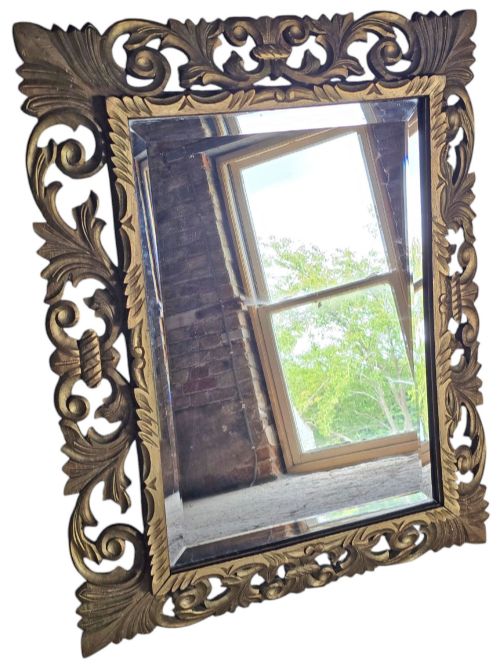
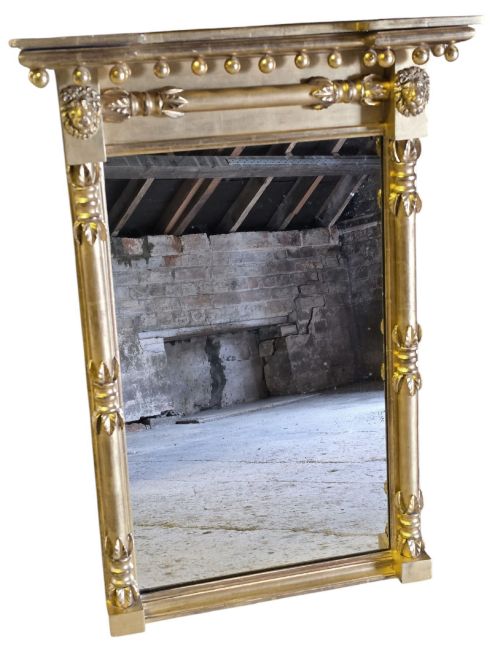
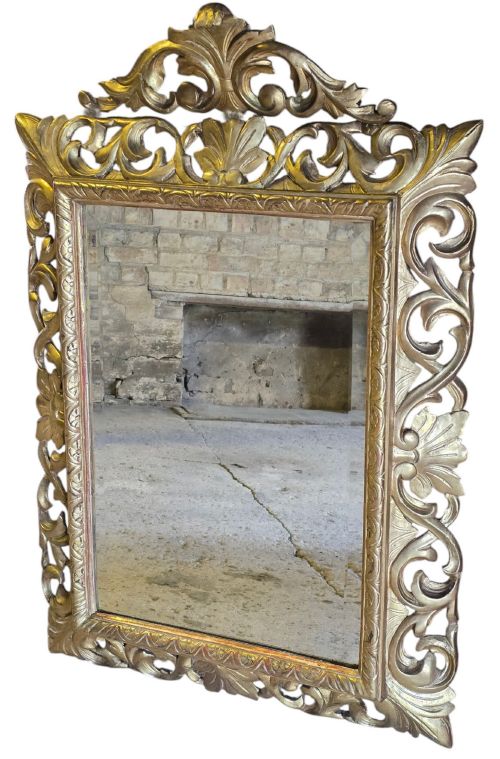
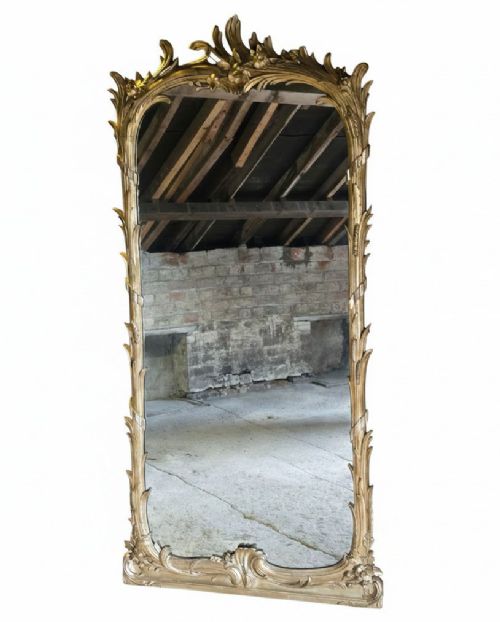

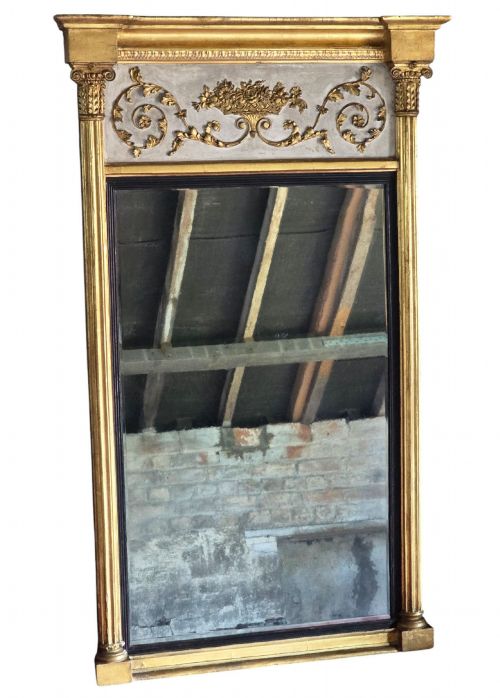


Statement Wall Mirror
A statement wall mirror acts as a room's focal point, bringing scale and historical presence to any interior scheme.
Statement Wall Mirror
When you search for a statement wall mirror, you encounter large decorative looking glasses designed to command attention in a room. The selection spans the nineteenth century up to the 1930s, encompassing substantial overmantel mirrors, pier mirrors, and grand oval formats.
The dominant forms on this page are nineteenth century overmantel mirrors and architectural wall pieces designed for high-ceilinged reception rooms. These objects carry heavy decorative framing and substantial glass plates intended to reflect light and expand spatial perception.
Styles range from French Chateau and Rococo Revival to Florentine, Neoclassical, and Regency designs. Buyers seeking an architectural anchor for a chimney breast or main wall find numerous giltwood and painted examples in these traditional aesthetics.
How they were made
Carved wooden frames form the structural core of many pieces, utilising giltwood and composition ornaments applied over a timber base. Gesso and gold leaf build up the intricate relief work seen on Florentine and Rococo Revival frames.
Surface decoration frequently combines gold leaf, paint, and ebonised finishes to create depth and contrast on the ornate mouldings. Mirror glass is set within these heavy frames, occasionally taking specialised forms such as convex plates or cushion profiles.
Listings feature items spanning the 1860s through to the 1930s, utilising giltwood, gesso, and ebonised finishes.
What varies in quality
The standard of carving and the complexity of the gesso work separate exceptional pieces from simpler utilitarian frames. Crisp relief and deep undercutting in the wood or composition ornament demonstrate superior craftsmanship.
The treatment of the finish, particularly the application and burnishing of gold leaf over the gesso ground, determines the visual richness of the object. Weight, proportion, and the retention of original mirror glass plates further distinguish the upper tier of pieces.
The Statement Wall Mirror Glossary
- Giltwood
- Wood that has been coated with gold leaf or gold paint. This technique provides the bright metallic finish seen on many traditional frames.
- Gesso
- A plaster-like mixture applied to wood frames to create a smooth surface for carving or gilding. It allows for intricate relief ornamentation.
- Overmantel mirror
- A large looking glass specifically designed to hang above a fireplace mantelpiece. These pieces often feature wide proportions to match the width of the hearth.
- Pier mirror
- A tall mirror designed to hang on the narrow wall space between windows. They frequently incorporate candle sconces or decorative consoles beneath.
- Convex mirror
- A round mirror with a curving outward glass plate that reflects a wide, fish-eye view of the room. It became popular in Regency and Neoclassical interiors.
Statement Wall Mirror: Frequently Asked Questions
Where should I hang a large overmantel mirror?
These pieces traditionally sit directly above a fireplace mantelpiece to anchor the room's primary focal point. They also work effectively on expansive blank walls in reception rooms to increase light.
Ensure the wall construction supports the substantial weight of these heavy framed objects before installation. Secure fixings attached to structural studs or masonry are essential for safety.
How do I identify a nineteenth-century frame?
Examine the construction methods visible on the reverse of the frame and the composition of the gesso ornamentation. Older pieces typically feature hand-carved elements, traditional joinery, and heavy timber backings.
The gilding technique and the ageing characteristics of the mirror glass provide further clues to the period of manufacture. Original mercury or early silvered glass often displays distinct foxing and dark spots.
What is a Florentine mirror frame?
Florentine frames originate from Italy and feature ornate, deeply carved scrollwork, foliage, and classical motifs. They are heavily gilt and designed to create an extravagant visual impact.
These frames often showcase elaborate crestings and apron details that extend far beyond the central glass plate. Their complex ornamentation suits grand architectural settings.
Can these mirrors be cleaned safely?
Dust the giltwood and gesso frame gently with a soft, dry brush to prevent damage to the delicate relief work. Avoid using chemical sprays or abrasive cloths on the metallic surfaces.
Clean the glass plate sparingly with a mild glass cleaner applied to a cloth rather than directly onto the mirror. This prevents moisture from seeping behind the silvering or damaging the wooden rabbet.