



Standing Wine Bucket
A standing wine bucket brings a distinct presence to a room, holding bottles ready while elevating the service of wine.
Standing Wine Bucket
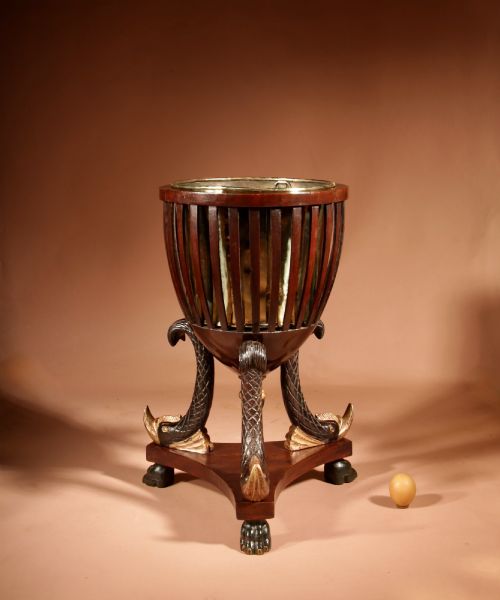
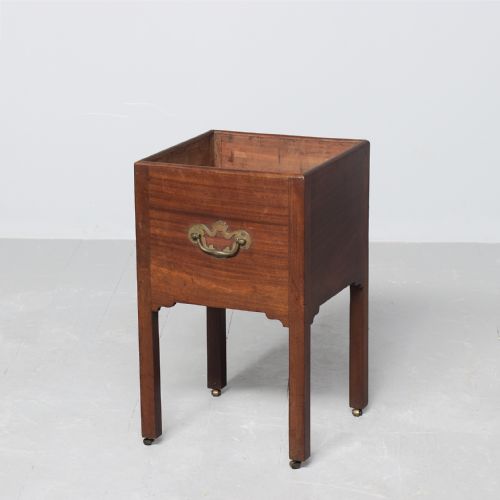
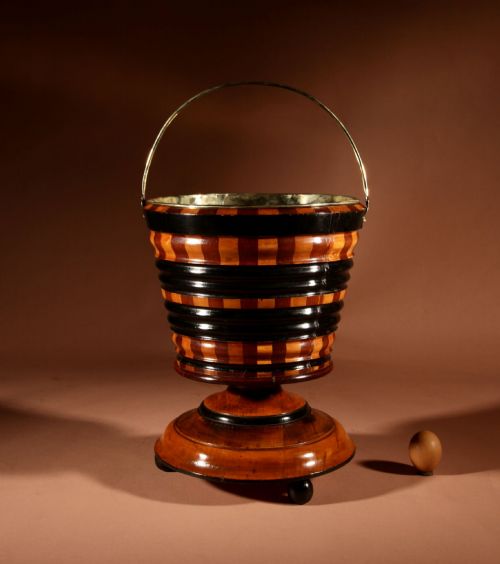
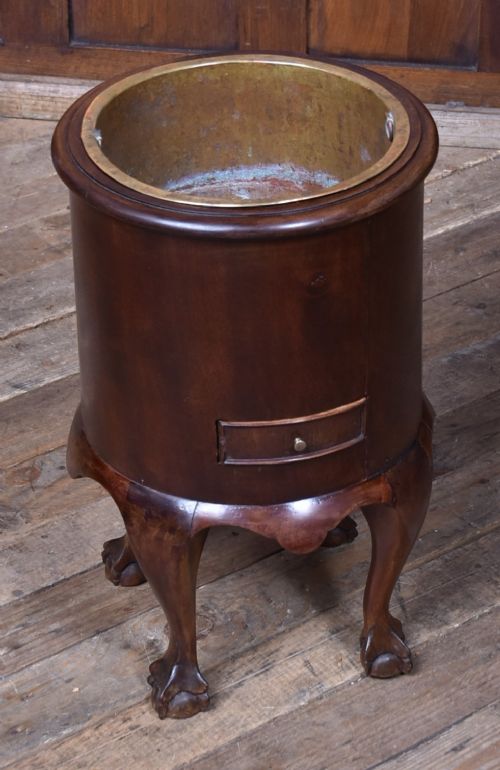
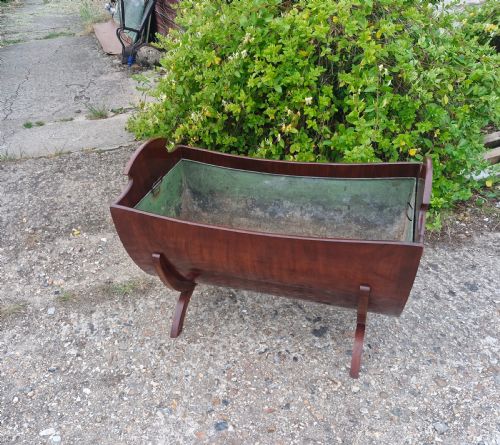
When you search for a standing wine bucket, you encounter vessels designed to chill or hold bottles, frequently raised on legs, stands, or built as floor-standing pieces. The examples available span the Georgian, Victorian, Edwardian, and Regency periods, alongside later 20th-century creations.
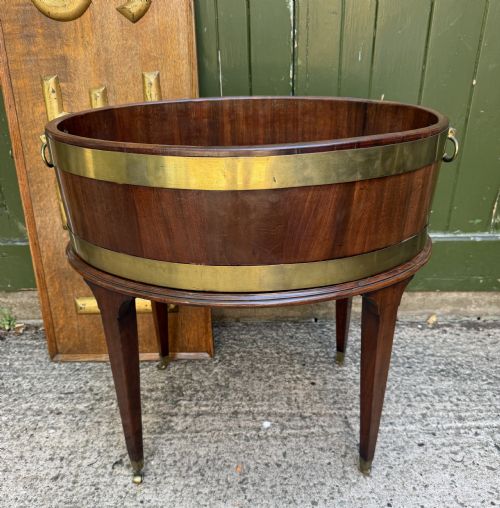
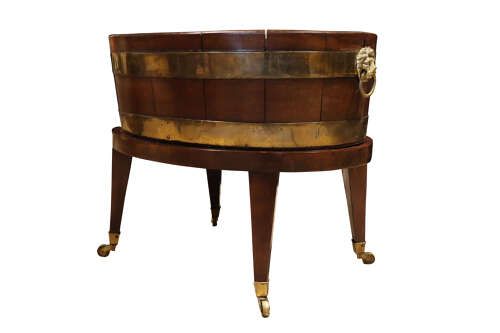
Mahogany and oak predominate in the wooden constructions, often styled with coopered staves and brass bands, while silver plate and brass form the metal alternatives. These items frequently share roles with jardinières, cellarettes, and planters due to their deep bucket shapes.
Materials and Construction
The wooden vessels rely heavily on traditional cooperage techniques, shaping staves of mahogany, oak, or walnut and binding them securely with brass hoops or bands. Handles, liners, and stands integrate metal components such as zinc, copper, or silver plate to handle ice and liquid.
Cabinetmakers constructed matching stands using turned or tapering legs to support the heavy oval, round, or elliptical buckets. Inlays, brass lion-mask handles, and polished patinas complete the standard joinery and metalworking methods seen across these eras.
Design influences include the Georgian, Regency, Edwardian, Victorian, Arts and Crafts, and French Empire styles.
Judging the Standard
Quality rests upon the integrity of the cooperage, the weight and gauge of the brass bands or silver plating, and the retention of original stands. Finer specimens display tight-fitting staves, rich timber grain, and well-cast mounts rather than mismatched replacements.
The presence of original metal liners and unaltered stands distinguishes higher-grade examples from those assembled later from disparate parts. Preservation of the surface patina further separates standard utility items from pieces made for formal dining rooms.
Christofle·WMF·Lister and Co·Walker and Hall
The Standing Wine Bucket Glossary
- Coopered
- Constructed from wooden staves joined side by side and bound by metal hoops, much like a traditional barrel. This method provides the structural strength needed for deep vessels holding ice and bottles.
- Cellarette
- A lockable container or fitted box used for storing wine bottles near the dining table. They frequently appear as freestanding wooden buckets on stands during the Georgian period.
- Jardiniere
- An ornamental pot or stand designed to hold plants or flowers. Many standing wine buckets share this exact form and serve interchangeable domestic purposes.
- Silver Plate
- A thin layer of silver applied to a base metal such as copper or Britannia metal. This technique allowed makers to produce large champagne buckets and cooling bowls with the lustre of solid silver.
- Hotte
- A deep carrying basket traditionally worn on the back during grape harvests. These French country items translate into decorative floor-standing containers in later interiors.
Standing Wine Bucket: Frequently Asked Questions
What is a standing wine bucket?
A standing wine bucket is a deep vessel designed to hold bottles and ice, typically raised on its own legs or a dedicated wooden stand.
These pieces emerged in dining rooms and drawing rooms to keep wine cool near the table without cluttering the floor.
How were these buckets used historically?
They served primarily to chill champagne and wine bottles during formal meals using ice and water.
Over time, many were also adapted to hold plants, logs, or coal as domestic fashions shifted.
Are liners original to the buckets?
Metal liners in zinc, copper, or silver plate were standard to protect the wood from moisture and melting ice.
Original liners add significantly to the integrity of a piece, though many survive without them.
How do I tell a wine bucket from a jardiniere?
The forms often overlap entirely, as both use coopered wooden staves or metal bodies on elevated stands.
Function is determined by the presence of bottle-sizing, metal liners, or carrying handles rather than a strict difference in manufacture.
What woods were used in these pieces?
Mahogany and oak form the vast majority of the wooden buckets and coopered barrels found in these listings.
Walnut and ebonised wood also appear in specific Regency and French Empire designs.