


Standing Vanity Mirror Wood
These standing vanity mirror wood pieces are functional dressing glass designs that bring practical elegance and period character to any interior scheme.
Standing Vanity Mirror Wood
When you search for standing vanity mirror wood items, you encounter various portable and floor-standing dressing glasses from historical eras. These pieces include compact toilet mirrors, adjustable shaving stands, and full-length cheval mirrors designed for personal grooming. Mahogany and walnut examples dominate the selection, spanning from the Georgian period through to the Edwardian era.
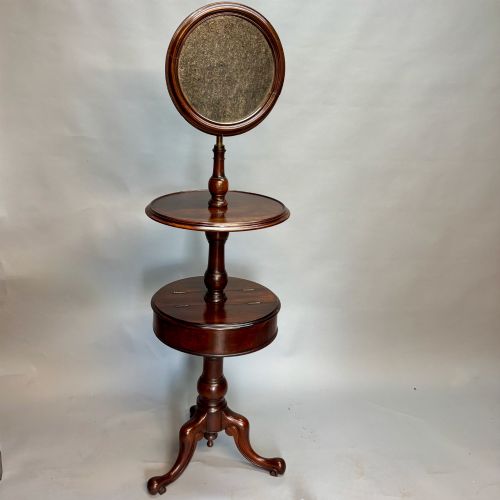
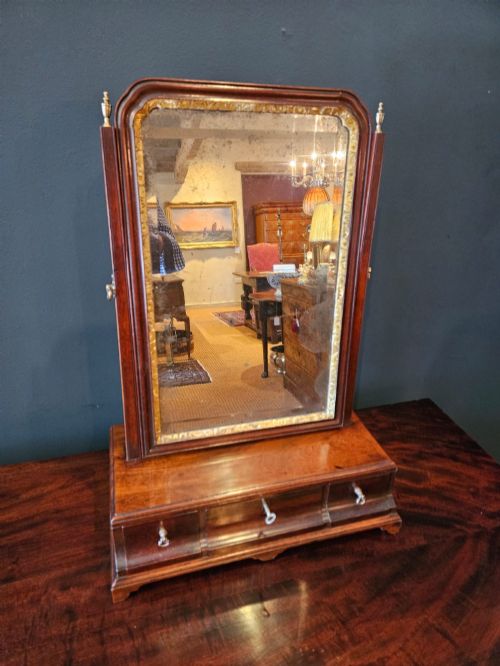
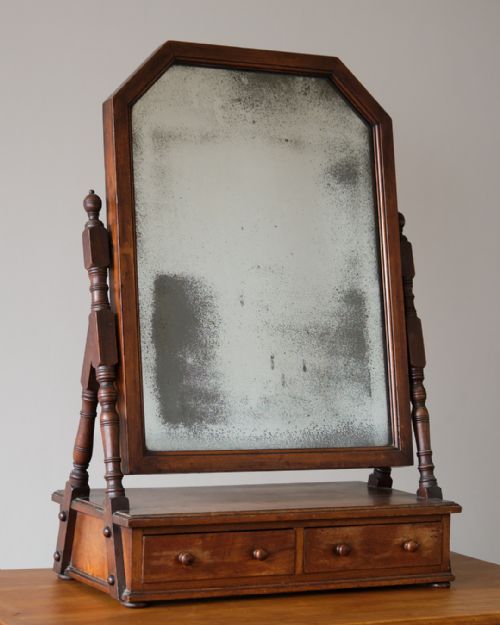
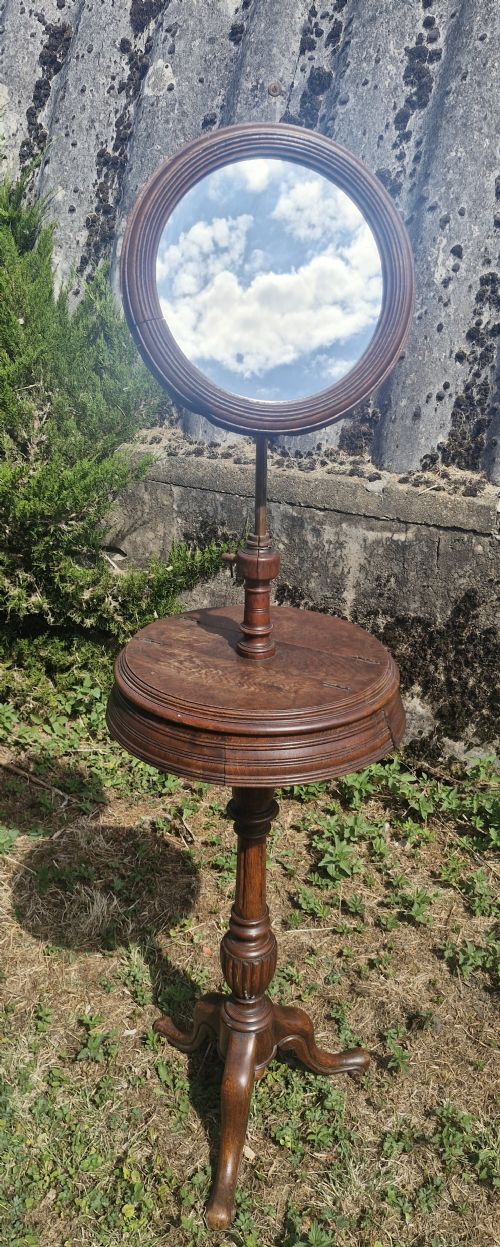
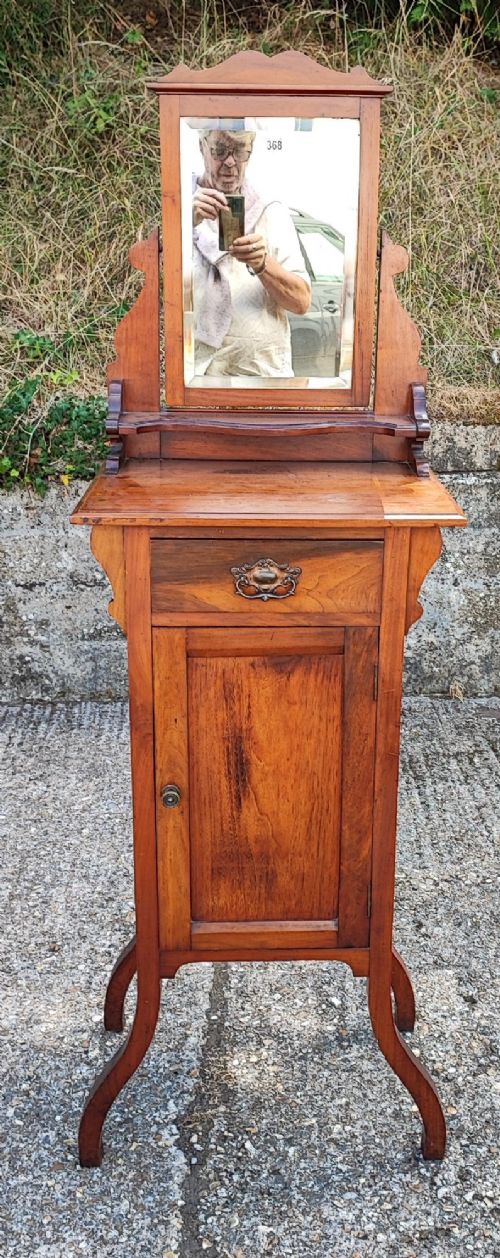
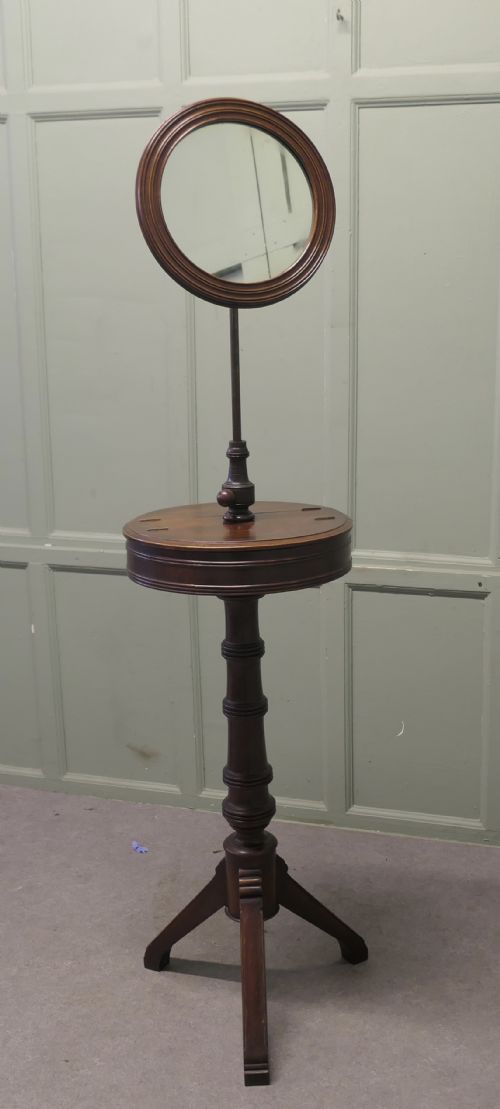
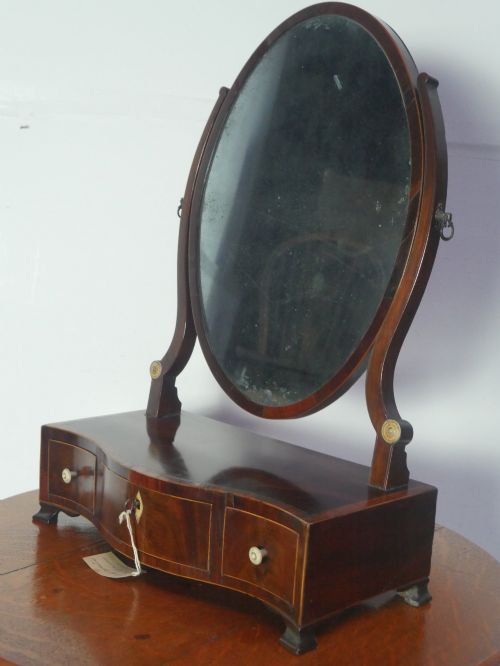
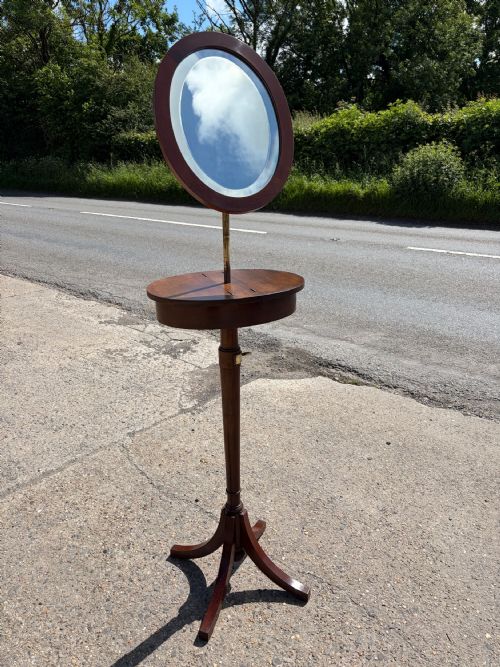
The most frequent form on this page is the swing mirror or toilet mirror, typically mounted upon a box base or small drawers. Shaving stands with telescopic columns or tripod bases also appear regularly, offering adjustable heights for practical daily use. These domestic objects reflect the changing fashions in interior joinery and personal care across centuries.
How they were made
Cabinet makers utilised dense hardwoods such as mahogany, walnut, and oak to construct the frames and support stands. Timber selection determined the structural stability of slender supports like tripod bases and swing arms. Boxwood and brass accents frequently provided subtle decorative contrast against the darker primary timbers.
Joinery methods relied on precise dovetailing for small drawer boxes and secure tenon joints for upright frames. Glass plates were silvered and fitted into rebated wooden surrounds, often supported by brass pivots that allowed the mirror angle to shift.
Periods represented range from seventeenth-century walnut examples through Georgian, Regency, and Victorian iterations up to Edwardian designs.
What varies in quality
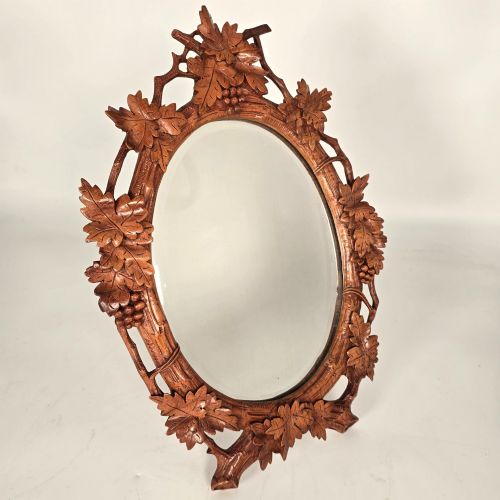
The degree of carving detail and timber figure distinguishes standard utility items from finer workshop output. Selected flame mahogany veneers and intricate boxwood stringing indicate superior craftsmanship and higher status commission.
Hardware integrity, such as original brass pivoting screws, swing arms, and functional telescopic mechanisms, defines the preservation standard. Proportional balance between the mirror glass and the supporting base dictates the visual harmony of each piece.
Heal And Sons·James Shoolbred·Gillows
The Standing Vanity Mirror Wood Glossary
- Swing mirror
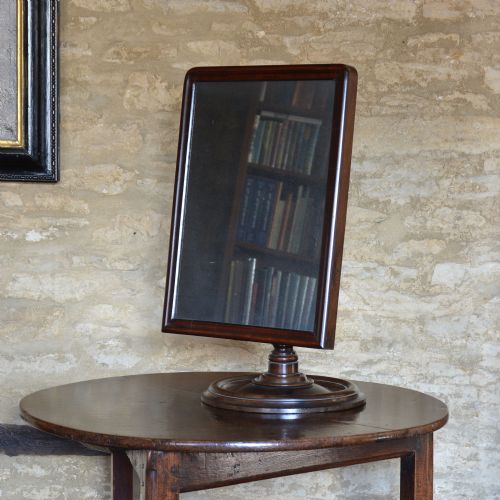
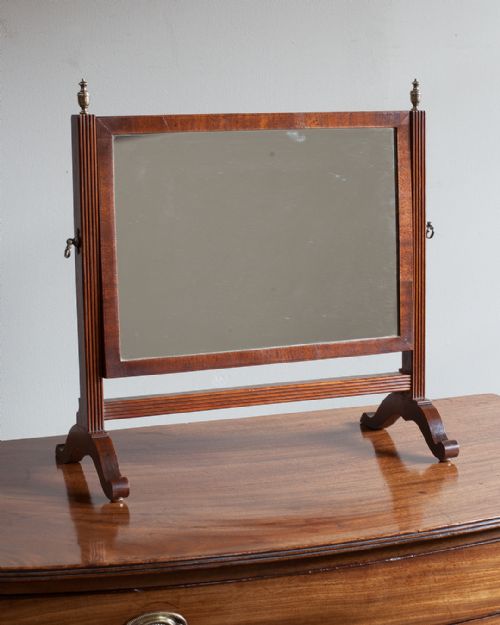
- A glass plate mounted on vertical pivots within a frame, allowing it to tilt forward and backward. This design sits upon a dressing table or forms part of a standalone frame.
- Toilet mirror
- A smaller dressing glass fixed above a miniature chest of drawers or a box base, designed for tabletops. These were essential bedroom furnishings in Georgian and Victorian households.
- Cheval mirror
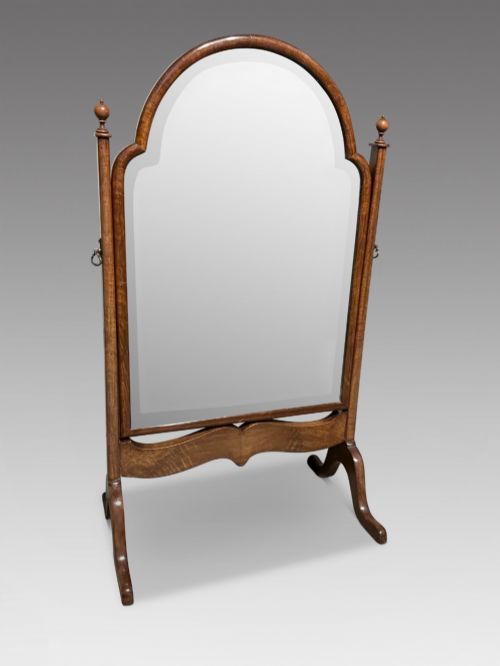
- A full-length standing dressing glass supported by a sturdy frame with four feet or upright pillars. The frame allows the entire mirror plate to rotate vertically.
- Shaving stand
- A specialised taller piece featuring an adjustable mirror mounted above a tripod base or small cabinet. Gentlemen utilised these for daily grooming before wall-mounted bathroom mirrors became standard.
- Stringing
- A narrow inlay of contrasting timber, such as boxwood, set flush into the surface of the primary wood. Cabinet makers used this technique to outline drawer fronts and borders.
Standing Vanity Mirror Wood: Frequently Asked Questions
How do I date a wooden vanity mirror?
Dating relies on observing timber choices, secondary woods in drawer linings, and construction methods like hand-cut dovetails. Georgian pieces often feature oak linings, while later Victorian items might employ pine or mahogany throughout.
Hardware styles, mirror plate bevelling, and overall decorative motifs such as Rococo revival carving also provide clear chronological markers for attribution.
Were these mirrors used in bedrooms?
These pieces served primarily in bedrooms, dressing rooms, and boudoirs for personal grooming and styling. Tabletop toilet mirrors sat atop larger chests or dressing tables.
Tall shaving stands and cheval mirrors stood independently on the floor, offering adjustable angles for full-length viewing or shaving.
How do I care for antique mirror glass?
Antique mirror glass requires gentle cleaning with a soft dry cloth to prevent moisture damage to the silvered backing behind the plate. Avoid harsh chemical sprays that can seep under the wooden frame edges.
Protecting the timber frame with appropriate wax feeds maintains the finish without harming the historic surface patination.