




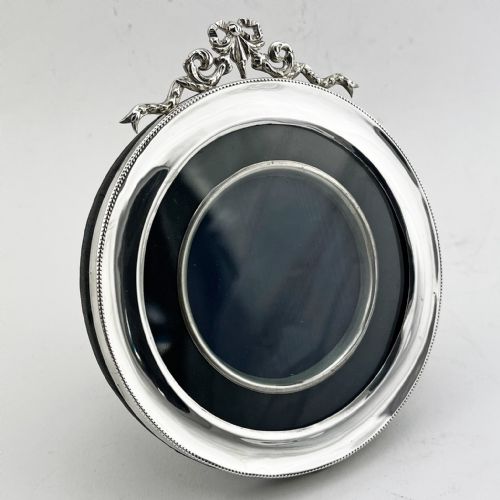

Standing Silver Photo Frame
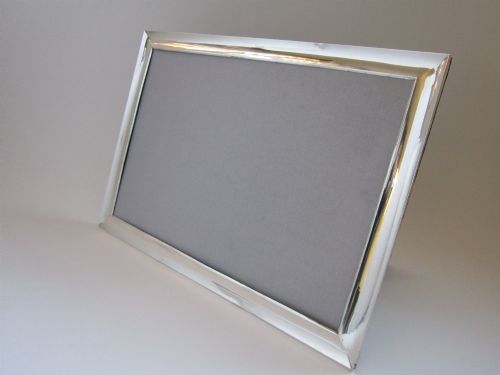
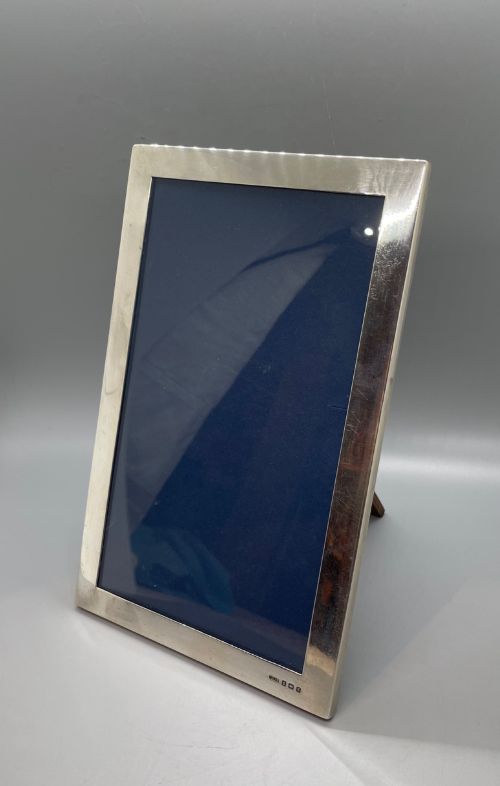
A standing silver photo frame brings polished metal and glass together to hold a cherished portrait on a desk or mantelpiece.
Standing Silver Photo Frame
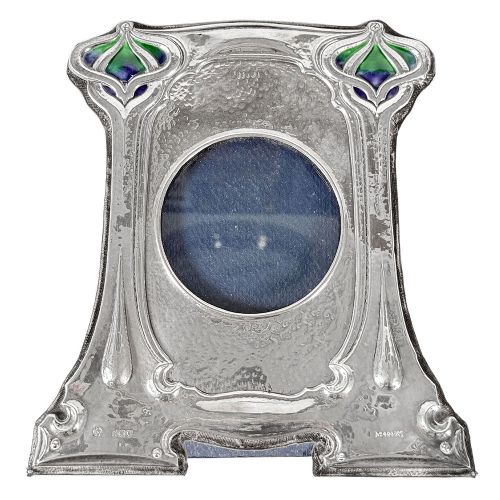
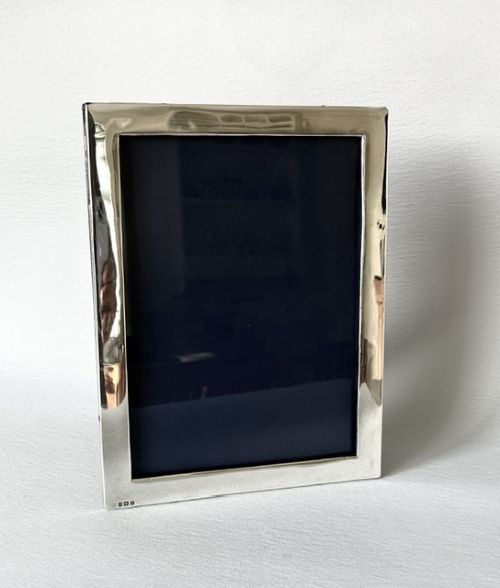
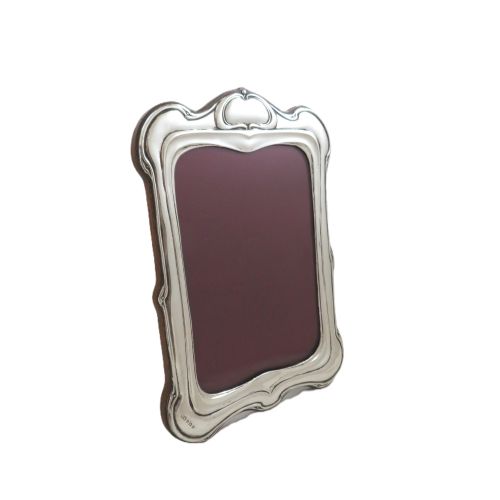
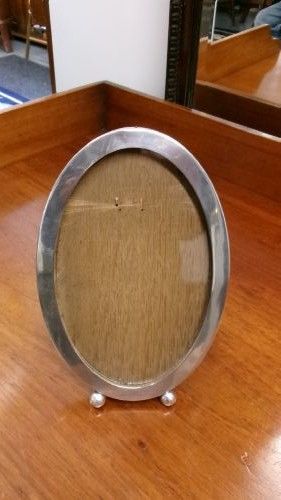
The forms vary from simple rectangular shapes with plain borders to ornate oval, round, and heart-shaped pieces decorated with embossed floral motifs or linear patterns. Many incorporate functional backing materials such as wood, velvet, fabric, or black leather to support the display upright on a flat surface. Distinctive stylistic movements appear frequently, including Arts and Crafts, Art Nouveau, and George V designs.
Materials and Construction
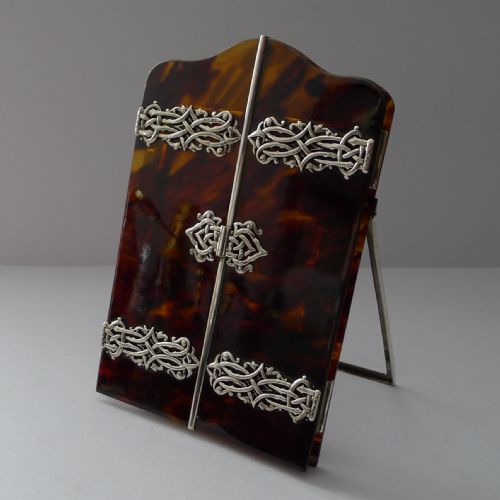
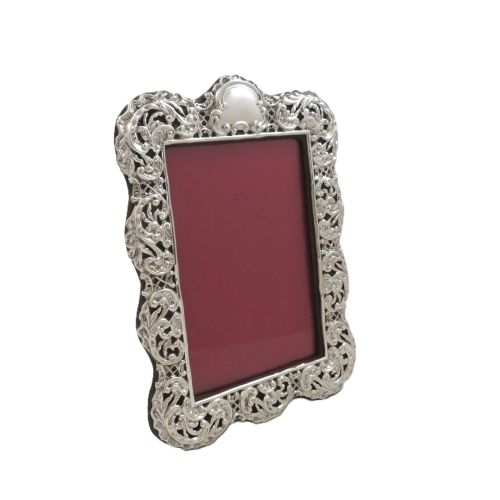
Makers constructed these frames using sterling silver or lower silver purities, mounted over structural elements of wood, tortoiseshell, or fabric. Metal components were often stamped, embossed, or engine-turned to create intricate floral borders and geometric textures, particularly during the Edwardian and Art Deco periods.
Backings were typically fitted with hinged struts made of wood or metal covered in velvet, leather, or fabric to allow the frame to stand independently. Glass protected the portrait aperture, held securely within silver mounts or nickel-plated frames.
Materials in these listings include sterling silver, chrome, glass, wood, velvet, and leather.
Distinctions in Quality and Craftsmanship
The distinction between standard production pieces and finer examples rests on the depth of the metalwork and the integrity of the materials. Hand-embossed or chased decoration with crisp floral motifs shows greater artisanal skill than shallow machine stamping. Furthermore, the inclusion of organic elements like tortoiseshell or applied enamel elevates the piece.
Structural completeness also defines a superior object. Frames retaining their original fitted wooden backs, functioning silver hallmarks, intact glass, and sturdy structural struts represent a higher standard of preservation than those with replaced or heavily damaged components.
William Hutton and sons·Pinci, Roma·Syner and Beddoes·William Comyns
The Standing Silver Photo Frame Glossary
- Sterling silver
- An alloy of silver containing 92.5 percent pure silver and 7.5 percent other metals, usually copper. This standard composition is frequently stamped with hallmarks indicating the assay office and year of production.
- Engine-turned
- A decorative technique involving precise geometric patterns or lines mechanically engraved into the metal surface. This finish is commonly found on early twentieth-century and Art Deco examples.
- Hallmark
- A series of official marks stamped onto precious metal items to indicate the standard of purity, the maker, and the year of assay. English silver typically bears city marks such as Birmingham or Chester.
- Tortoiseshell
- The mottled brown and amber shell of certain sea turtles, used as a luxurious backing or decorative mount on late Victorian frames. It is often paired with polished sterling silver mounts.
- Embossed
- A technique where the metal is raised from the reverse side using hammers and punches to create a three-dimensional design on the front. Floral borders on Edwardian frames were frequently produced this way.
Standing Silver Photo Frame: Frequently Asked Questions
How do I date a silver photo frame?
You date a silver photo frame by examining the hallmarks stamped into the metal, which indicate the specific assay office and year of manufacture. Stylistic indicators, such as the flowing organic lines of Art Nouveau or the geometric precision of Art Deco, also help narrow down the period.
Makers' marks provide further context, linking the object to specific silversmiths active during the Victorian, Edwardian, or George V eras.
What are the common backing materials?
Original backings on these frames typically consist of wood, often covered in black leather, velvet, or fabric. These materials were chosen to provide a sturdy foundation for the hinged stand.
Many surviving pieces retain these structural elements, though some older frames have had their backings replaced over time due to wear.
How do I clean a silver frame?
Cleaning requires a soft microfiber cloth and a mild silver polish specifically formulated for precious metals. Care must be taken around embossed details, glass panels, and delicate backing materials like leather or velvet to avoid staining.
Harsh chemical dips should be avoided, particularly on antique pieces with applied enamel or tortoiseshell.
Can these frames be used for modern photographs?
These frames accommodate standard photographic prints, though historical aperture sizes may occasionally require trimming a modern image to fit. The internal dimensions are fixed by the original silver mount and glass.
Care should be taken when opening the backings of antique pieces to avoid damaging brittle struts or aged retaining clips.