

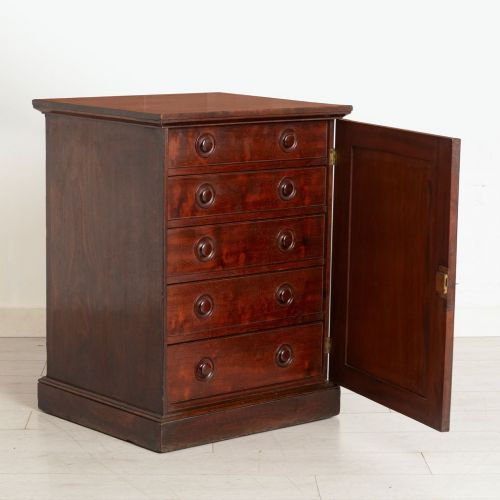


Standing Music Cupboard
These standing music cupboard pieces store sheet music and scores with upright elegance, bringing period craftsmanship straight into a modern music room.
Standing Music Cupboard
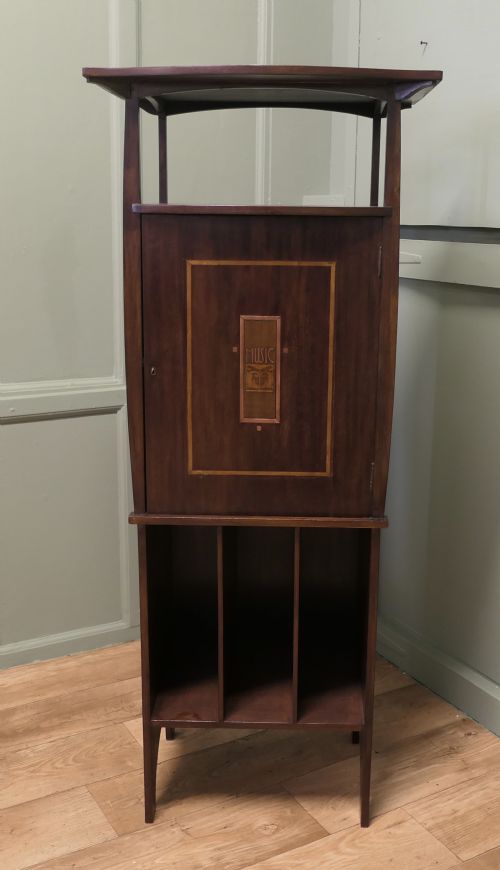
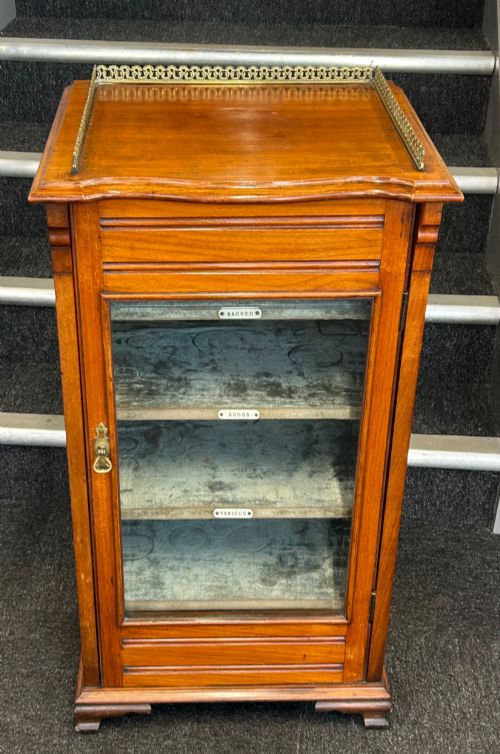
A standing music cupboard provides compact, upright storage designed specifically to hold sheet music, folios and scores within a domestic interior. You encounter these primarily in Edwardian and Victorian versions, alongside examples from the nineteenth century and the nineteen-twenties.
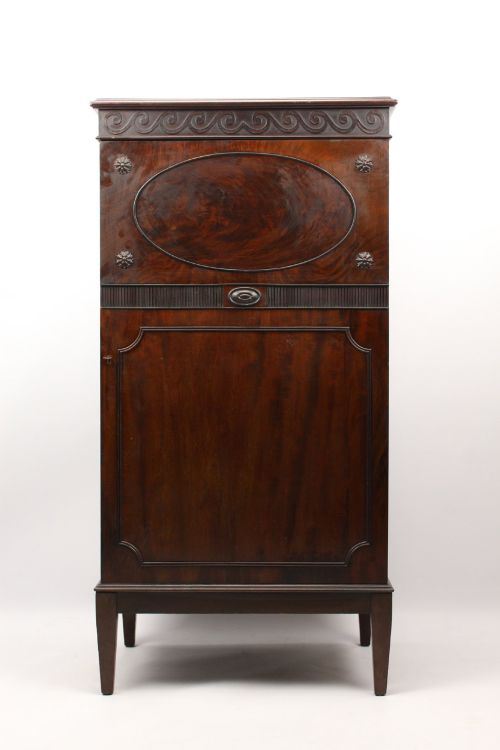
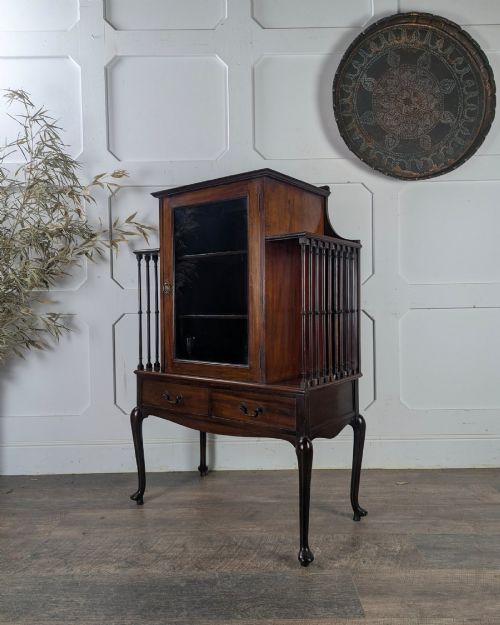
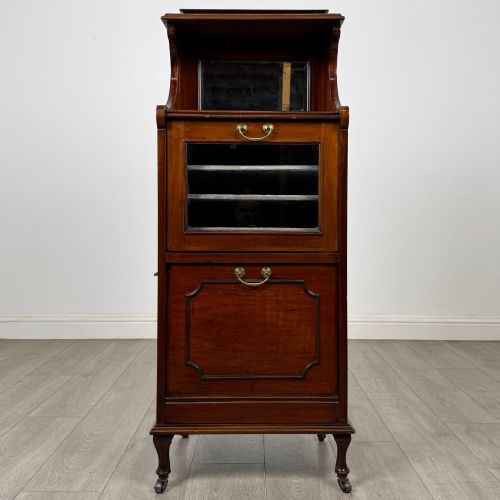
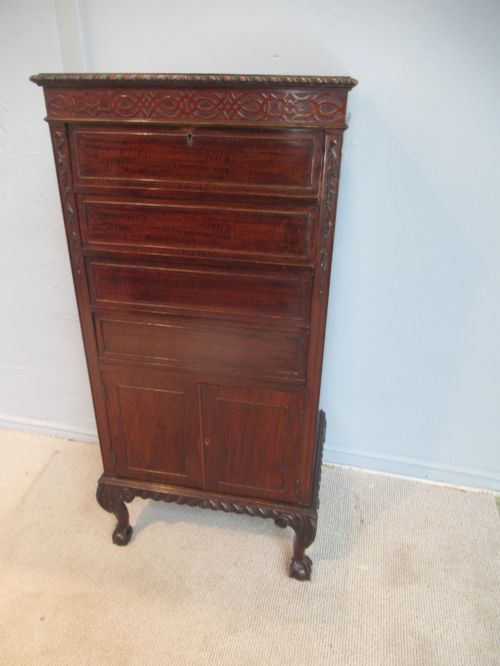
The form typically manifests as a tall, narrow cabinet featuring internal shelving or drop-front drawers sized for paper sheets. Variants across the selection include display cabinets, side cabinets, whatnot stands and specialised music cabinets.
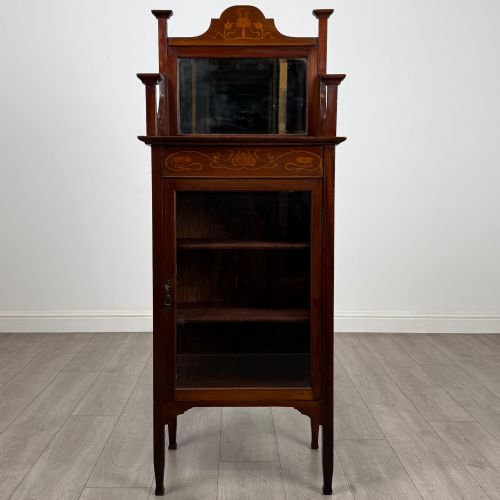
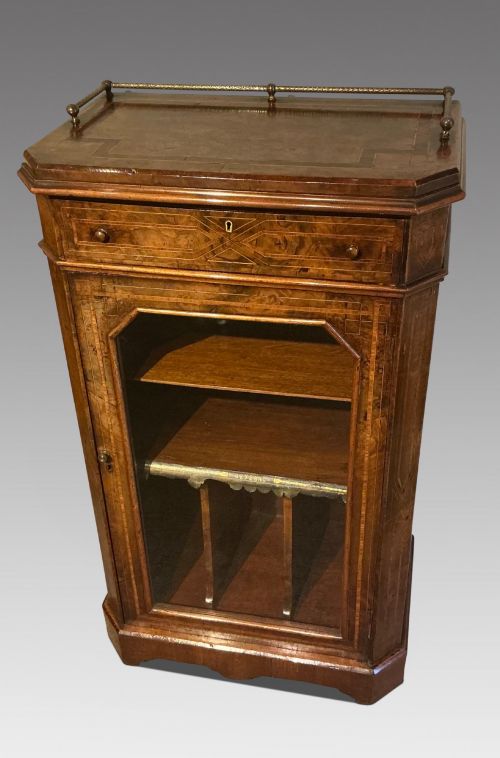
Makers utilised woods such as mahogany, walnut, burr walnut, rosewood, oak and hardwood. Many pieces incorporate decorative touches including glass doors, brass hardware and wood inlay.
Materials and construction methods
Cabinet makers built these pieces using solid timbers and veneers, predominantly selecting mahogany and walnut for their rich grain and durability. Workshops applied contrasting wood inlay to decorate drawer fronts and panel doors.
Fittings incorporate brass for handles, hinges and gallery rails, whilst glass appears in doors designed to showcase collections of books or display items. Internal drawer construction relies on traditional joinery methods suited to holding the weight of heavy paper folios.
Some cabinets feature ingenious drop-front mechanisms designed to tip sheet music forward politely upon opening, sparing musicians from awkward fumbling.
Judging the quality of a standing music cupboard
Quality rests in the choice of timber figure, particularly where burr walnut, figured mahogany or detailed wood inlay are concerned. Superior examples display precise cabinetwork and balanced proportions in the upright frame.
The choice of secondary woods, the finish of the interior filing space and the crispness of any applied decoration separate standard production from master workshop output.
GM Elwood for JS Henry·Denby & Spinks·Henry Ogden & Son·Collinson & Lock London
The Standing Music Cupboard Glossary
- Music cabinet
- A specialised tall cabinet designed with internal partitions or shallow drawers for organising sheet music. These pieces often feature glass panel doors or fall-front compartments.
- Whatnot stand
- An open shelved piece of furniture used for displaying ornaments or small objects. Certain examples combine open tiers with an enclosed cupboard section.
- Burr walnut
- Timber taken from the warted burl growth of a walnut tree, yielding highly figured grain patterns. Cabinet makers prized this veneer for high-end Victorian and Edwardian furniture facades.
- Wood inlay
- The technique of inserting contrasting pieces of wood into a recessed surface to form decorative patterns. Edwardian makers frequently applied this method to mahogany cabinet doors.
- Aesthetic Movement
- A late nineteenth-century design style emphasising visual beauty over narrative function. Pieces from this movement often display refined lines and careful attention to material.
Standing Music Cupboard: Frequently Asked Questions
What is a standing music cupboard?
A standing music cupboard is a tall, narrow piece of furniture designed to hold sheet music, scores and folios. These cabinets keep paper collections organised while taking up minimal floor space in a room.
They appear in various styles from the Victorian and Edwardian eras, often featuring specialised internal shelving or drop-front drawers.
How were music cabinets used originally?
Musicians and households placed these cabinets in drawing rooms and music parlours to store piano scores and vocal music. The shallow drawers or internal slots kept fragile paper sheets flat and sorted.
Today, they serve the same practical function for musicians or double as compact storage and display units in living spaces.
How do I identify an Edwardian music cabinet?
Edwardian music cabinets typically feature lighter woods such as mahogany or satinwood, frequently enhanced with delicate wood inlay. Their proportions tend to be neat and upright, reflecting early twentieth-century domestic tastes.
Many incorporate glass doors or brass fittings characteristic of the period between eighteen-eighty and nineteen-ten.
What woods were used for these cabinets?
Makers constructed these cabinets using a variety of hardwoods, with mahogany and walnut being the most prevalent. Burr walnut and rosewood appear on finer examples to provide striking grain patterns.
Inlay work often incorporates contrasting timbers, whilst hardware typically utilises cast brass.