
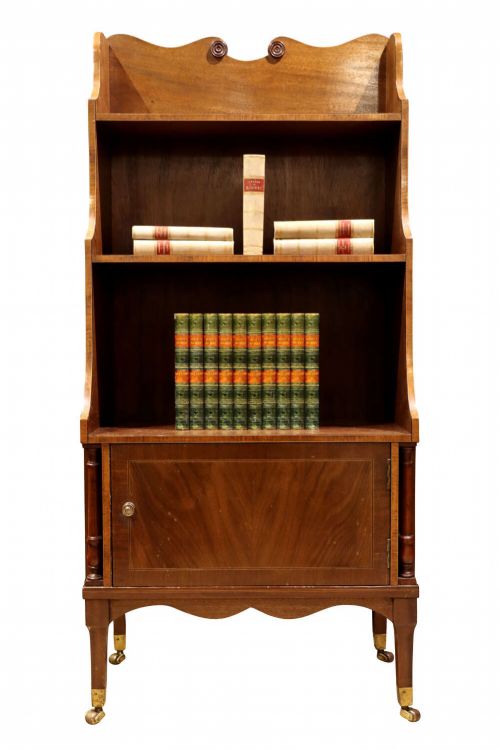


Mahogany Cabinet on Castors
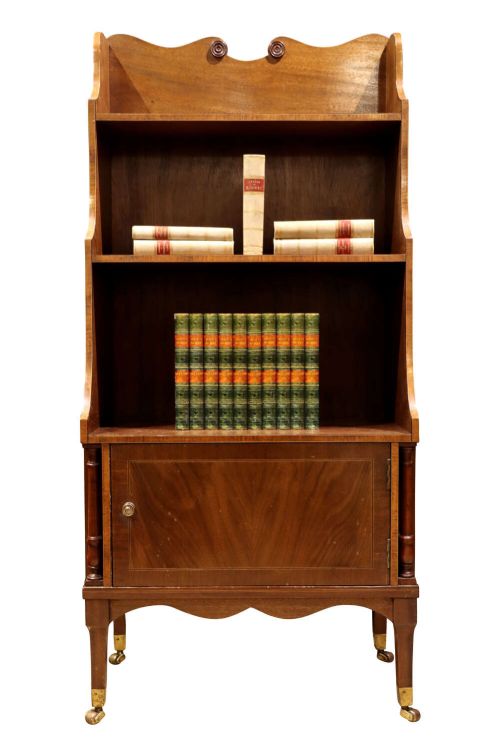
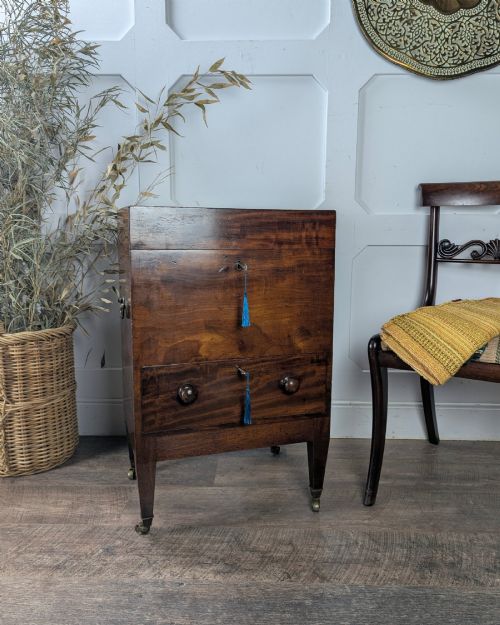
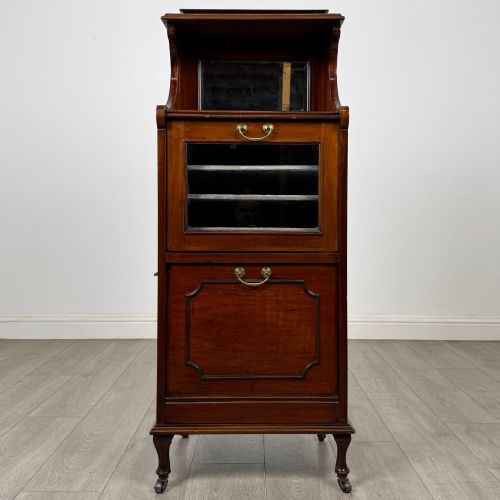
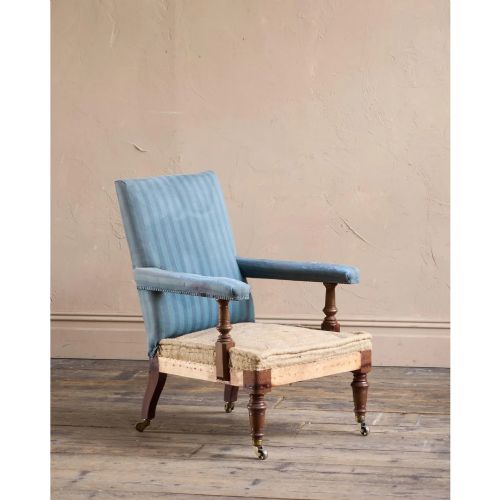
These mahogany cabinet on castors examples bring mobile storage and display into period rooms through timber and brass work.
Mahogany Cabinet on Castors
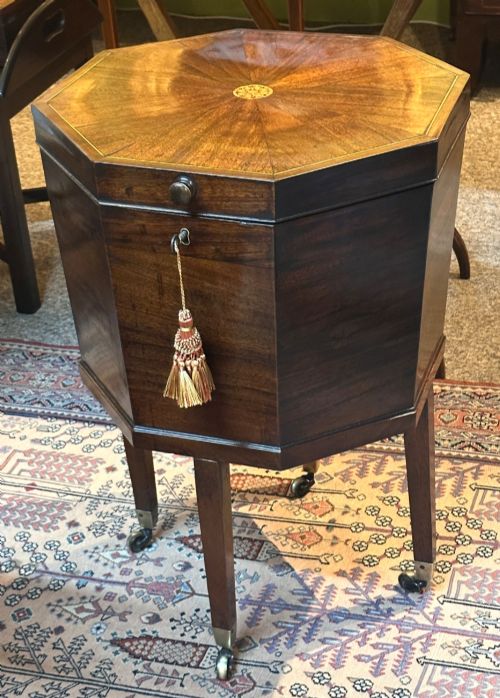
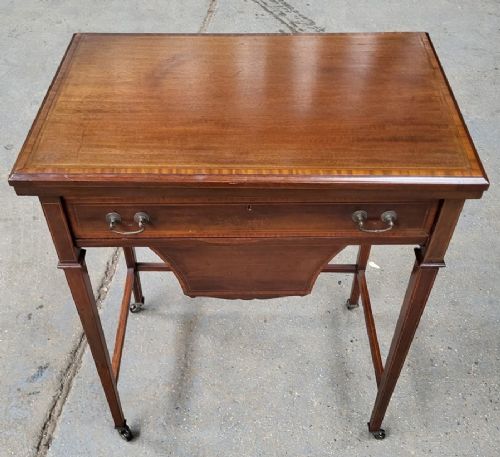
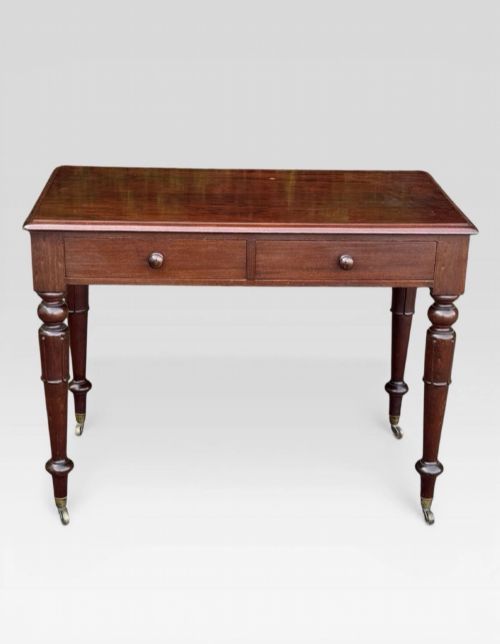
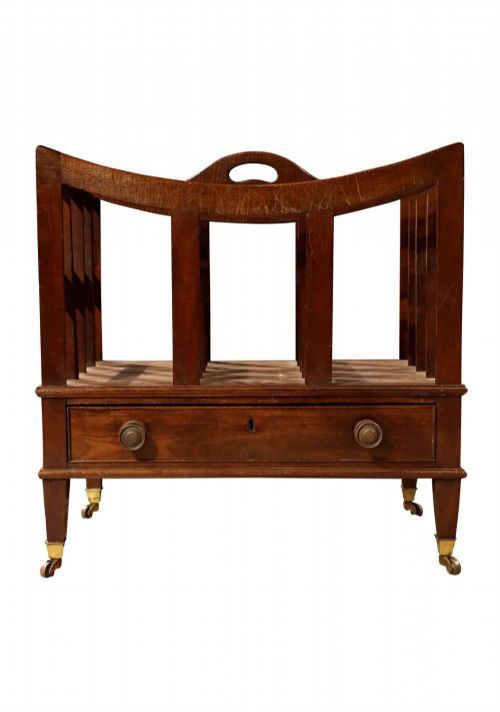
A mahogany cabinet on castors gathers a diverse range of forms designed for storage and mobility, spanning the Georgian, Regency, Victorian and Edwardian eras. You will encounter cellarettes, wine coolers, bookcase cabinets, work tables and canterburys operating as part of this grouping.
The pieces on this page lean heavily towards late nineteenth-century and Edwardian pieces, alongside Georgian and Regency specimens. They serve practical domestic functions such as holding sheet music, holding wine, or displaying small collections while remaining easy to move across the floor.
How they were made
Cabinet makers built these pieces using solid mahogany and mahogany veneers, frequently incorporating boxwood inlay, satinwood, and ebonised details. Wood construction met metal components where brass castors were fitted to the feet for smooth movement.
Joinery techniques ranged from simple turned supports to intricate cross-banding, marquetry inlay, and tiered shelving stands. Glass panels appear in display variants, while internal divisions accommodate bottles, newspapers, or sewing materials.
Some nineteenth-century canterburys rolled around simply so musicians could fetch their sheet music without getting off the sofa.
What varies in quality
Quality rests upon the crispness of the cabinet work, the depth of the mahogany grain, and the finesse of any inlaid boxwood or satinwood stringing. Superior examples display thoughtful proportions and well-integrated brass castors that belong to the piece rather than appearing as later replacements.
The distinction between ordinary workshop output and finer productions shows in the handling of secondary timbers, the neatness of internal compartments, and the preservation of original surfaces.
Morison and Co·J A Mein·Shoolbred of London·J.C.Loudon
The Mahogany Cabinet on Castors Glossary
- Castor
- A small wheel mounted on a swivel attached to the foot of a piece of furniture to allow easy rolling across carpets and floors. They are frequently made of brass.
- Cellarette
- A lockable container or cabinet designed for storing bottles of wine or spirits near the dining table. They often feature lead-lined interiors.
- Canterbury
- A low stand fitted with partitions for holding sheet music, newspapers, or magazines, usually equipped with a small drawer below and castors for movement.
- Cross-banding
- A decorative border of veneer laid with the grain running perpendicular to the surrounding surface. It frames panels on tabletops and drawer fronts.
- Marquetry
- The art of forming decorative patterns using thin veneers of different coloured woods. It creates pictorial or geometric designs on cabinet doors and tops.
Mahogany Cabinet on Castors: Frequently Asked Questions
What were mahogany cabinets on castors used for?
These pieces served practical domestic tasks in period homes, functioning as wine coolers, music stands, work tables, and small bookcases.
Their mobile design allowed servants or family members to wheel them across dining rooms, drawing rooms, and studies as needs changed.
How do I tell a Georgian piece from a Victorian one?
Georgian and Regency examples tend to feature restrained lines, architectural proportions, and sturdy functional forms like cellarettes.
Victorian and Edwardian versions often introduce more elaborate inlays, glass display doors, lighter framework, and tiered shelving structures.
Are the brass castors usually original?
Brass castors see heavy use and floor contact, making them common points for later replacement or tightening.
Examining how the fixing plates and screw slots match the timber age helps determine if the castors have remained with the piece since manufacture.
Can I use a cellarette as a small side table?
Many cellarettes and wine coolers provide a flat top surface at a convenient height for placing drinks or books.
Their sturdy timber construction and internal depth make them adaptable for modern living spaces as mobile storage units.