
Standing Magazine Holder
A standing magazine holder gathers journals and folios off the floor with practical grace.

Standing Magazine Holder
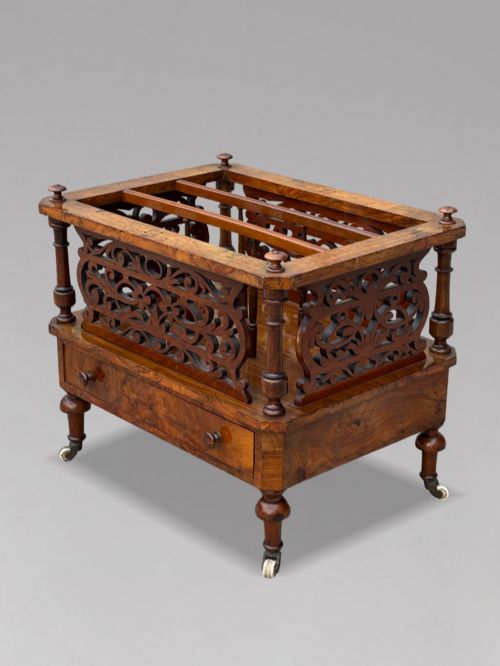
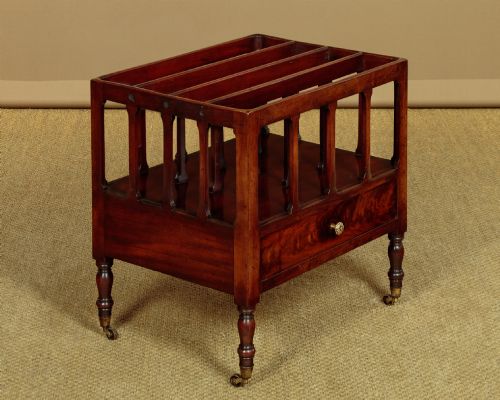
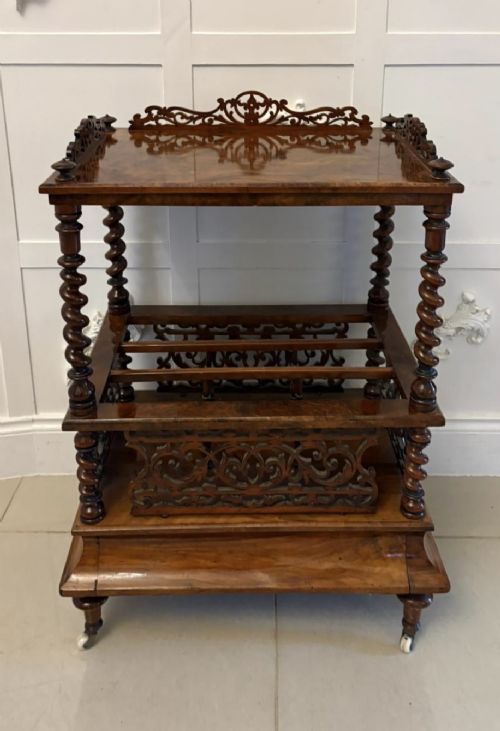
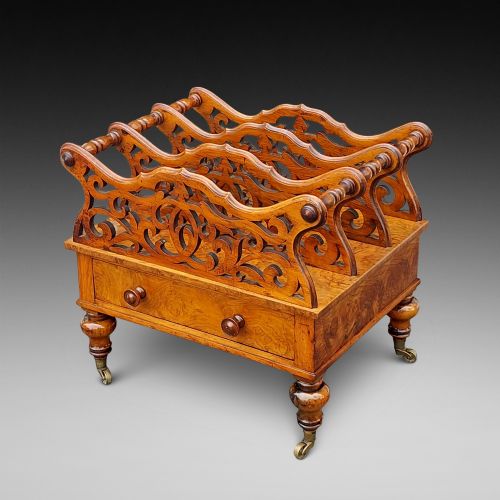
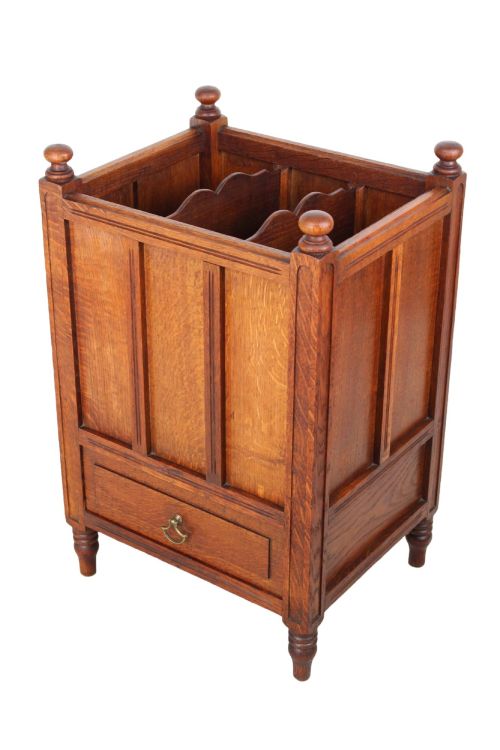
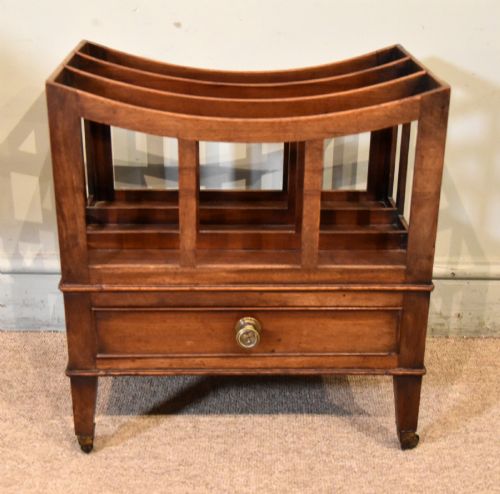
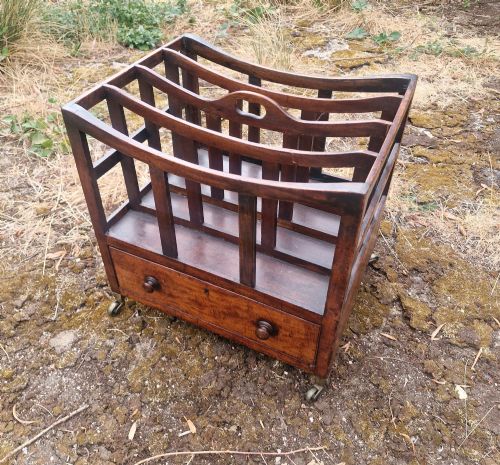
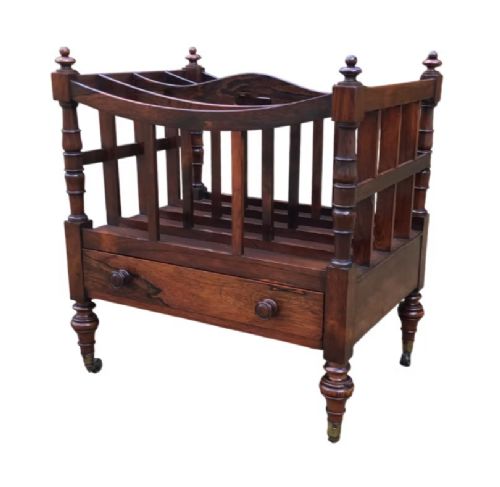
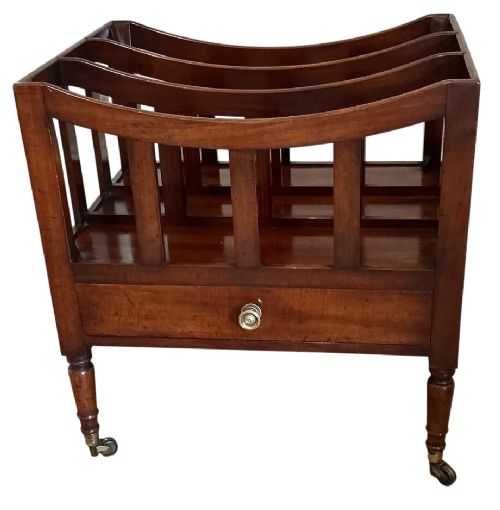
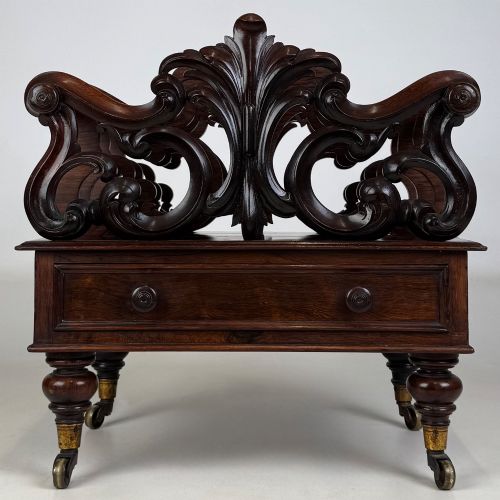
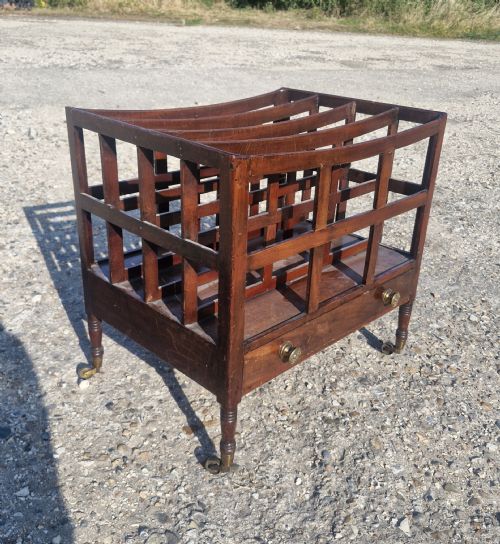
When you search for a standing magazine holder, you encounter a lineage of low furniture designed to keep periodicals and folios orderly. These pieces predominantly take the form of the Canterbury, a partitioned stand originally conceived to hold sheet music or newspapers near a chair or desk.
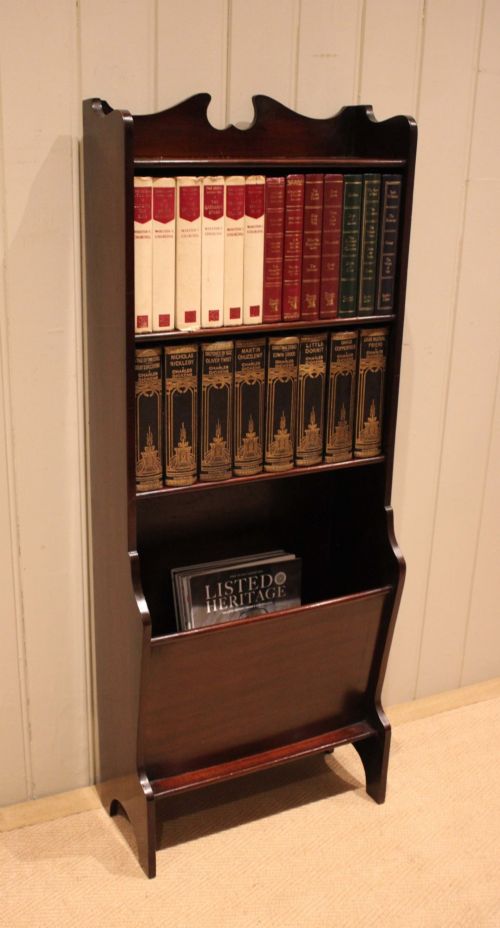
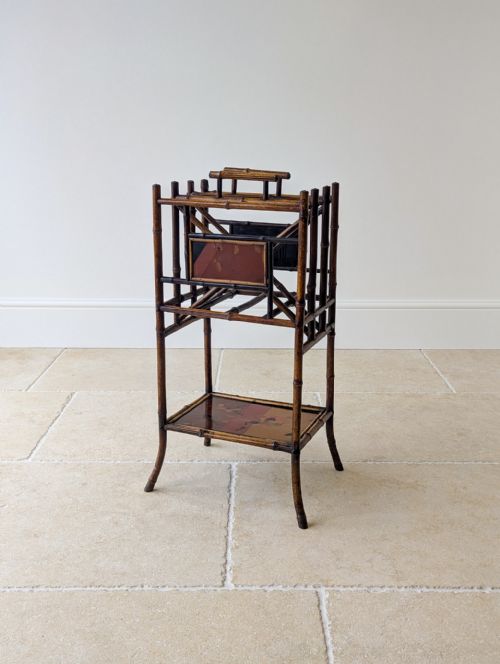
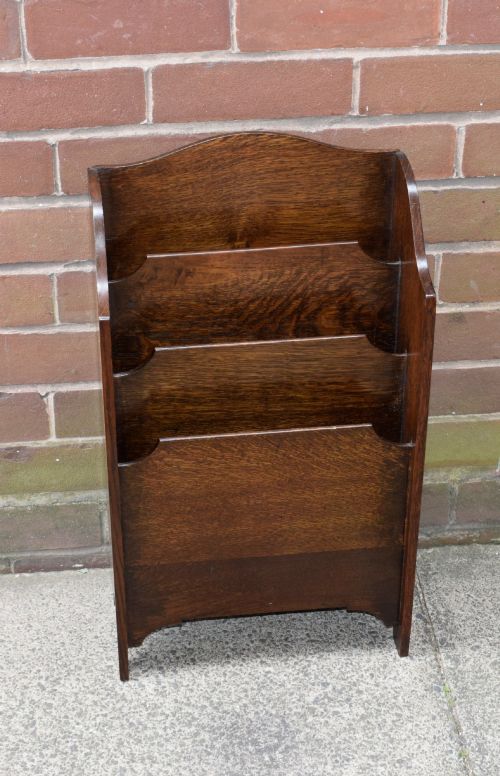
The selections span distinct eras, with Victorian and Regency examples appearing frequently alongside Edwardian and Arts and Crafts iterations. Alongside traditional wooden partitions, the listings include book troughs and bamboo racks designed for domestic reading spaces.
Materials and Construction
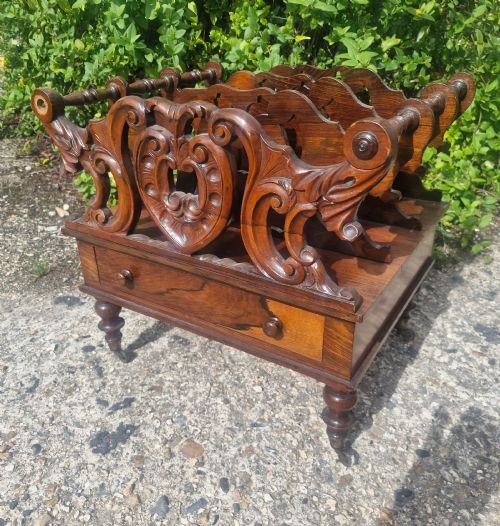
Cabinetmakers relied heavily on rich timbers such as mahogany, walnut, burr walnut, rosewood, and oak to construct the main frameworks and slatted partitions. These woods often feature turned supports, carved details, or delicate fretwork panels.
Alternative materials include bamboo for lighter Aesthetic Movement pieces, as well as copper and brass used in later Arts and Crafts designs. Joinery methods range from pegged joints and dovetails in Georgian pieces to bent bamboo and metal fastenings in later centuries.
Listings include timber varieties such as mahogany, walnut, burr walnut, rosewood, oak, and fruitwood alongside bamboo and ceramic elements.
Assessing Craft and Preservation
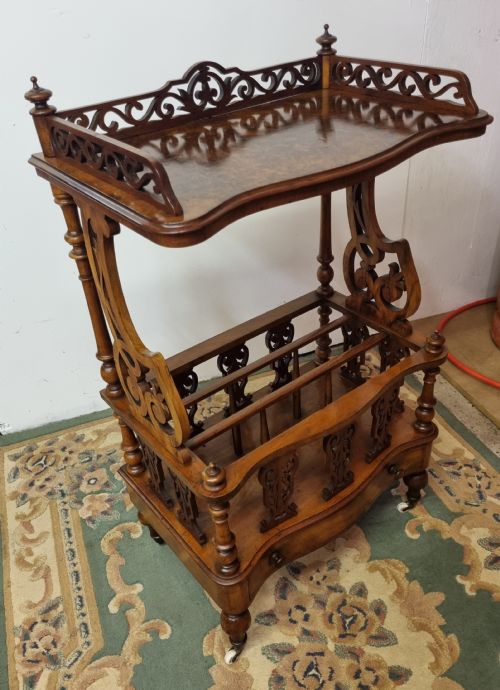
Quality rests upon the selection of timber veneers and the crispness of any turned or carved ornamentation. Fine burr walnut and figured mahogany display rich grain patterns that elevate simpler structural forms.
Integrity of the upright dividers and the stability of the base determine durability under daily use. Pieces featuring fitted lower drawers or integrated work tops demonstrate greater ambition in their original commission.
Edwards and Roberts
The Standing Magazine Holder Glossary
- Book Trough
- An open-topped receptacle designed to hold a small selection of books upright on a table or floor. They frequently appear in Arts and Crafts and Edwardian contexts.
- Aesthetic Movement
- A late nineteenth-century design style emphasising visual beauty over narrative subject matter. Pieces from this movement often utilise bamboo or exotic woods.
- Folio Stand
- A larger framework designed to hold oversized prints, maps, or unbound sheets. Regency examples often display grand scale and sophisticated joinery.
- Burr Walnut
- A highly prized timber veneer showing swirling growth patterns from tree knots. Cabinetmakers utilised it on high-status Victorian and Georgian pieces to create dramatic visual texture.
Standing Magazine Holder: Frequently Asked Questions
What is a Canterbury?
A Canterbury is a low, freestanding piece of furniture partitioned into vertical sections for holding newspapers, magazines, or sheet music.
Originating in the eighteenth century, these stands sit beside seating areas to keep reading materials tidy and accessible.
How were these holders used?
They served primarily to organise daily newspapers, periodicals, and sheet music in drawing rooms and libraries.
Many designs incorporated carrying handles or lower drawers to store writing accessories and small reading items.
Where should I place one?
These holders suit placement beside a favourite armchair, sofa, or desk where reading material accumulates.
Their compact footprints allow them to fit easily into narrow spaces while displaying timber grains or bamboo frames.
How do I identify periods?
Regency and George III pieces often display clean classical lines in solid mahogany, whilst Victorian examples frequently showcase burr walnut and serpentine shapes.
Edwardian and Arts and Crafts pieces tend toward simpler oak frames, occasional copper details, or lighter bamboo structures.