



Brown Wooden Paper Stand
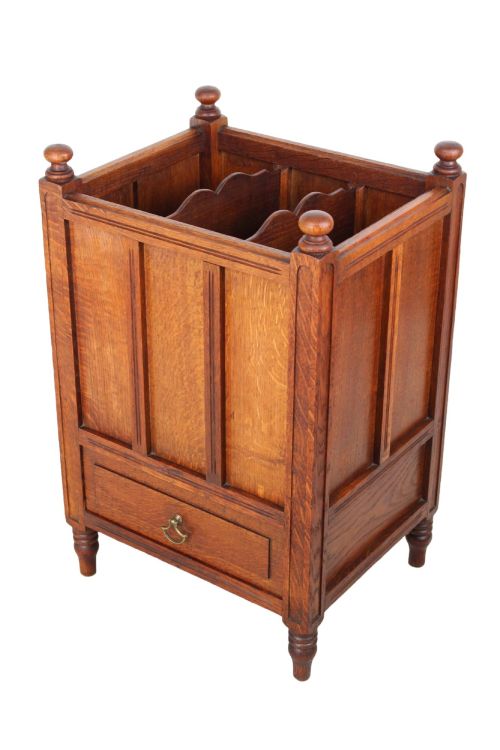
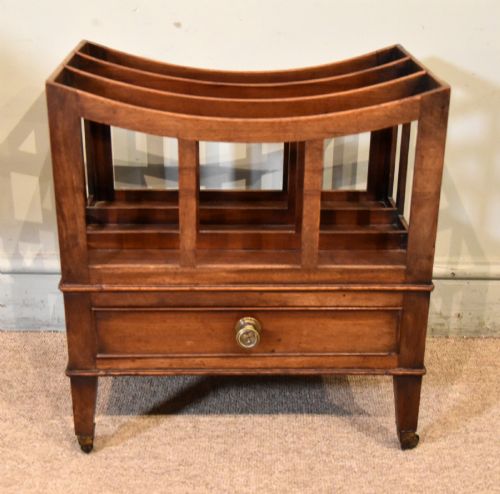
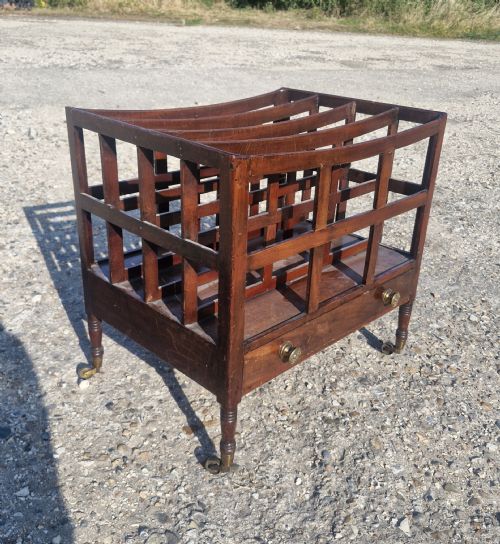
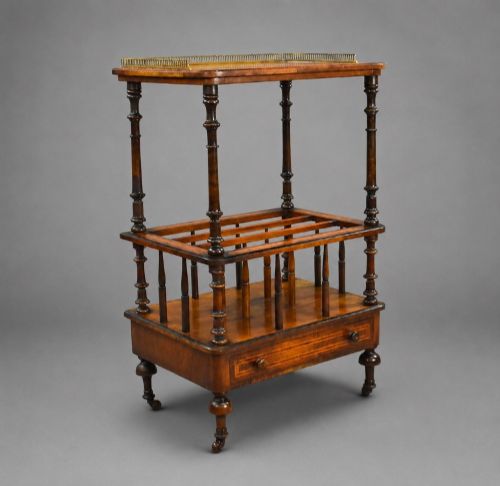
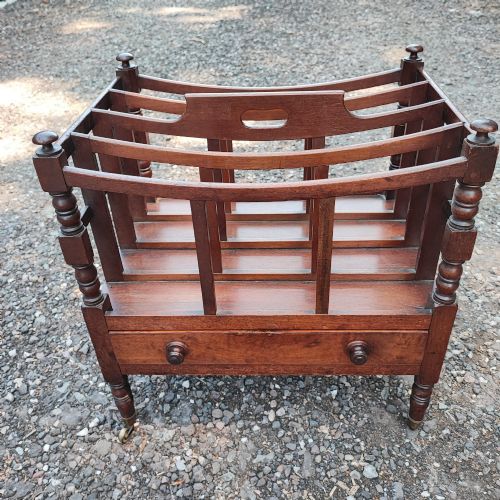
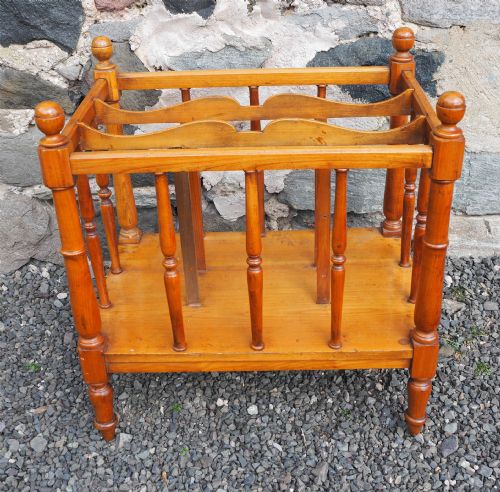
A brown wooden paper stand organises daily journals and folios, bringing period timber and practical shelving to a room.

Brown Wooden Paper Stand
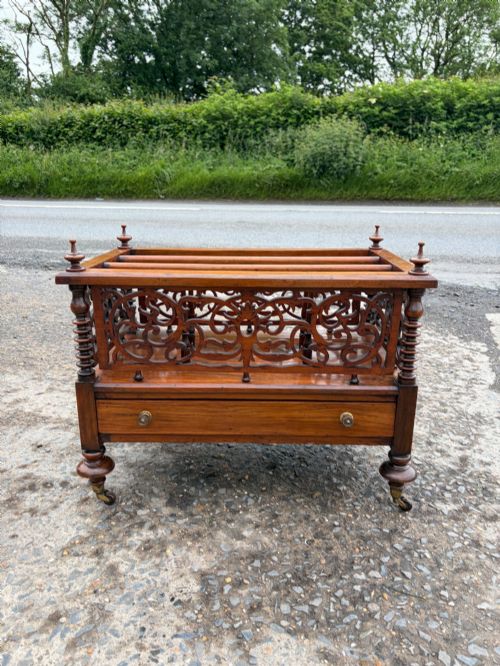
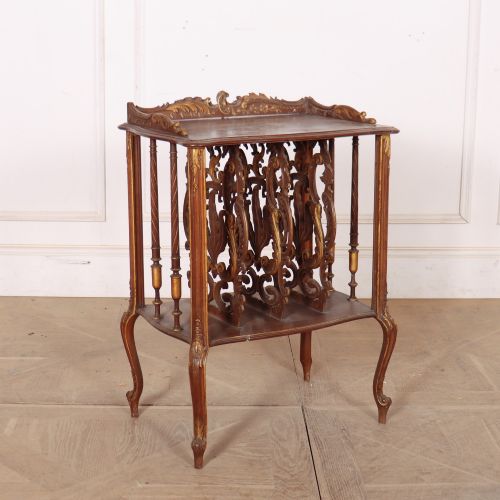
A brown wooden paper stand encompasses traditional canuterburys, music cabinets, and magazine racks designed to hold folios and periodicals. These pieces appear across the Georgian, Regency, Victorian, and Edwardian eras, reflecting changing domestic habits in handling daily reading.
Mahogany and walnut form the core of what you encounter here, alongside oak, rosewood, and fruitwood. Makers constructed these stands with tiered divisions, lower drawers, and carved or inlaid surfaces to suit studies and drawing rooms.
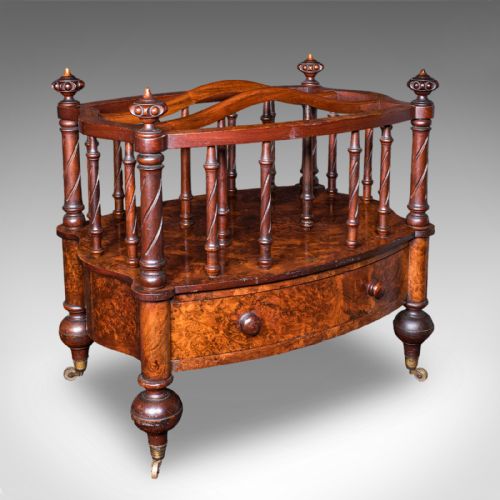
The version you meet most often on this page is the nineteenth-century mahogany or burr walnut canterbury. Such pieces combine upright slatted divisions for papers with a single low drawer beneath.
Materials and construction
Cabinet makers utilised dense hardwoods such as mahogany, walnut, and rosewood, often selecting burr veneers for decorative grain patterns on top surfaces and drawer fronts. Brass details appear on castors, hinges, and handles, supporting mobility and daily use.
Joinery methods rely on precise mortise and tenon framing for the upright divisions, whilst turnery shapes the supporting legs and carrying handles. Inlaid banding in satinwood or ebony frequently decorates the borders of top shelves and panels.
Victorian readers trusted these sturdy wooden racks to keep their daily broadsheets from fluttering away in the drafty drawing room.
Distinctions in quality
Quality rests upon the selection of timber figures and the crispness of carved or inlaid details. Substantial burr walnut veneers and finely turned spindles distinguish finer workshop output from simpler utilitarian pieces.
Structural integrity reveals itself in the rigidity of the slatted partitions and the smooth operation of any lower drawer. Pieces retaining original brass castors and unblemished timber surfaces represent the higher tier of surviving examples.
Howard and Sons of London
The Brown Wooden Paper Stand Glossary
- Canterbury
- A low stand featuring vertical partitions for holding sheet music, newspapers, or books, often fitted with a drawer below. Originating in the eighteenth century, the form remained popular through the Victorian and Edwardian periods.
- Burr walnut
- A figured timber taken from the excrescences of walnut trees, prized for its complex swirling grain patterns. Cabinet makers applied it as a veneer on prominent surfaces of nineteenth-century furniture.
- Music cabinet
- An enclosed piece of furniture with multiple shallow drawers or shelves designed to store sheet music. These stands frequently date from the Edwardian era and often feature glazed or panelled doors.
- Inlay
- A decorative technique where contrasting woods or metals are fitted into recesses carved into the primary timber surface. Lines of satinwood and ebony frequently define the borders of Victorian and Georgian pieces.
- Folio stand
- A piece designed to hold large loose sheets of paper, prints, or maps upright between adjustable or fixed frames. Examples often date from the Georgian and Regency periods.
Brown Wooden Paper Stand: Frequently Asked Questions
What is a brown wooden paper stand used for?
These stands serve to organise newspapers, magazines, and sheet music within living spaces and studies. The partitioned sections keep folios upright and accessible.
Historically, they sat beside desks or armchairs to keep daily reading materials tidy and close at hand.
How do I date a mahogany canterbury?
Dating relies on stylistic clues and timber choice, moving from clean Regency lines to more ornate Victorian burr walnut veneers. Turned legs, brass castors, and inlay styles also help pinpoint the period.
Earlier pieces from the Georgian era tend to feature simpler, robust mahogany framing without extensive fretwork.
Can these stands hold modern magazines?
The slatted divisions accommodate standard modern periodicals and newspapers quite easily. Many nineteenth-century formats match the proportions of contemporary publications.
Measuring the width of the internal partitions ensures larger editions fit comfortably within the slots.
Where should I place a music cabinet?
These cabinets suit studies, living rooms, and hallways where extra surface space and subtle storage are required. Their compact footprint allows them to fit neatly beside seating.
Keeping them away from direct heat sources protects the polished timber and veneer surfaces over time.