


Standing Curio Cabinet
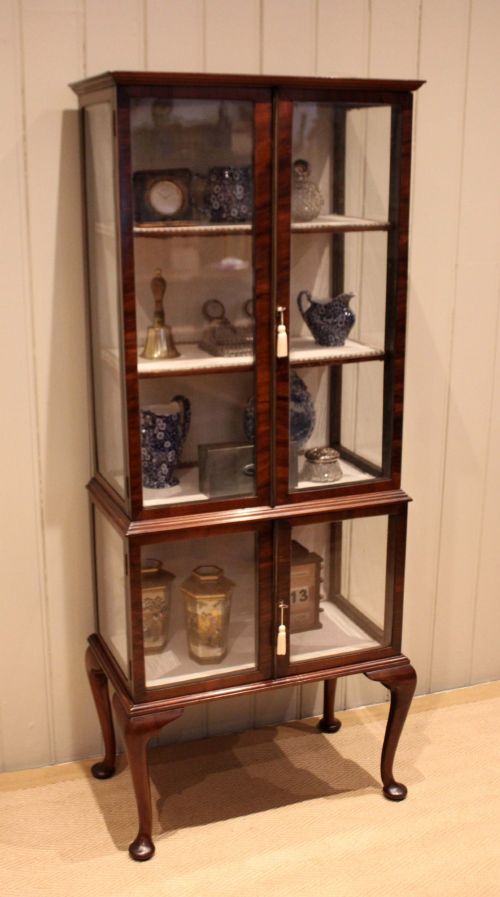
A standing curio cabinet holds small treasures and collections behind glazed panels, bringing vertical presence and ordered display to a room.
Standing Curio Cabinet
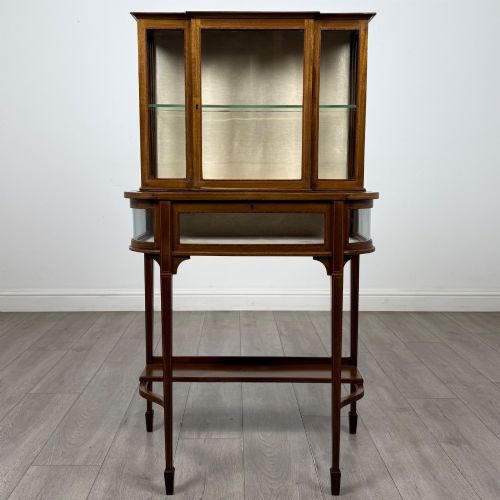
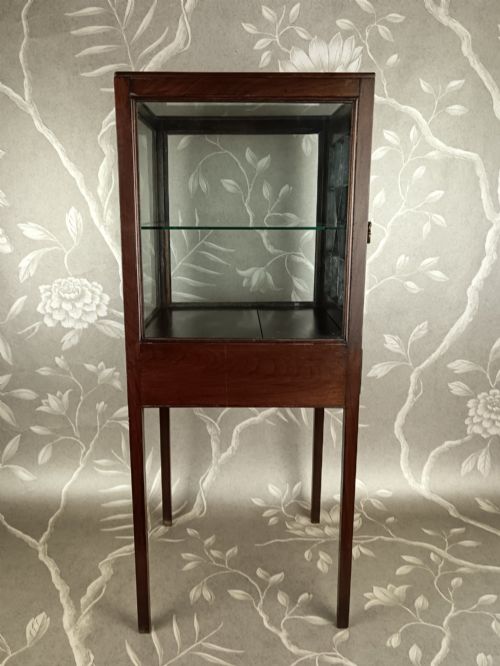
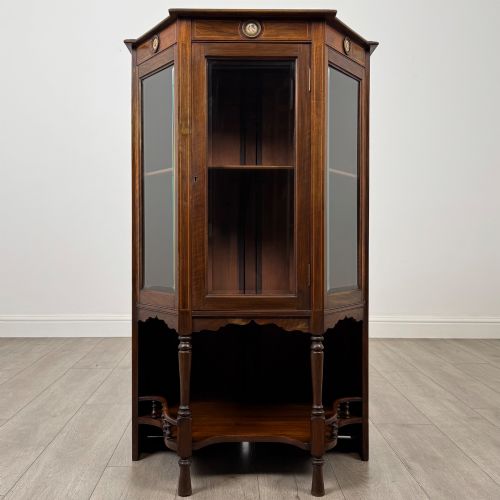
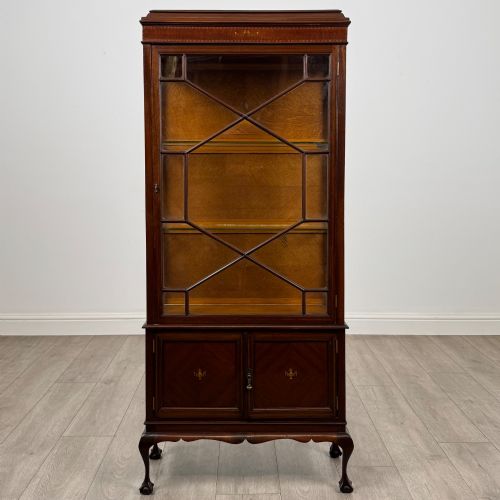
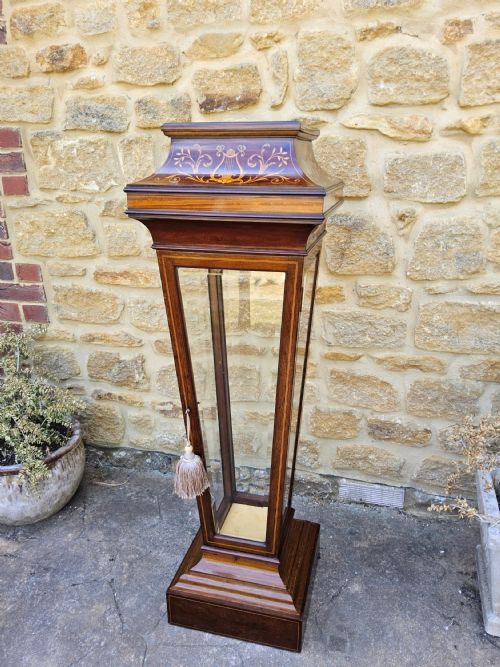
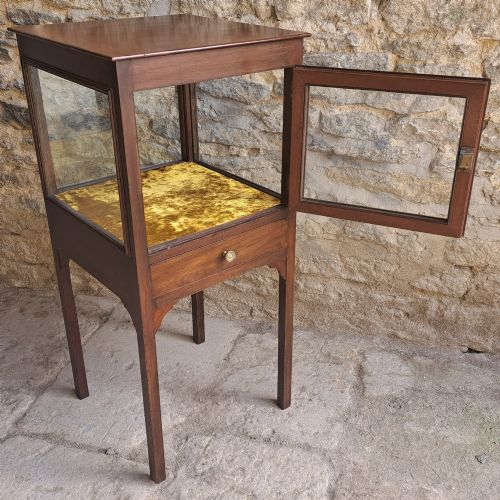
A standing curio cabinet is a piece of furniture designed specifically to exhibit precious objects, porcelain and curiosities within a glazed enclosure. When searching for a standing curio cabinet, buyers encounter a wide variety of forms, from tall upright towers to pedestal stands and corner units.
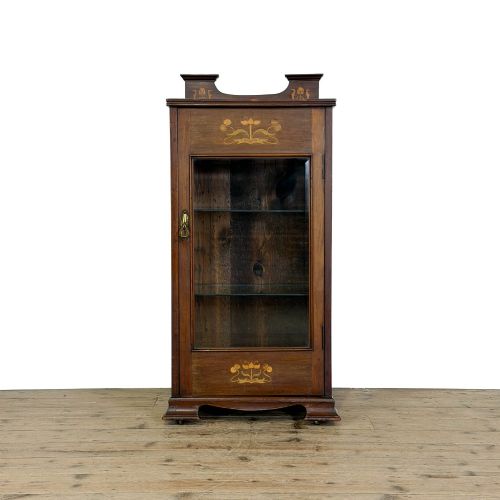
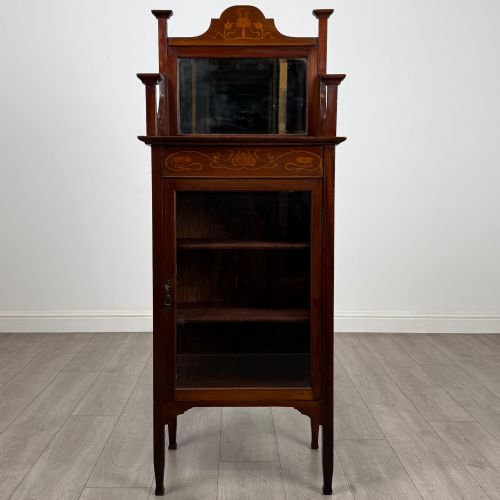
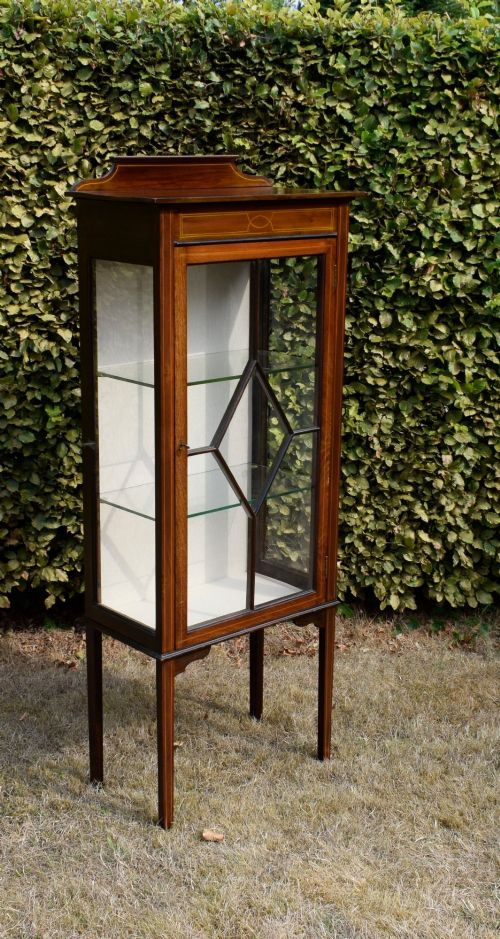
The Edwardian era provides many of the examples seen on this page, often executed in mahogany with delicate inlay and satinwood crossbanding. These pieces reflect a domestic desire to showcase collected items at eye level while occupying a minimal footprint on the floor.
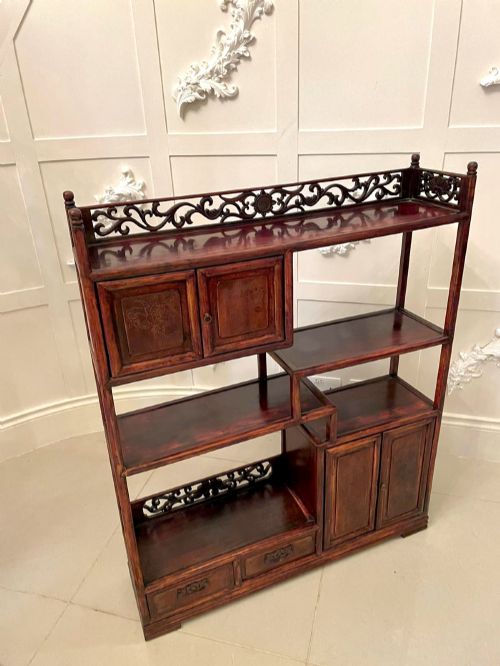
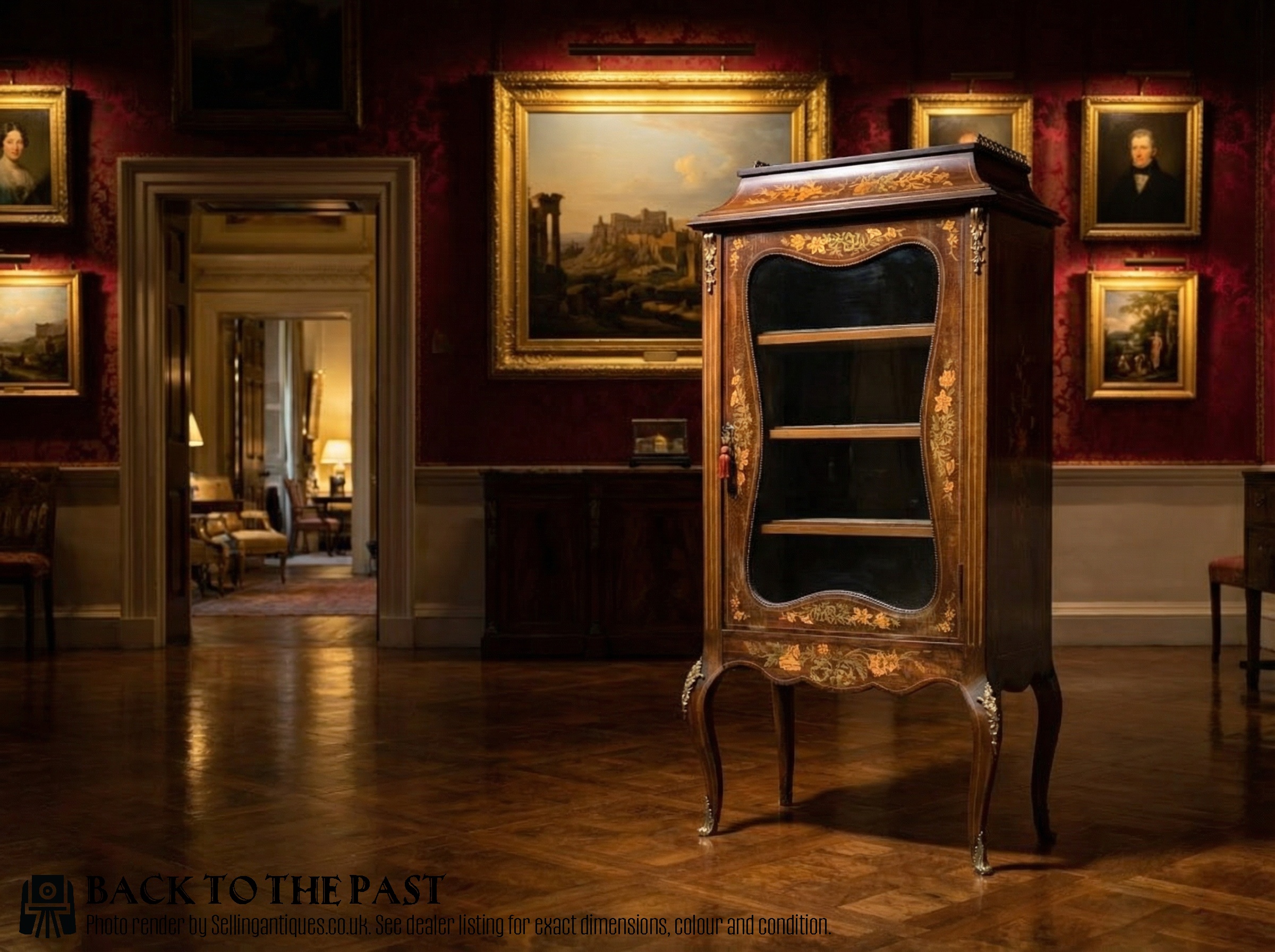
Earlier pieces from the Victorian and Georgian periods tend to use dense hardwoods and more restrained architectural lines. Alongside these, occasional Continental and Asian examples bring giltwood, ebonised finishes, and carved details to the selection.
How they were made
Cabinet makers utilised solid and veneered timbers, predominantly mahogany, alongside exotic woods like satinwood and kingwood for decorative contrast. Structural stability was essential to support heavy glass doors and multiple internal display shelves.
Surface ornamentation involved fine stringing, parquetry, and painted panels, particularly in Edwardian and Sheraton revival pieces. Brass mounts, ormolu, and parcel-gilt details further enhanced the visual weight of formal vitrines and cabinet frames.
Materials range from traditional mahogany and satinwood to giltwood, ormolu, and Chinese hardwood.
What varies in quality
The refinement of the timber selection and the precision of the inlay set superior cabinets apart from standard production. Cabinet makers who invested time in matching wood grain and executing delicate crossbanding achieved a more harmonious facade.
Glazing quality and the construction of the door frames dictate the overall elegance of the piece. Fine mouldings, well-fitted original glass, and integrated brass hardware demonstrate superior craftsmanship across Victorian and Edwardian examples.
Waring and Gillow
The Standing Curio Cabinet Glossary
- Vitrine
- A glass-fronted display cabinet used for showing porcelain, silver, and curiosities. These cabinets often feature glazed sides to let light reach the objects from multiple angles.
- Bijouterie cabinet
- A shallow glass-topped display case designed specifically for jewellery, medals, and small trinkets. They frequently stand on slender legs and lift open from the top.
- Inlay
- A technique where pieces of contrasting wood, shell, or metal are inserted into depressions in the base wood to form a pattern. Sheraton revival pieces often use this to create neat geometric borders.
- Satinwood
- A lustrous, hard timber of a yellowish-gold colour utilised for banding and decorative panels. It provides a bright contrast against darker woods like mahogany.
- Ormolu
- Gilded bronze mounts applied to furniture for decorative effect. They are typically found on continental European cabinets and grander Victorian vitrines.
Standing Curio Cabinet: Frequently Asked Questions
What is the difference between a vitrine and a curio cabinet?
A vitrine typically refers to a glass-sided display case intended for porcelain and decorative objects, often with shelves. A curio cabinet serves a similar purpose but historically describes a piece meant for smaller, miscellaneous collectors' items.
Both terms describe upright display furniture, though vitrine frequently implies a more formal or continental aesthetic while curio cabinet covers a broader range of styles.
Where should I place a standing curio cabinet?
These cabinets suit reception rooms, drawing rooms, or studies where their glazed panels can protect objects from dust while remaining visible. Corner models fit neatly into unused angles, saving floor space in smaller rooms.
Keep them away from direct sunlight to protect delicate interior fabrics and organic materials stored inside.
How do I identify an Edwardian display cabinet?
Edwardian cabinets, dating from around 1901 to 1910, often feature Sheraton revival influences such as light mahogany construction, satinwood crossbanding, and slender tapering legs. The inlay work tends to be neat and symmetrical, reflecting the lighter aesthetic of the early twentieth century.
They frequently incorporate glazed doors with intricate tracery or astragals framing the glass.
Were these cabinets used for books?
Some tall glazed cabinets double as bookcases or were specifically built as glazed bookcases on stands. However, standard curio cabinets and vitrines feature lighter internal shelving designed for ceramics and glass rather than heavy volumes.
Checking the depth of the shelves helps determine whether a piece was intended for books or lighter display objects.