



Inlaid French Vitrine
An inlaid french vitrine brings together fine cabinetmaking, visible glass display, and meticulous detail to showcase prized ornaments.
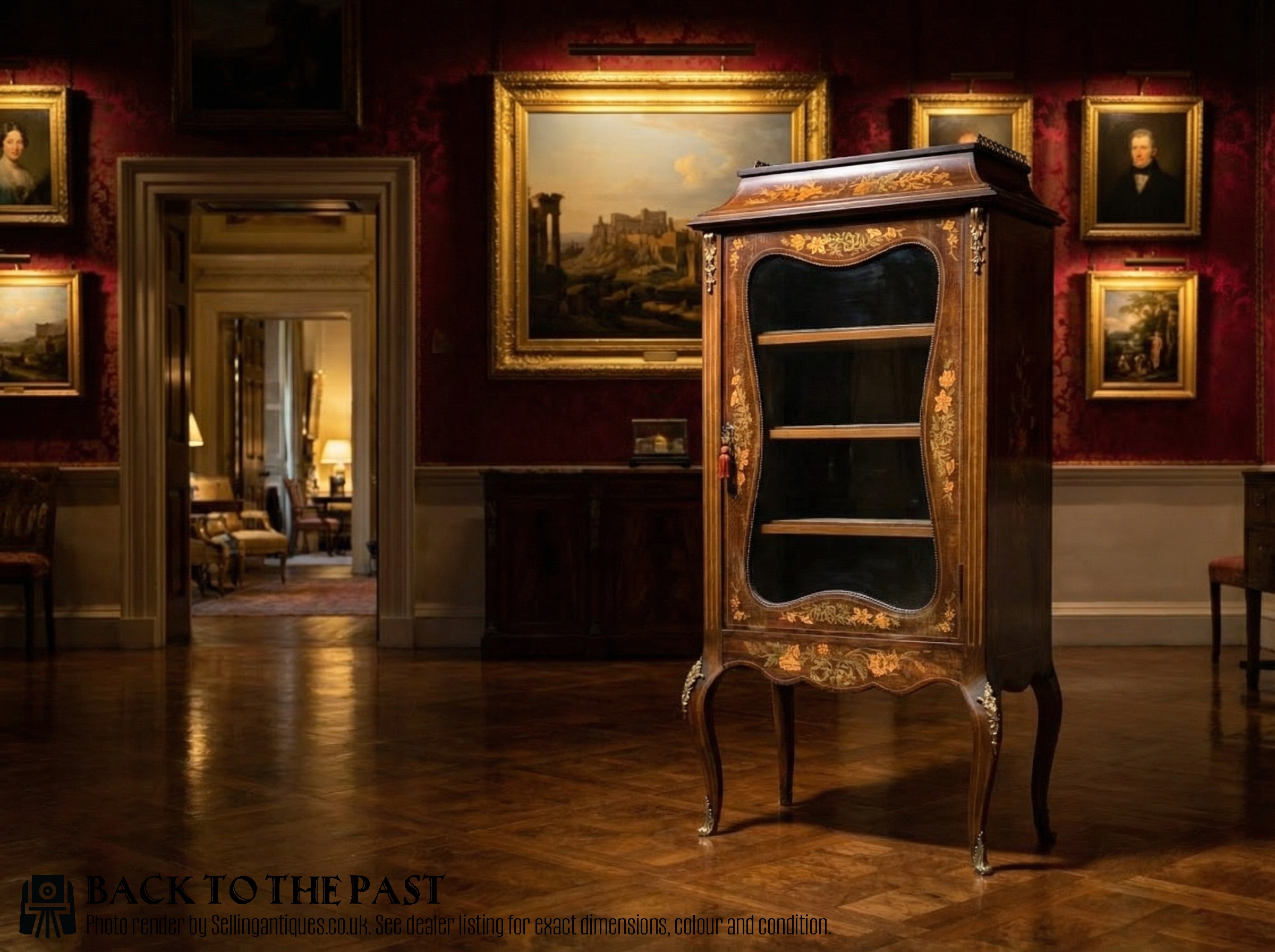
Inlaid French Vitrine
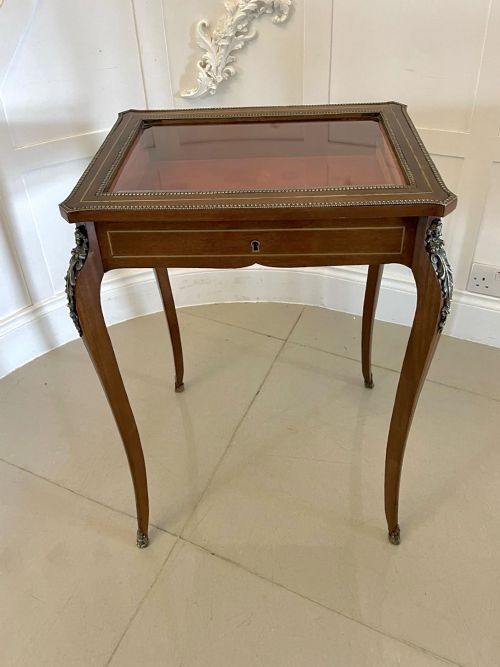
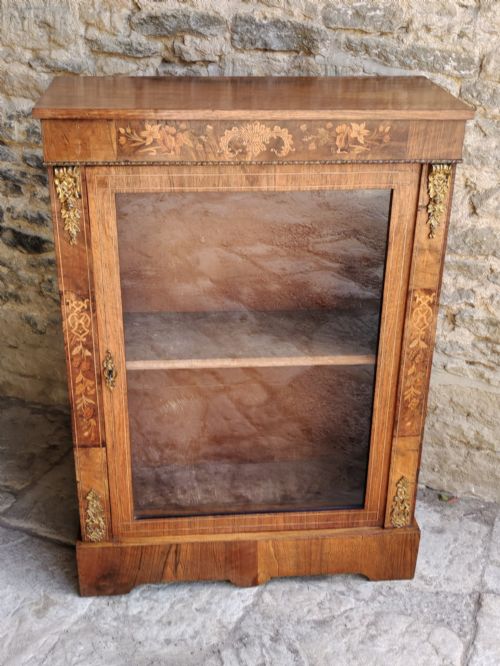
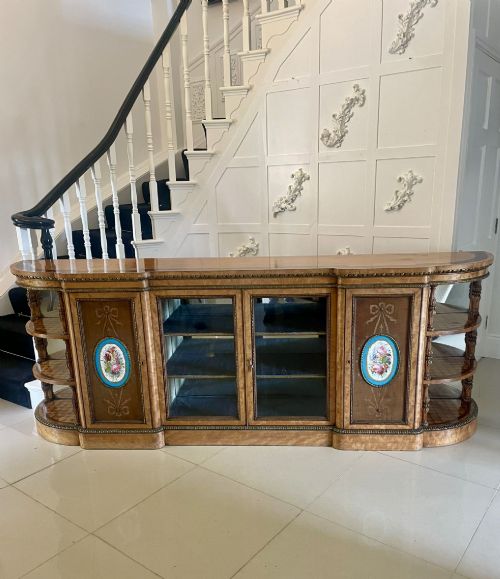
An inlaid french vitrine combines glazed display space with decorative surface patterns, designed primarily to exhibit small ornaments and precious objects. The pieces appearing here span the nineteenth century and the Edwardian era, encompassing freestanding display cabinets, corner cupboards, and lower pier cabinets alongside glazed tables.
Most examples lean towards revival aesthetics, notably Louis XV and Louis XVI styles, incorporating serpentine fronts or bow fronts. Alongside dedicated vitrines, the selection includes related forms such as bijouterie cabinets and credenzas sharing the same decorative vocabulary.
Materials and construction
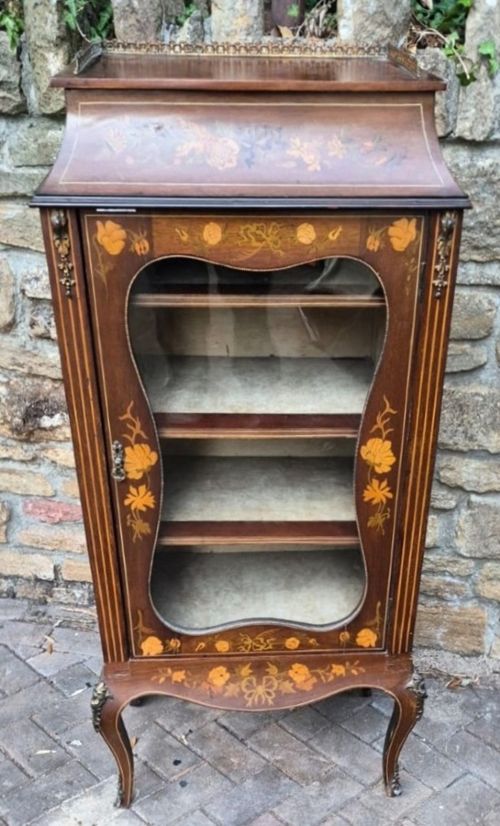
Cabinetmakers utilised structural timbers like mahogany, walnut, and kingwood, often overlaid with intricate marquetry or contrasting veneers such as satinwood. Ormolu mounts in cast brass provide structural borders and decorative highlights around the glazed panels.
Boullework appears frequently, integrating tortoiseshell and brass inlay into ebonised wood surfaces. Individual components are joined with precision, allowing delicate brass stringing and floral marquetry to follow curved serpentine lines.
Inlaid French Vitrine Retail Price Guide 2026
Typical asking prices for inlaid french vitrine among the pieces listed under this phrase on Sellingantiques today, from the lower quarter to the upper quarter. They describe what is for sale here now, not the wider market.
The listings combine nineteenth century and Edwardian periods, utilising materials including mahogany, kingwood, ormolu, tortoiseshell, and glass.
Distinctions in quality
Quality rests upon the crispness of the marquetry cutting and the integration of the ormolu mounts. Finer examples display meticulous grain matching and complex floral motifs that follow the exact contours of the timber.
The weight and finish of the cast ormolu mounts distinguish superior work from simpler production. Better pieces maintain structural integrity across curved glass doors and complex serpentine forms without timber warping.
The Inlaid French Vitrine Glossary
- Vitrine
- A glass-fronted cabinet designed for displaying fine objects and porcelain. The form prioritises visibility through side and front glazing.
- Bijouterie table
- A glass-topped display table intended for holding small valuable items and jewellery. These pieces often feature hinged lids.
- Marquetry
- Decorative patterns formed by fitting together small pieces of veneer into wooden surfaces. Craftsmen utilise various coloured woods to create floral or geometric designs.
- Ormolu
- Gilded bronze mounts applied to furniture edges and corners. The technique provides metallic contrast against dark timbers.
- Boullework
- A precise form of marquetry using brass and tortoiseshell inlaid into dark wood grounds. Developed in France, it creates a reflective, patterned surface.
Inlaid French Vitrine: Frequently Asked Questions
What is an inlaid french vitrine used for?
These glazed cabinets serve to house and display collections of porcelain, small silver, and decorative objects while protecting them from dust.
Their transparent panels and mirrored interiors allow light to circulate around fragile items, making them traditional centrepieces in drawing rooms.
How do I identify a revival style?
Revival pieces borrow decorative motifs from earlier royal French periods, particularly the flowing curves of Louis XV or the geometric symmetry of Louis XVI.
Examining the specific marquetry patterns and ormolu mounts helps reveal which historical design vocabulary the cabinet interprets.
Where should I place a vitrine?
Position these cabinets away from direct sunlight to protect delicate wooden veneers and interior linings from fading over time.
Because many examples feature glass on multiple sides, placing them near a light source enhances the visibility of displayed items.