

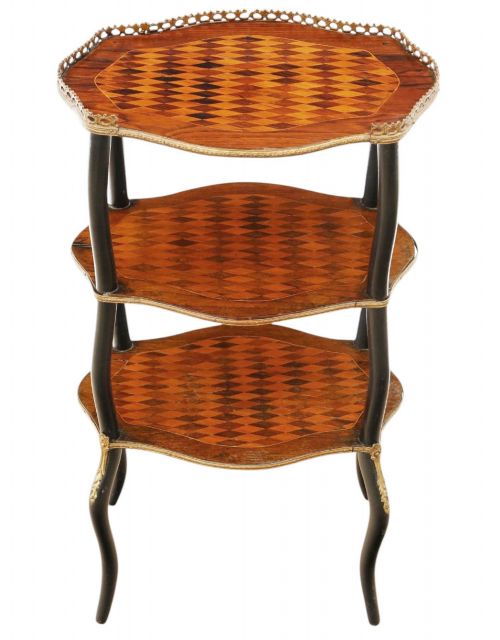
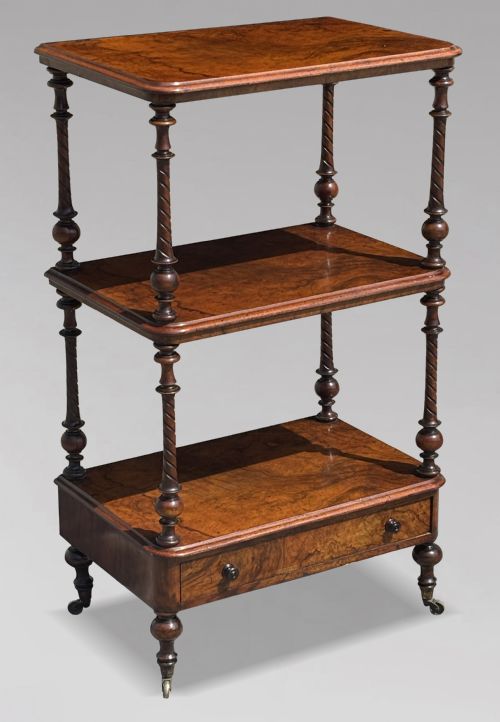
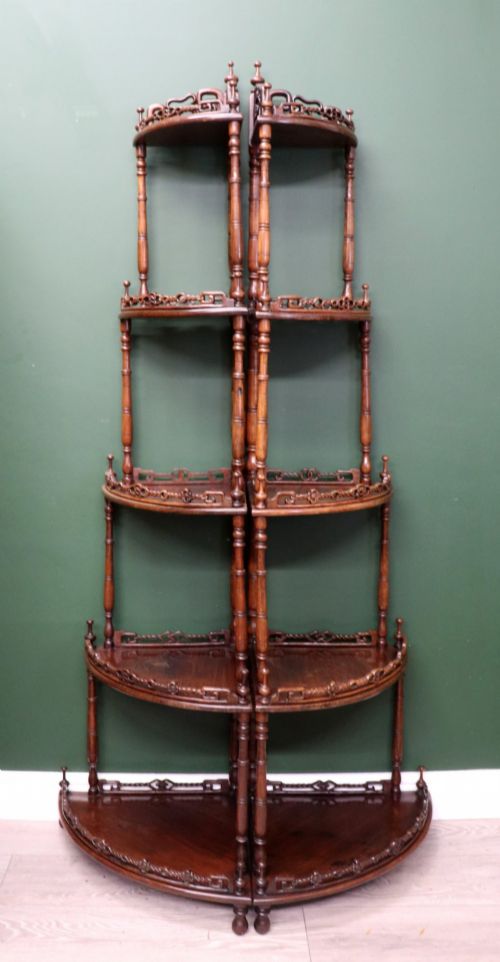
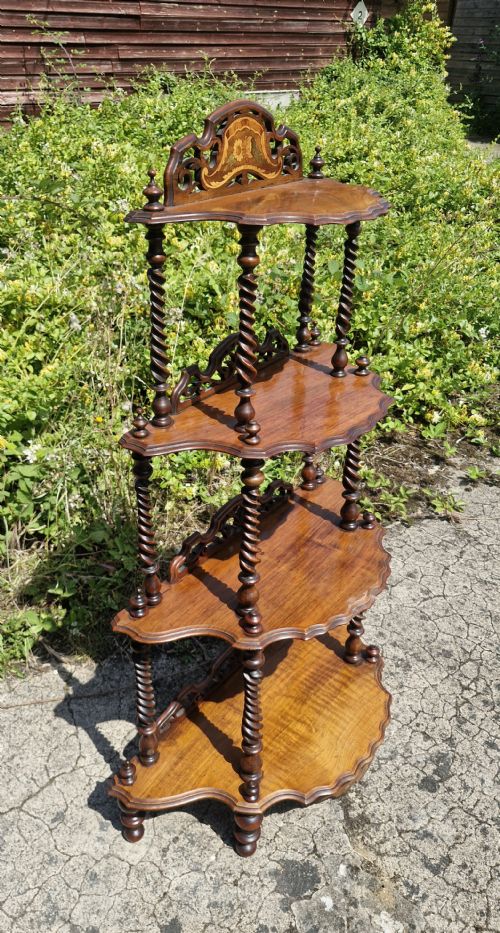
Standing Corner Shelf
A standing corner shelf is a practical tier of display surfaces designed to turn unused room angles into storage.
Standing Corner Shelf
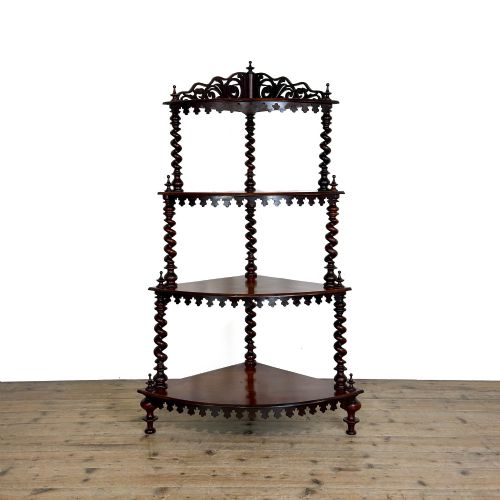
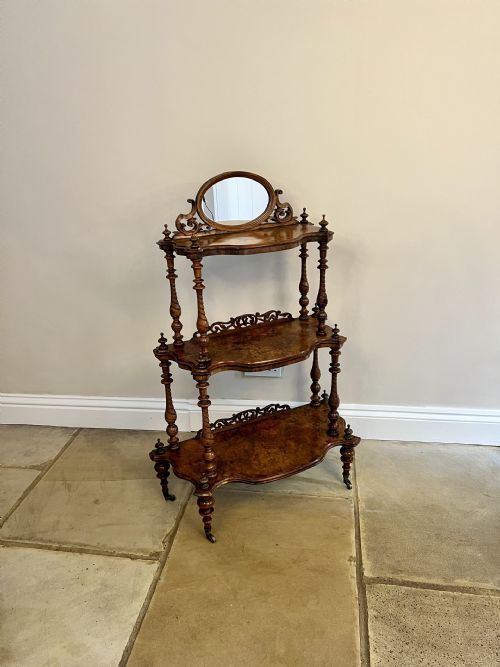
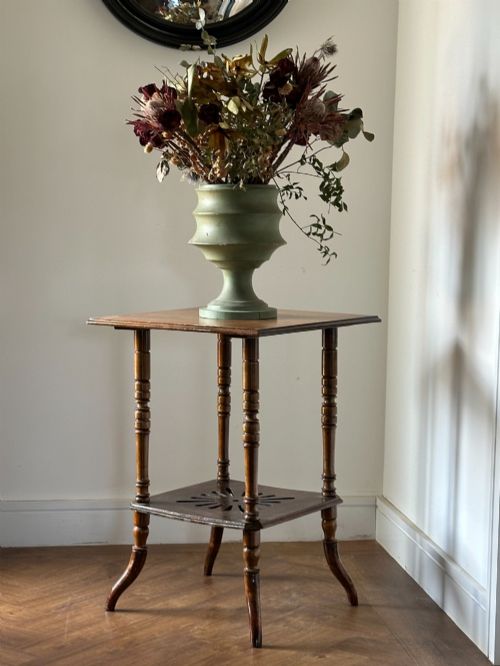
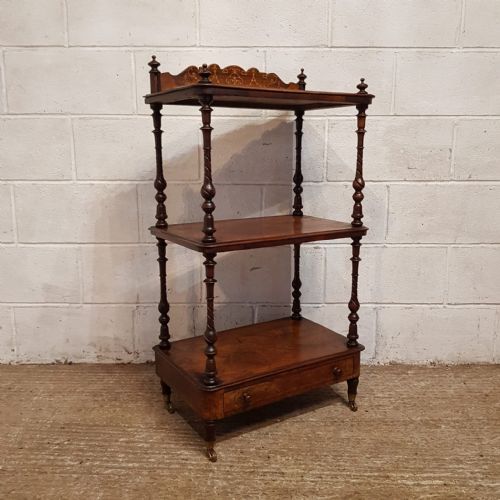
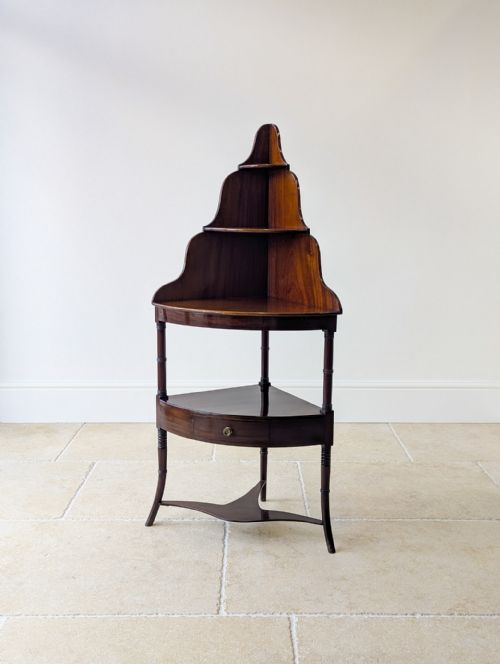
A standing corner shelf utilises vertical space in rooms by fitting snugly into right angles, offering multiple tiers for display without crowding floor space. When exploring a standing corner shelf, buyers frequently encounter tiered Victorian mahogany and walnut examples alongside lighter bamboo and inlaid pieces.
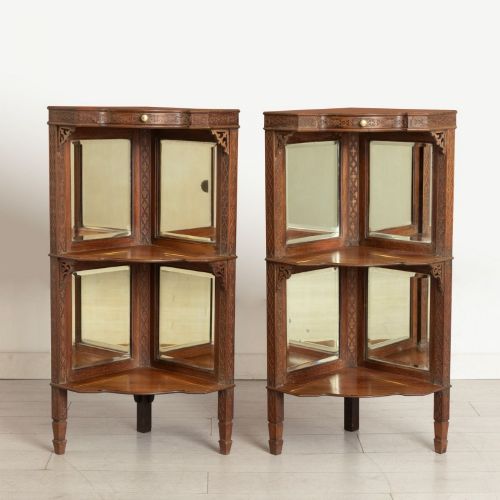
The historical record on this page draws primarily from the Victorian and Georgian periods, spanning multiple tiers of shelving or combined corner cabinet storage. These pieces range from simple pine and iron stands to elaborate burr walnut structures designed to showcase ornaments and books.
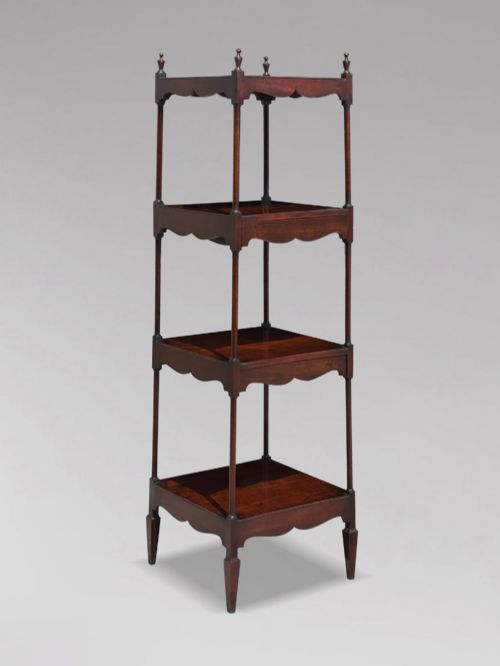
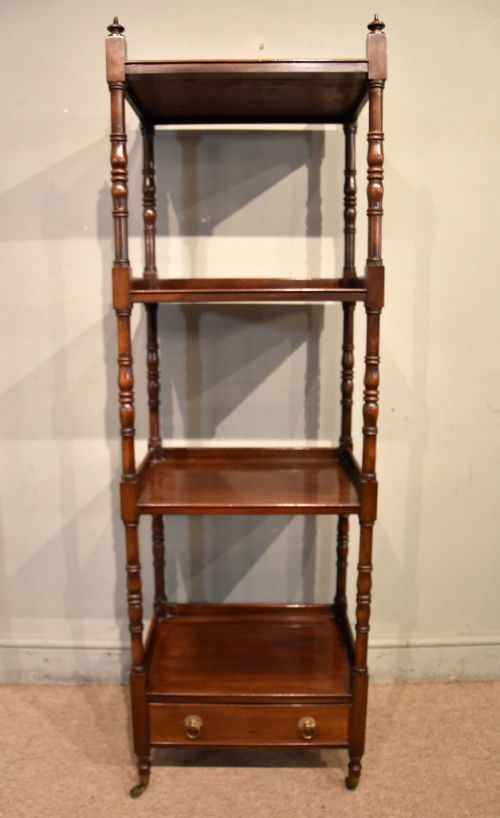
Makers and workshops of the nineteenth century utilised diverse woods to construct these angled units, resulting in varying heights and tier counts. The selection includes multi-tiered etageres and corner cabinets that serve both functional storage and decorative display roles.
Judging quality and craftsmanship
Quality reveals itself in the selection of timber veneers and the precision of the joinery connecting the shelves to the upright supports. Superior examples display carefully matched burr walnut or figured mahogany, while simpler utilitarian pieces rely on plain pine or painted iron.
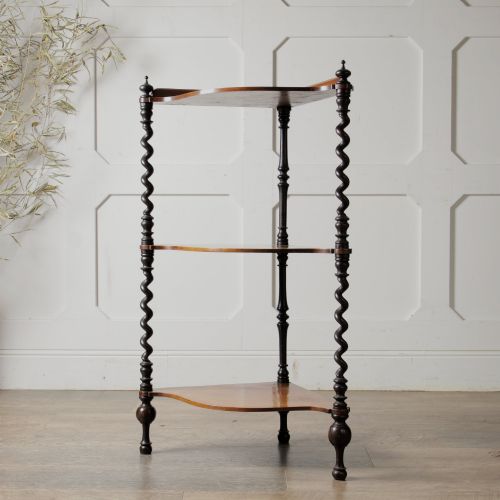
The crispness of turned wood columns, the integrity of inlaid parquetry, and the stability of stacked tiers distinguish finer workshop production from standard commercial output. Original hardware, balanced proportions, and well-fitted cabinet doors indicate higher tier manufacturing standards.
One particularly utilitarian entry on this page serves plants as an iron pan stand.
Gillows·Edwards & Roberts
The Standing Corner Shelf Glossary
- Whatnot
- An open shelved piece of furniture designed for displaying ornaments, books, or small objects. These tiered stands gained popularity during the Georgian and Victorian eras.
- Etagere
- A piece of furniture consisting of a series of open shelves for displaying small articles. They often feature delicate supports and decorative fretwork.
- Burr walnut
- Wood taken from the warted growth on a walnut tree, yielding highly decorative swirling grain patterns. Cabinetmakers used veneers of this material on prominent surfaces.
- Barley twist
- A type of turning resembling a spiralling rope or barley sugar stick. This decorative woodworking technique appears frequently on nineteenth-century supports and legs.
- Parquetry
- Mosaic woodwork used for floors and cabinet surfaces, constructed from geometric blocks of coloured wood. It creates contrasting patterns on tabletops and shelf borders.
Standing Corner Shelf: Frequently Asked Questions
How do I style a corner shelf?
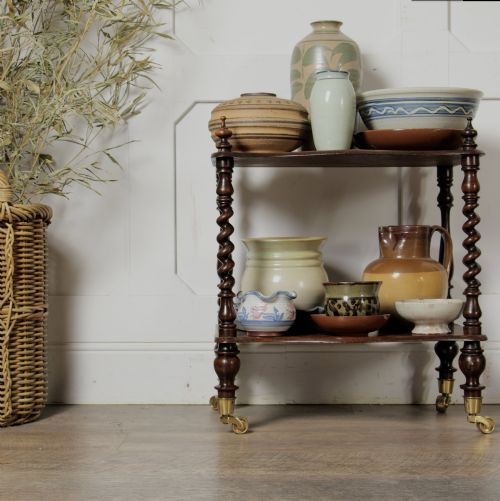
Balance heavier items on lower tiers to maintain visual stability while placing lighter ceramics or books higher up. Leave some open space on each shelf to let the timber grain or turned supports remain visible.
Vary the height of objects displayed on adjacent tiers to prevent a uniform appearance. Combining small plants with framed photographs or decorative boxes creates a layered display.
Are these shelves stable enough for heavy books?
Hardwood versions constructed from mahogany or walnut offer sturdy support for moderate collections of books. Multi-tiered structures distribute weight across several vertical uprights and back supports.
Lighter constructions made from bamboo or slender turned wood suit decorative ornaments better than heavy volumes. Checking the joinery where shelves meet the corner uprights ensures the piece handles intended loads safely.
How do I identify a Victorian corner unit?
Victorian examples frequently feature dark timbers like walnut and rosewood, often enhanced with barley twist columns or burr walnut veneers. These pieces reflect the period's preference for ornate display furniture.
Earlier Georgian pieces tend to exhibit simpler architectural lines and mahogany construction without heavy Victorian embellishments. Examining the secondary woods and construction techniques helps confirm the manufacturing era.
Where should I place a corner stand?
Position these units in empty room corners to draw the eye outward and make efficient use of dead space. They fit well in living rooms, hallways, or bedrooms where floor space is limited.
Keep wooden pieces away from direct heat sources and strong sunlight to prevent timber warping or veneer cracking. Adequate clearance allows cabinet doors on hybrid units to open fully without obstruction.