
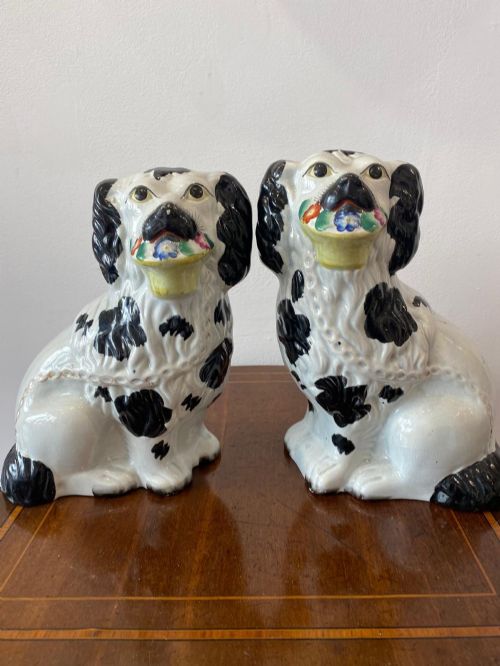


Staffordshire Wally Dogs
Staffordshire wally dogs are ceramic spaniel figures that once stood on Victorian mantelpieces, bringing cheerful character to any room.
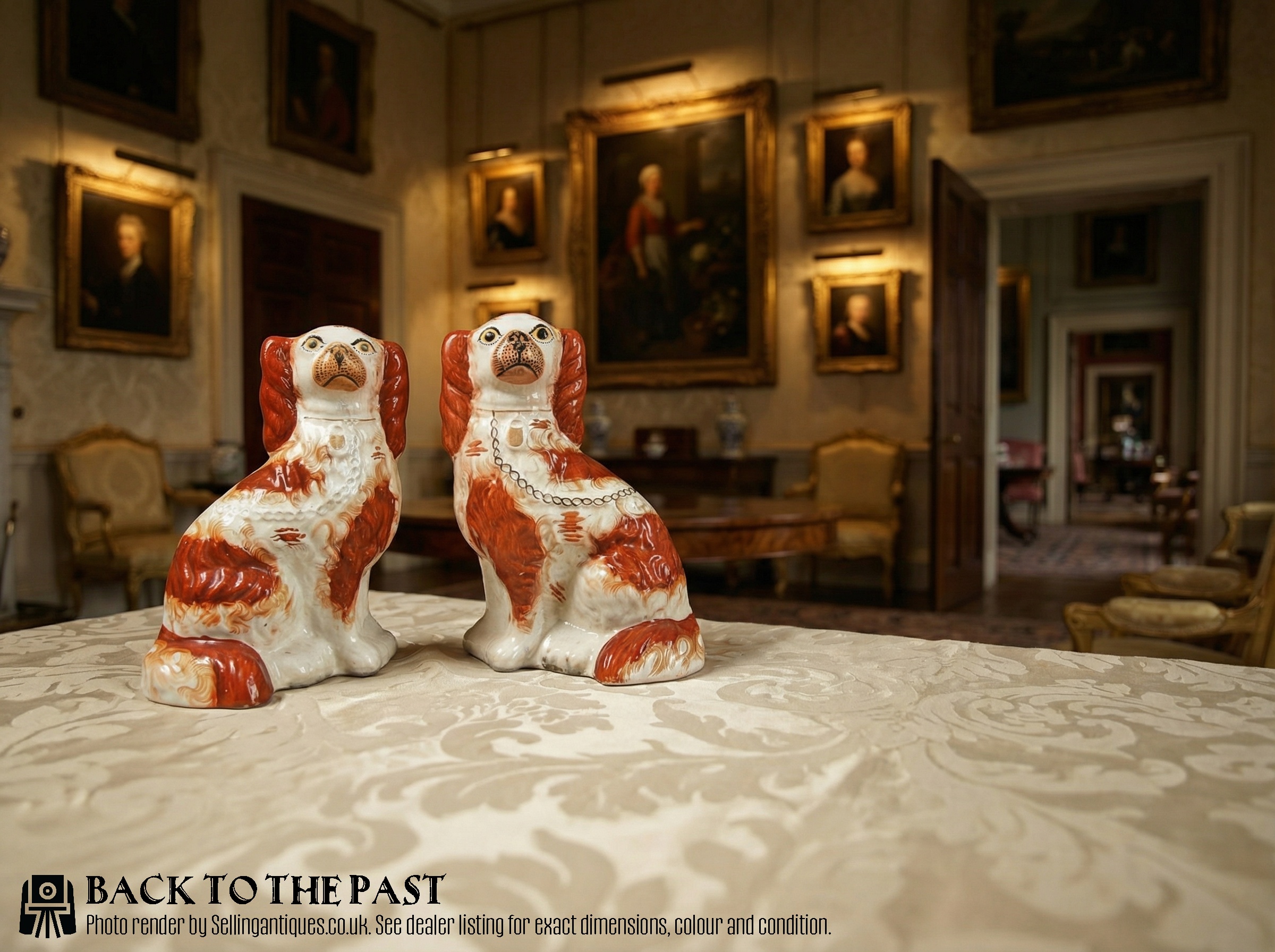
Staffordshire Wally Dogs
Staffordshire wally dogs are ceramic spaniel figures modelled during the nineteenth century, most commonly appearing as symmetrical pairs intended to guard the fireplace hearth. These decorative figurines originate predominantly from the Victorian period, spanning decades from eighteen sixty through to nineteen hundred.
The entries on this page display traditional English pottery forms, recording spaniels seated upright with alert expressions and painted details. Buyers encounter white glazed bodies, copper lustre finishes, and distinctive black and white markings across these Victorian objects.
Makers produced these ceramic figures in varying sizes, from smaller domestic ornaments up to grand fifteen inch examples designed for prominent display. Most listings show pairs, though single figures and small collections also surface.
How they were made
Potters shaped these earthenware figures using ceramic moulds before applying a smooth glaze and firing the pieces in kilns. Artisans then hand painted surface details onto the hardened ceramic body.
Some nineteenth century spaniels feature separate legs modelled beneath the glaze, offering extra realism for the vigilant hearth.
What varies in quality
The presence of specialised finishes, such as rich copper lustre, separate legs, or original glass eyes, elevates the distinction of a pair. Larger scale figures and well matched pairs command greater presence on the mantelpiece.
Beswick
The Staffordshire Wally Dogs Glossary
- Earthenware
- Porous pottery fired at lower temperatures, serving as the standard ceramic body for nineteenth century Staffordshire figures. Potters glazed this material to seal the surface before adding enamel paint.
- Comforter spaniels
- Victorian ceramic dogs traditionally placed on either side of the fireplace to watch over the household. These figures represent the quintessential English traditional style of domestic animal ornament.
- Copper lustre
- A metallic glaze technique producing a reflective, coppery sheen across the ceramic surface. This finish appears on specific nineteenth century Staffordshire dog pairs.
- Gilt
- A thin layer of gold leaf or gold paint applied to decorate the collars, lockets, and chains of the spaniel figures. It provides a bright contrast against white or painted ceramic bodies.
- Glass eyes
- Inserted glass components that replace painted eyes to give the ceramic spaniel a lifelike gaze. These occur on select larger antique figures from the later Victorian decades.
Staffordshire Wally Dogs: Frequently Asked Questions
Where did these dogs sit?
Victorian households traditionally placed these ceramic spaniels on the mantelpiece above the fireplace, facing inward toward each other. They served as decorative companions for the hearth.
Today, owners continue to display them on mantelpieces, bookshelves, and side tables in traditional English interiors.
Why are they called wally dogs?
The term wally dog is a traditional Scottish and northern English colloquialism for ceramic mantelpiece ornaments. It distinguishes these pottery figures from live animals.
Collectors and dealers still use the name affectionately when referring to nineteenth century Staffordshire spaniels.
Are they sold as pairs?
Makers originally produced these spaniels as symmetrical pairs to sit on opposite ends of a fireplace. The majority of surviving nineteenth century examples remain together as pairs.
Listings occasionally feature individual figures or larger collections, but matched pairs represent the standard form.
How do I date them?
Dating relies upon stylistic details, manufacturing techniques, and recorded periods ranging from eighteen sixty to nineteen hundred. Earlier Victorian examples often feature simple white glazes or copper lustre.
Later nineteenth century pieces sometimes introduce distinct variations such as separate legs or inserted glass eyes.