


Earthenware Spaniel Figures
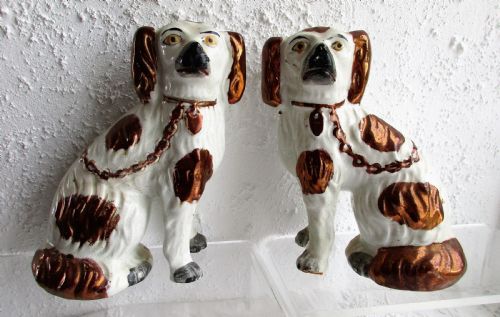
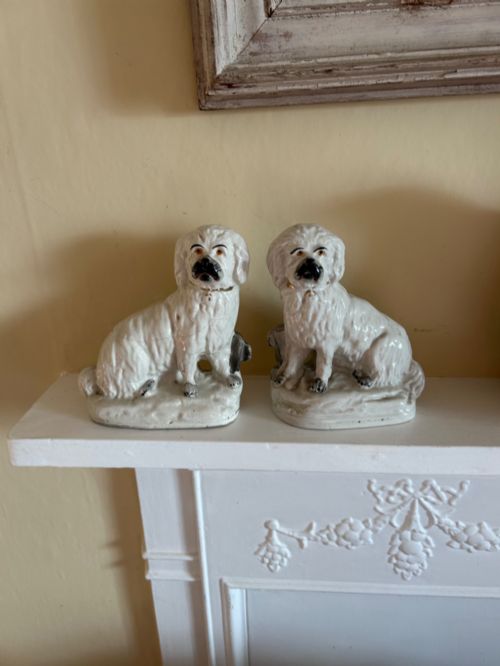
These earthenware spaniel figures are classic Victorian mantelpiece ornaments, traditionally displayed in pairs to greet visitors from the hearth.
Earthenware Spaniel Figures
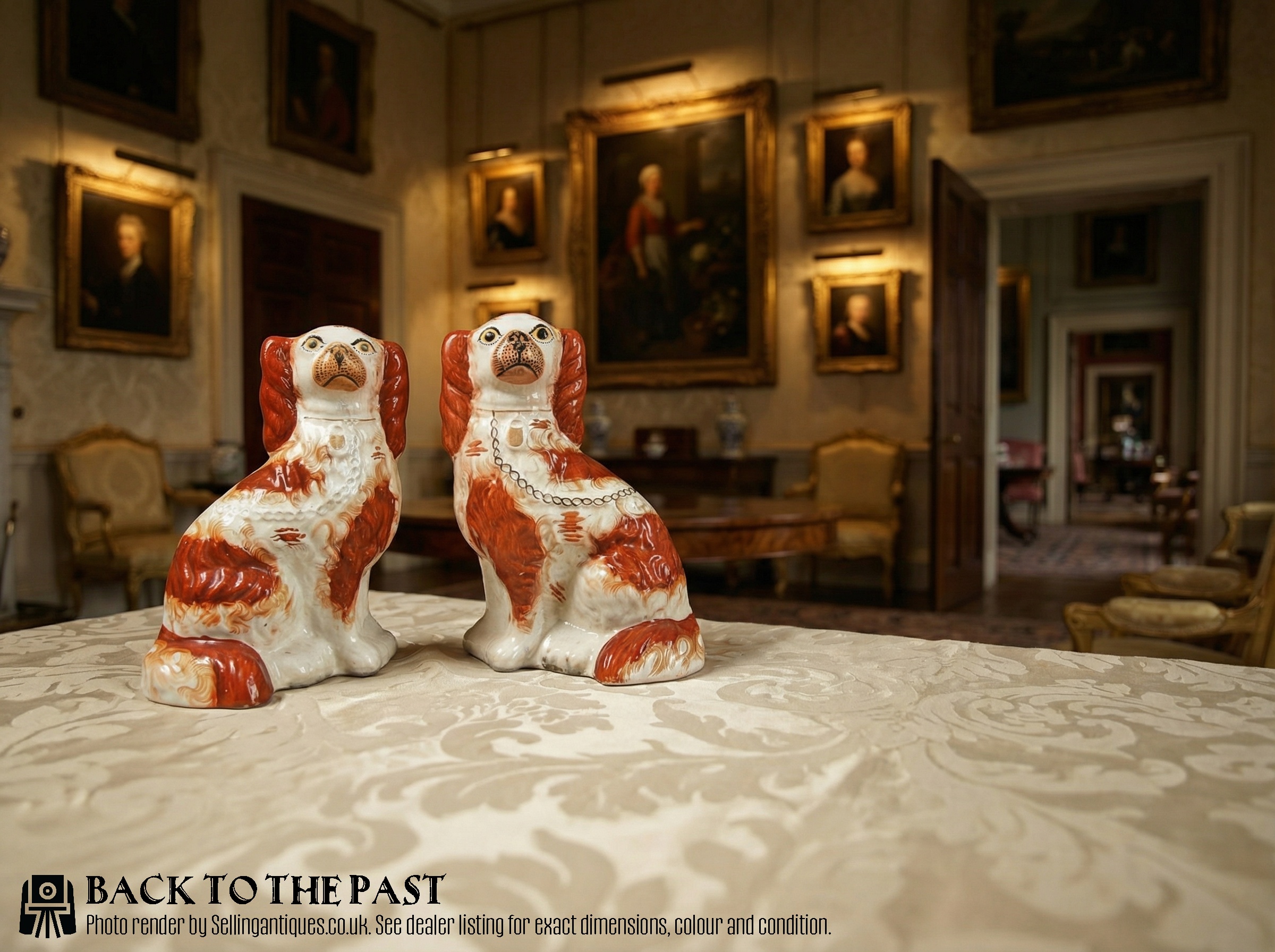
Earthenware spaniel figures are quintessential nineteenth-century mantelpiece ornaments, commonly known as comforter dogs because Victorian households kept them on either side of the fireplace. You will most frequently encounter pairs of seated spaniels, often modelled as King Charles spaniels with distinct markings.
The evidence shows these ceramic figures extend beyond simple mantel ornaments into functional pieces, including money boxes, Toby jugs, quill holders, and spill vases. Some examples incorporate clock groups or musicians accompanied by dogs, representing the broader Victorian taste for domestic animal figures.
Originating primarily from English potteries during the Victorian period, these decorative objects span several decades from the mid-nineteenth century to around nineteen hundred. They appear in various configurations, including standard pairs, single figures, and groups featuring dogs with puppies.
How they were made
Makers shaped these ceramic figures from earthenware clay, typically utilising moulds to achieve the characteristic seated spaniel form. Potters then applied glazes to seal the porous body before adding hand-painted enamel details to define the coats, faces, and collars.
Some Victorian spaniels stare out with actual glass eyes, lending an uncanny alertness to the mantelpiece.
What varies in quality
The distinction between ordinary and superior pieces rests largely on the crispness of the modelling and the precision of the hand-painted enamels. Finer examples display carefully rendered facial expressions, clean separation of the ears, and neatly applied surface decoration rather than hurried brushwork.
Scale and completeness also separate the output, particularly when considering matched pairs, large formats, or integrated forms like spill vases and clock groups. The presence of secondary details, such as gilt accents or copper lustre glazes, marks the distinction in the tier.
Beswick Staffordshire Dogs
The Earthenware Spaniel Figures Glossary
- Earthenware
- A porous type of pottery fired at relatively low temperatures and coated with a glaze to render it waterproof. It forms the standard ceramic body for nineteenth-century Staffordshire animal figures.
- Comforter spaniels
- A traditional term for pairs of ceramic spaniel figures placed on mantelpieces in Victorian homes. They were believed to watch over the household and provide comfort.
- Spill vase
- A hollow cylindrical holder attached to a figure, designed to hold wooden spills used for lighting pipes or candles. These combine decorative animal sculpture with domestic utility.
- Copper lustre
- A metallic glaze technique producing a warm, coppery sheen across the ceramic surface. Potters used this to highlight collars and lockets on select figures.
Earthenware Spaniel Figures: Frequently Asked Questions
What are Staffordshire spaniels?
Staffordshire spaniels are ceramic mantelpiece ornaments modelled after King Charles spaniels, produced in large quantities across nineteenth-century English potteries.
Most commonly found as seated pairs, they served a decorative role on household hearths and remain recognisable symbols of Victorian interior style.
Why are they called comforter dogs?
The term comforter refers to the traditional practice of placing these ceramic spaniels on the mantelpiece facing inwards towards each other. Victorian owners viewed them as comforting household guardians that brought warmth to the hearth.
They sat proudly in pairs on either side of the fireplace in many nineteenth-century parlours.
How do I spot a spill vase figure?
A spill vase figure incorporates an open-topped vertical cylinder alongside or behind the animal sculpture. These cylinders held wooden tapers used for lighting fires and candles before matches became common.
They combine the standard decorative spaniel form with a practical household accessory.