



Staffordshire Transferware Dishes
These staffordshire transferware dishes bring nineteenth-century landscape and narrative scenes into the home through durable ceramic serving pieces.
Staffordshire Transferware Dishes
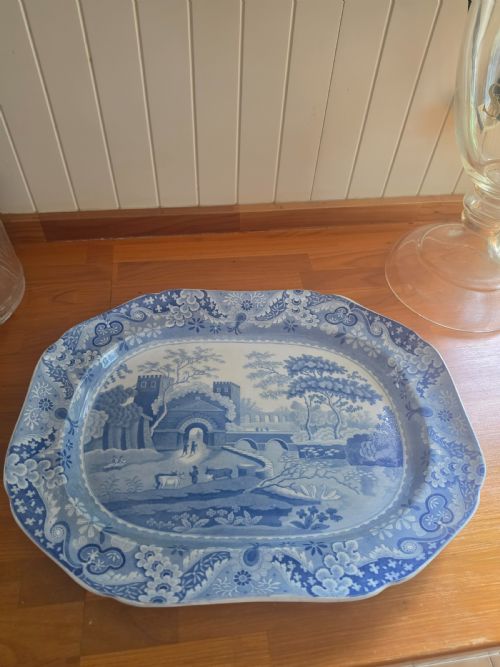
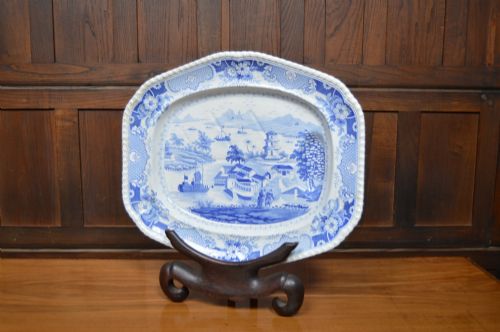
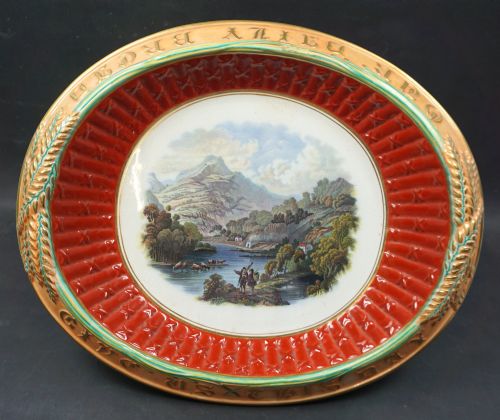
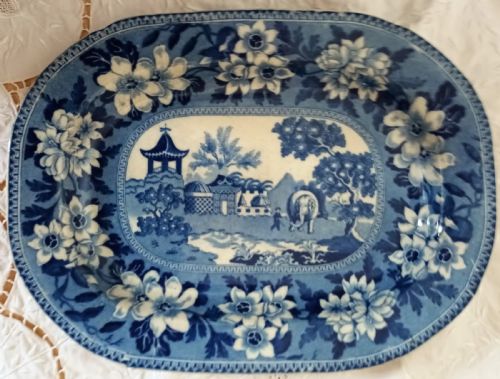
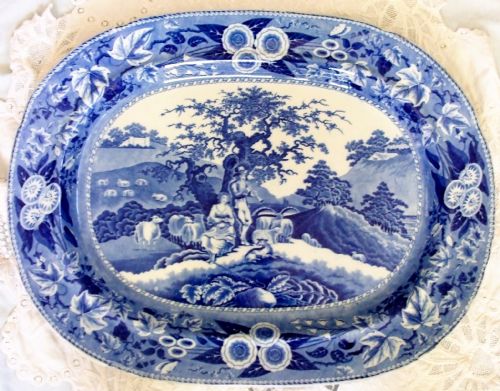
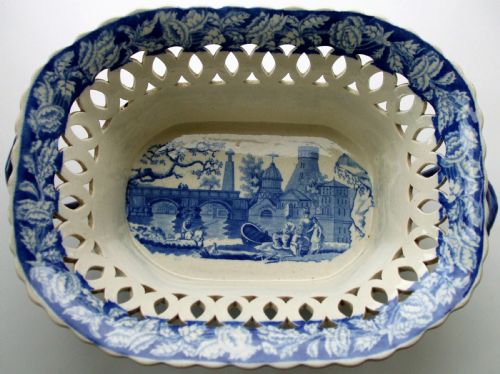
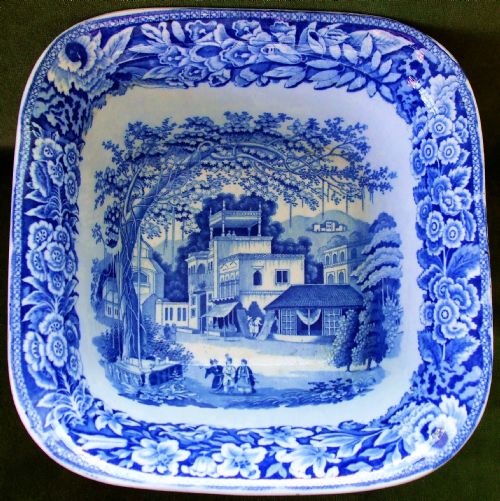
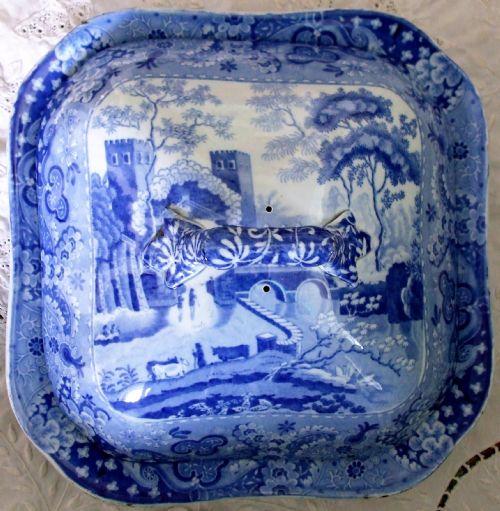
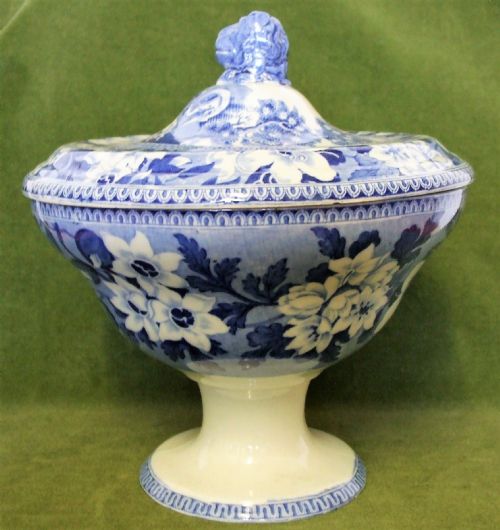
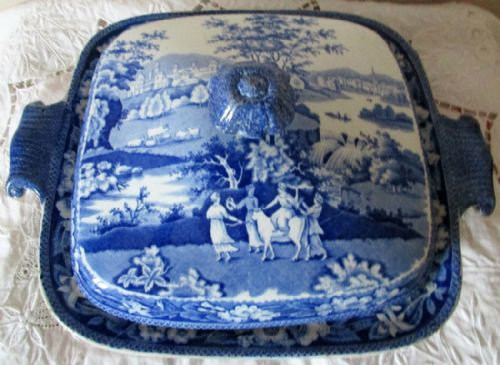
Staffordshire transferware dishes encompass a range of nineteenth-century earthenware forms including serving platters, decorative plates, vegetable tureens, and chestnut baskets. These pieces carry printed topographical, architectural, and figural scenes derived from copper plates.
The selection on this page leans toward Georgian and Victorian examples, featuring large meat platters, deep bowls, and covered tureens decorated in blue and white, mulberry, and polychrome prints.
Common patterns draw from historical architecture, classical ruins, exotic landscapes, and pastoral daily life, produced across the nineteenth century by notable Staffordshire potteries.
Materials and Technique
Potters shaped these vessels from earthenware and pearlware bodies, applying cobalt pigment and enamel colours beneath or over a clear ceramic glaze. The foundational clay body provides a sturdy, opaque base suited for domestic service.
Makers transferred engraved copperplate designs onto tissue paper using oil-based pigments, then pressed the paper onto the bisque-fired ceramic surface before glazing and high-temperature firing.
Object forms range from large meat platters and vegetable tureens to chestnut baskets and decorative plates.
Assessing the Pieces
Quality rests in the crispness of the transfer print and the clarity of the underlying ceramic glaze. Sharp lines without blurring or smudging indicate careful execution during the paper transfer stage.
Form complexity also separates utilitarian items from higher-status production, seen in moulded lion mask handles, gravy wells, and fitted covers on tureens and serving dishes.
Spode·John Rogers and Son·J. and R. Clews·John and Richard Riley·John Davenport·William Adams·Brameld and Co·John Ridgway
The Staffordshire Transferware Dishes Glossary
- Transferware
- Earthenware decorated by transferring a printed design from an engraved copper plate onto the ceramic surface using tissue paper. This technique allowed intricate pictorial patterns to be replicated consistently.
- Pearlware
- A refined earthenware developed in the late eighteenth century featuring a subtle bluish glaze that pooled in crevices to mimic the appearance of Chinese porcelain. It forms the body of many early nineteenth-century dishes.
- Tureen
- A deep covered serving vessel used for soups, vegetables, or sauces, often fitted with matching stands and handles. Staffordshire examples frequently include moulded details like animal heads.
- Earthenware
- A porous pottery fired at lower temperatures than stoneware or porcelain, requiring a vitreous glaze to hold liquids. It serves as the primary ceramic body for nineteenth-century Staffordshire production.
- Comport
- A raised dish or bowl used for serving fruit or sweets at the dining table. These elevated pieces stand upon a central foot or pedestal.
Staffordshire Transferware Dishes: Frequently Asked Questions
How do I date a Staffordshire dish?
Dating relies on stylistic clues, ceramic bodies, and recorded maker marks active during the nineteenth century. Pearlware bodies and specific cobalt hues point toward earlier decades, while later Victorian marks offer narrower windows.
Backstamps and registry marks stamped into the earthenware provide precise years of production for many patterned services.
Can I use these antique dishes for food?
Most nineteenth-century earthenware dishes remain structurally sound for serving dry foods or display purposes. Porous ceramic bodies and historical glazes require careful handling to preserve the integrity of the surface.
Gentle hand washing protects the glaze and prevents staining through microscopic crazing lines developed over centuries.
What is the difference between pearlware and earthenware?
Pearlware is an enhanced type of earthenware formulated with flint and covered in a lightly blued glaze. Potters used this specific composition to achieve a whiter appearance that resembled Chinese export porcelain.
Standard earthenware utilises a warmer, buff-colored clay body beneath clear or tinted lead glazes without the distinctive blue pooling of pearlware.
Why are most patterns blue and white?
Cobalt pigment withstood high kiln temperatures without burning away, making it the most reliable colour for underglaze printing. This chemical stability allowed potteries to produce deep blue scenes consistently across large production runs.
British potters drew inspiration from imported Chinese porcelain, creating domestic blue and white wares that matched prevailing Georgian and Victorian tastes.