


Staffordshire Pottery Spaniels
Staffordshire pottery spaniels are traditional mantelpiece ceramic figures that bring character and a distinct historical presence to any room.

Staffordshire Pottery Spaniels
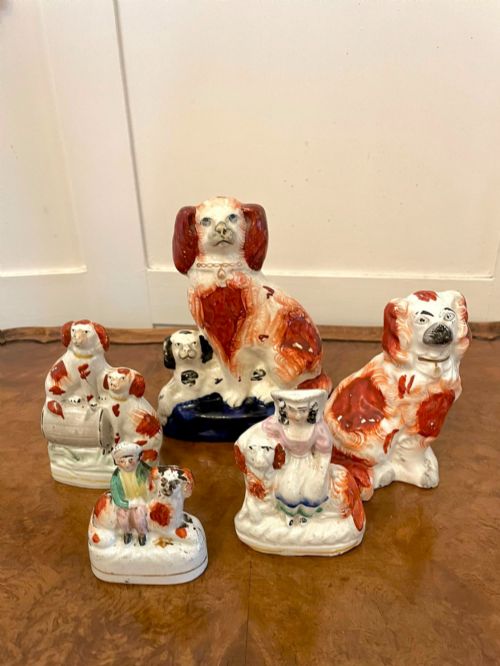
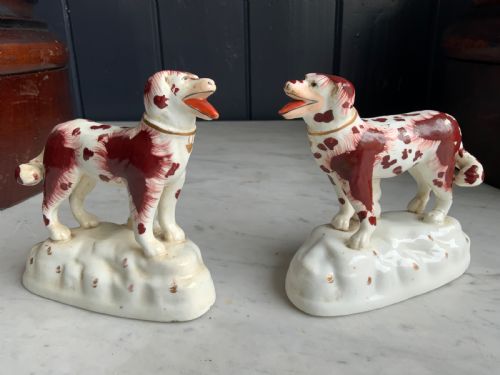
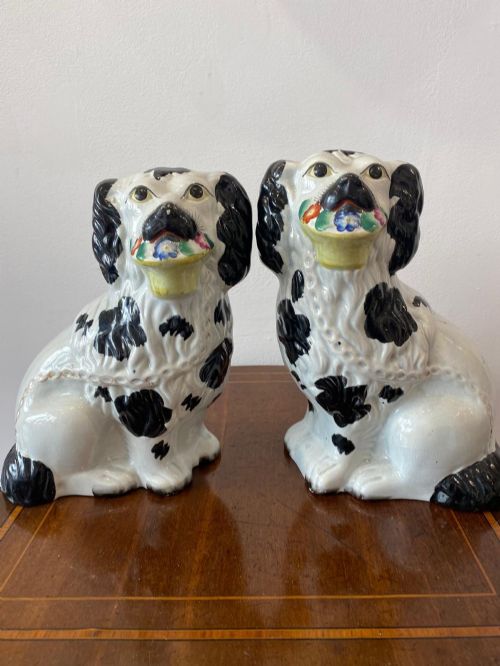
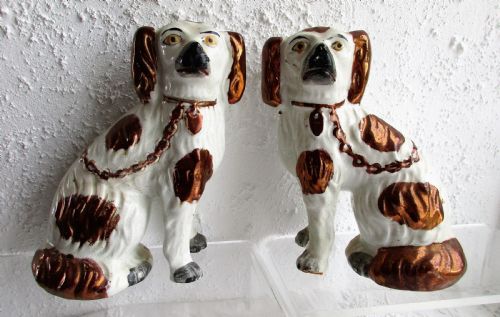
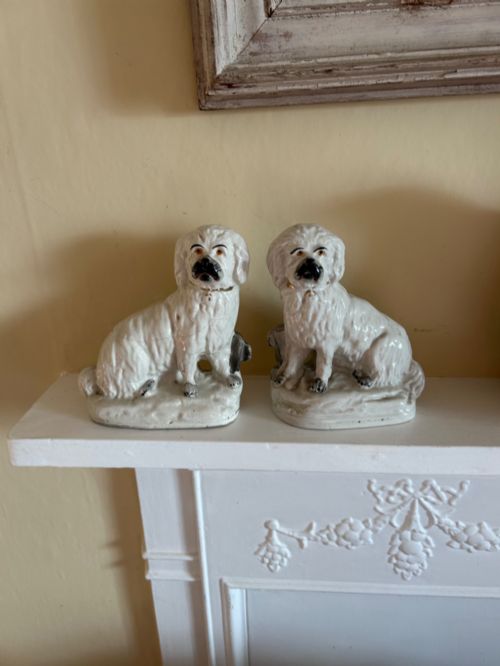
Staffordshire pottery spaniels appear predominantly as decorative pairs designed to sit facing each other upon a fireplace mantel. These ceramic figures originate mostly from the nineteenth century, capturing the Victorian penchant for domestic animal subjects.
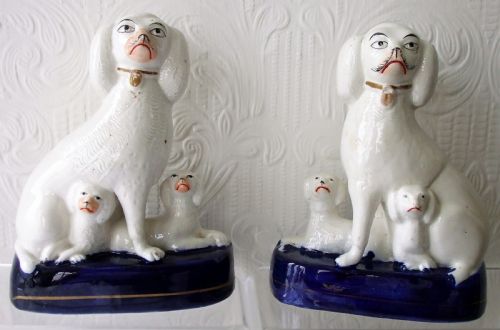
The selections range from simple seated spaniels to more complex groupings such as spaniels with pups, clock groups, money boxes, and quill holders. Most examples reflect the classic comforter spaniel type, though related canine forms like poodles and terriers also emerge.
Makers produced these ceramic figures using earthenware and porcelain, shaping them into decorative figurines and utility vessels like jugs and pitcher forms.
How they were made
Specialised techniques included surface encrusting to represent texture on cushions and coats, creating tactile depth on nineteenth-century specimens.
Listings show earthenware as the primary material, finished with hand-painted enamel and gilt details across the Victorian period.
What varies in quality
Quality rests in the crispness of the moulding and the precision of the hand painting, where finer brushwork defines eyes, muzzles, and coats with clarity. The application of gold leaf and enamel decoration shows a marked difference between standard production pieces and superior examples.
The weight and presence of the ceramic body, alongside the depth and lustre of the glaze, separate ordinary figures from grander, finely potted pairs.
Beswick
The Staffordshire Pottery Spaniels Glossary
- Comforter spaniel
- A ceramic figure of a seated spaniel traditionally placed on a Victorian mantelpiece as a domestic companion. These figures often appear in mirrored pairs facing inwards.
- Earthenware
- A porous pottery body fired at lower temperatures, commonly used for nineteenth-century Staffordshire figures before glazing and painting. It forms the base fabric for most mantle dogs.
- Enamel
- Opaque glass-based paint applied over the glaze and fired again to fix the colours onto the ceramic surface. It provides the reds, blacks, and tans seen on the coats.
- Gilt
- A thin layer of gold leaf applied to ceramic details such as lockets, chains, and collars. This decorative touch elevates the visual richness of the figure.
- Copper lustre
- A metallic glaze finish that produces a reflective, coppery sheen across the ceramic body. It creates a distinctive monochromatic metallic appearance on specific pairs.
Staffordshire Pottery Spaniels: Frequently Asked Questions
Why are staffordshire pottery spaniels found in pairs?
These figures were traditionally designed to sit at either end of a fireplace mantelpiece, facing one another.
This symmetrical arrangement suited Victorian interior styling and the architectural proportions of nineteenth-century hearths.
What is a comforter spaniel?
A comforter spaniel refers to the specific seated dog model popularised in Victorian parlours as a decorative hearth ornament.
They represent the King Charles spaniel breed and usually feature painted facial markings, gilded chains, and alert expressions.
How can you date staffordshire spaniels?
Dating relies on examining the ceramic body, the style of the hand painting, and the characteristics of the glaze.
Nineteenth-century pieces often show distinct craquelure in the glaze and simpler enamel palettes compared to later reproductions.
Were these dogs used for anything other than decoration?
While mostly decorative figurines, certain examples served practical functions within the Victorian home.
Potters also shaped these canine designs into money boxes, quill holders, clock groups, and Toby jugs.