



Staffordshire Pottery Group
A staffordshire pottery group brings lively narrative colour and Victorian character to a mantelpiece.
Staffordshire Pottery Group
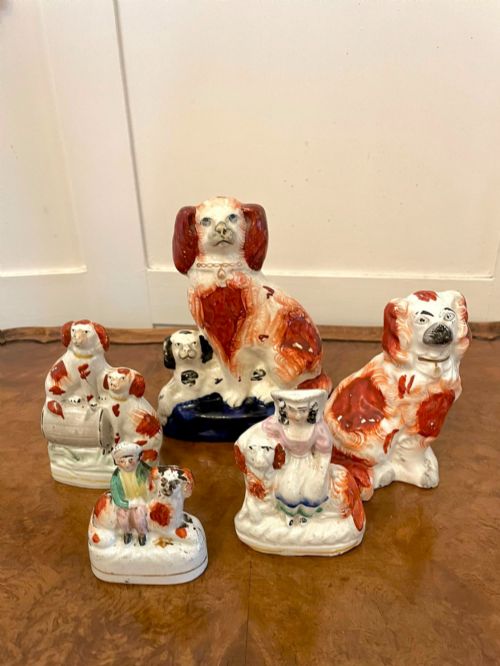
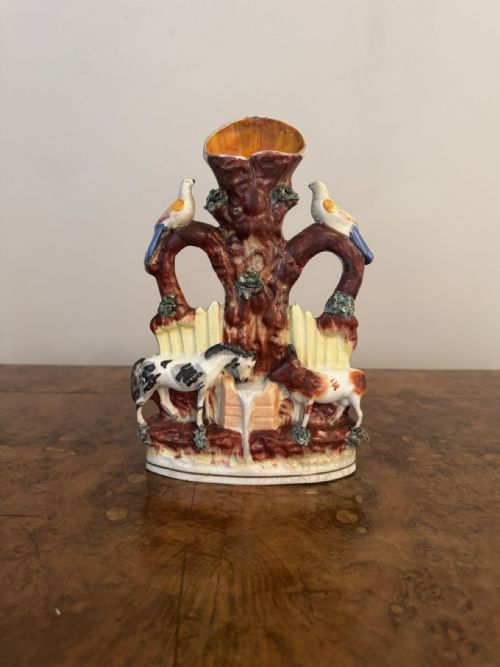
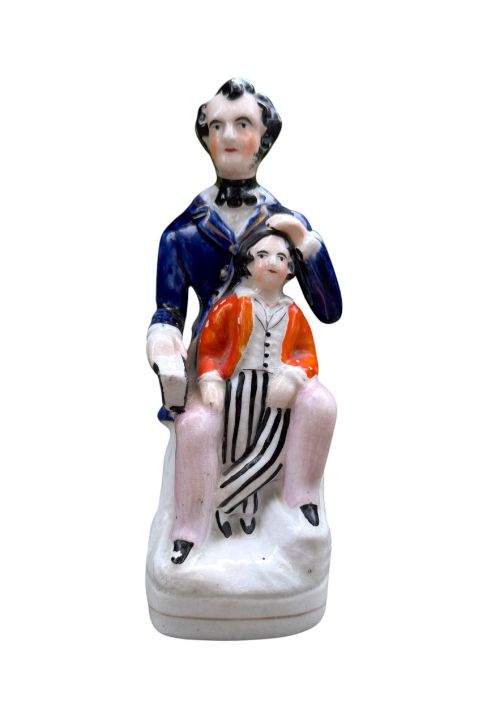
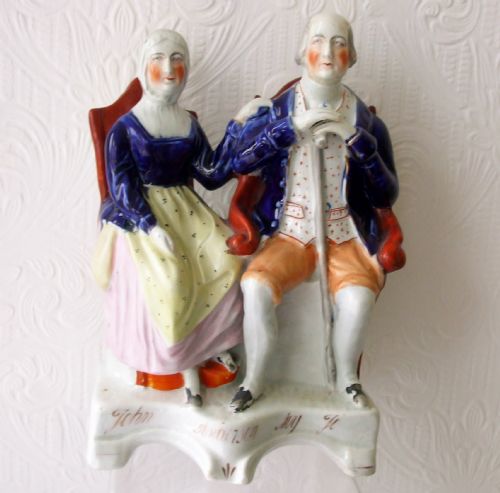
A staffordshire pottery group depicts human figures, literary characters, and animals modelled in clay for domestic display. These pieces range from simple figures to elaborate spill vases and bocage groups.
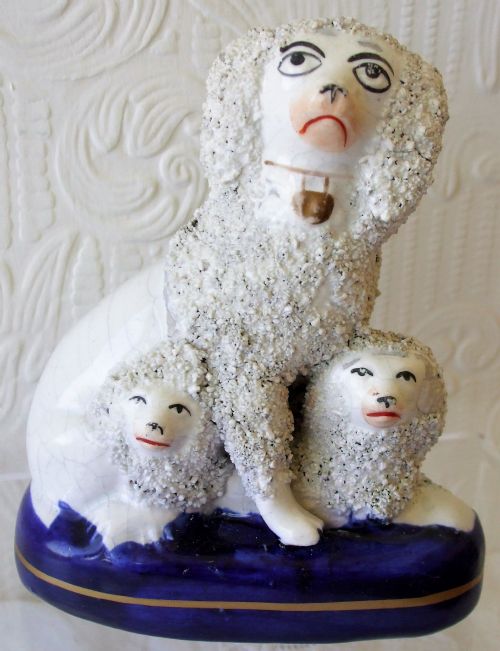
The version most commonly met on this page is the Victorian flatback, designed to stand against a wall. Subjects span royal portraits, poodles, literary scenes like Tam O'Shanter, and commemorative groups such as Peace and Plenty.
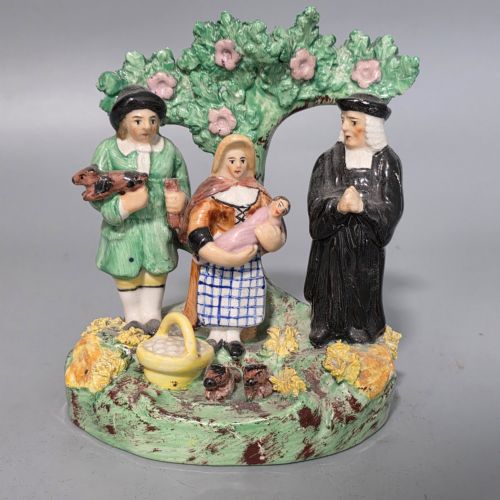
Earlier examples extend back into the eighteenth century with pearlware figures like the Vicar and Moses. These transitional pieces capture the rustic charm that preceded mass Victorian production.
Materials and technique
Potters shaped these figures using earthenware, pearlware, and ceramic bodies, often formed in moulds and finished by hand. The resulting clay body provided a stable base for subsequent decoration.
Glazing involved lead glaze applied to seal the porous surface, giving the figures their characteristic shine. Enamel paint and enamel colours were then added over or under the glaze to bring the subjects to life.
Poodles dominate the animal groups, standing ready to watch over the hearth with coats rendered in careful curls of clay.
Judging quality
Model crispness distinguishes finer figures from softer secondary examples. Sharp facial expressions and well-defined details indicate a maker working from a fresh mould.
Painting execution dictates the visual impact of the piece. Controlled brushwork and rich enamel colours elevate a portrait group above hastily decorated productionware.
Ralph Wood·Wedgwood and Co
The Staffordshire Pottery Group Glossary
- Flatback
- A figure modelled with a finished front and a plain, unglazed or lightly glazed back intended to face a wall. This construction saved time and material during manufacture.
- Pearlware
- A refined earthenware developed in the late eighteenth century featuring a bluish-white glaze that pooled in recesses. It formed the precursor to many nineteenth-century figures.
- Spill vase
- A hollow cylindrical holder incorporated into the figure design to hold wooden spills for lighting fires. These functional additions were popular in nineteenth-century parlours.
- Bocage
- Applied tree or foliage background made of clay petals and branches framing the main figures. This decorative element draws inspiration from earlier porcelain traditions.
- Enamel paint
- Coloured decoration applied to the fired ceramic surface and fixed in a second, lower-temperature kiln. It provided the bright palette seen on Victorian figures.
Staffordshire Pottery Group: Frequently Asked Questions
What are staffordshire pottery groups?
These ceramic pieces are decorative figures and figure groups produced in the Staffordshire potteries during the eighteenth and nineteenth centuries. They portray animals, literary characters, royalty, and historical events for domestic display.
Potters shaped them from earthenware and pearlware, painting them with enamels under a lead glaze. They served as affordable ornaments for mantelpieces and sideboards in Victorian homes.
How were they used?
Victorian households displayed these figures prominently on mantelpieces, tabletops, and in parlours as decorative ornaments. Some variations, such as spill vases, combined display with the practical task of holding wooden tapers for lighting candles and fires.
They also functioned as commemorative objects, marking royal marriages, military victories, and political alliances. Families collected them to signal cultural awareness and current events.
How do I date a staffordshire group?
Dating relies on stylistic clues, ceramic bodies, and subject matter. Eighteenth-century examples often use pearlware bodies and show simpler modelling, while Victorian flatbacks display bolder enamel colours and subjects tied to the nineteenth century.
Historical references in the titles, such as the Crimean War or specific royal portraits, provide a clear after which date for the piece's manufacture.
What subjects are most common?
Animals feature frequently, with poodles, dogs, cows, lions, and swans appearing across multiple periods. Pairs of figures depicting literary characters, milkmaids, or contemporary soldiers and sailors are also widespread.
Royal portrait groups and scenes from popular literature provide another large category of domestic decoration.
How do I care for antique figures?
Keep these glazed ceramic pieces out of direct sunlight to prevent fading in the enamel paintwork. Dust them gently with a soft, dry brush rather than using water or liquid cleaners.
Handle them by the base rather than delicate projections like bocage foliage or animal limbs to avoid accidental breakage.