


Staffordshire Pottery Dog Statues
Staffordshire pottery dog statues are charming ceramic figures that bring character and a touch of domestic history to any mantelpiece.
Staffordshire Pottery Dog Statues
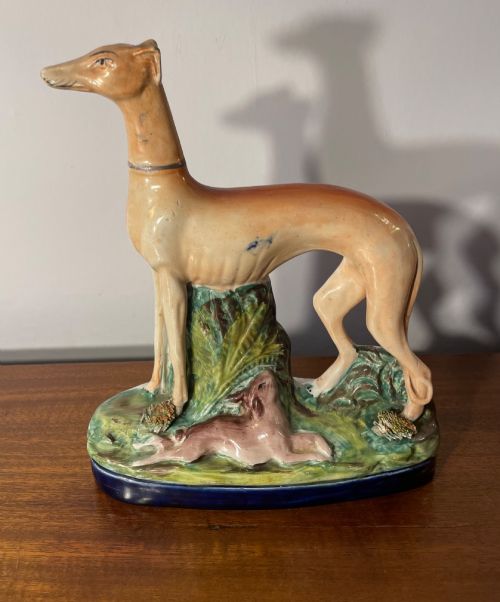
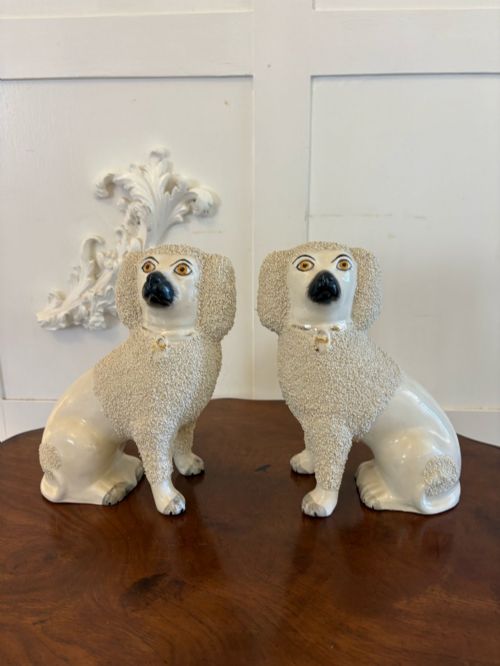
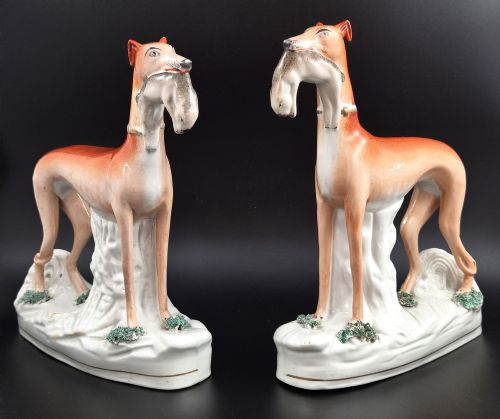
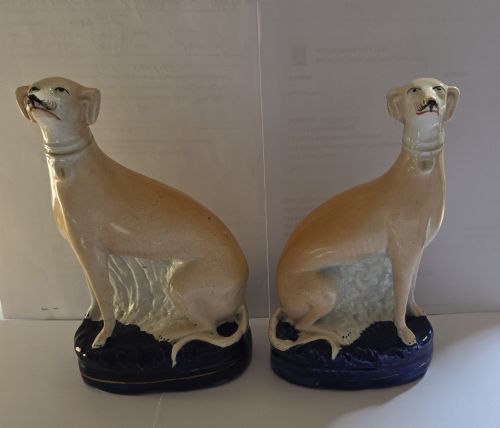
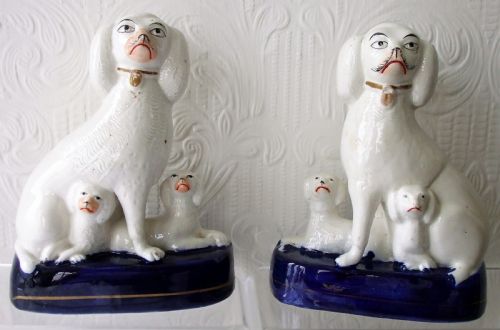
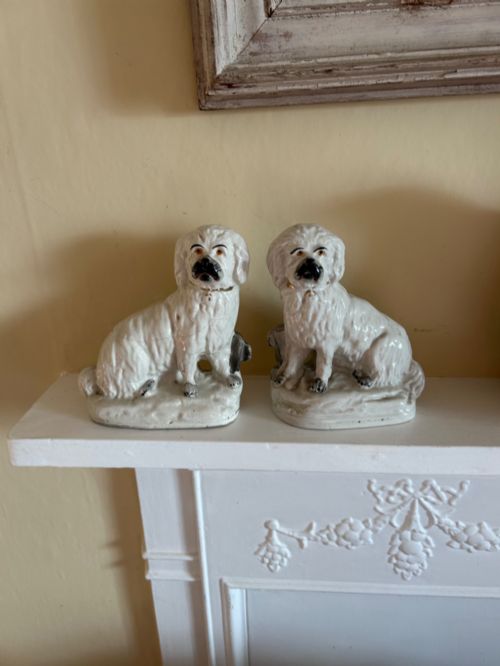
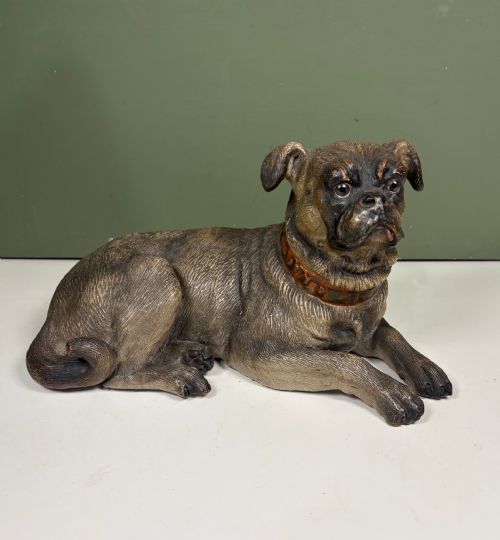
Staffordshire pottery dog statues encompass a delightful array of ceramic figures modelled after various canine breeds. When exploring these listings, spaniels, poodles, greyhounds and pugs appear most frequently, often presented as symmetrical pairs designed for a hearth or shelf.
These figures span the Georgian, Victorian and Edwardian periods, reflecting the shifting tastes of nineteenth-century households. Alongside standard decorative models, buyers encounter specialised forms such as quill holders, poodles with pups and canine figures accompanied by human subjects.
Originating primarily from English kilns during the nineteenth century, the scale of these pieces ranges from miniature models to unusually large statuary. The selection demonstrates both traditional mantel ornaments and distinct sculptural groups set upon painted ceramic cushions or bases.
What varies in quality
Quality rests upon the crispness of the original moulding and the precision of the hand-painted enamel work. Superior examples exhibit finely detailed facial expressions, neatly painted eyes and carefully applied gilt highlights rather than hurried brushwork.
The visual balance of a pair and the preservation of the delicate glazed ceramic or encrusted fur surface dictate distinction. Pieces retaining clear modelling without heavy glaze pooling or loss to the enamel stand at the upper end of the range.
Listings feature earthenware figures spanning the Georgian, Victorian and Edwardian periods, decorated with lead glaze and hand-painted enamel.
Wedgwood & Co Ltd·Beswick
The Staffordshire Pottery Dog Statues Glossary
- Earthenware
- Porous pottery fired at lower temperatures, serving as the primary ceramic body for these Staffordshire figures. It requires a protective glaze to hold liquid and provide a smooth decorative surface.
- Enamel
- Coloured glass paste applied over the fired glaze and subjected to a secondary low-temperature kiln firing. This technique allowed potters to add rich black, rust and gold details to the animal coats.
- Lead glaze
- A shiny liquid coating containing lead oxide applied to pottery before firing to create a glossy, impermeable finish. It gives nineteenth-century figures their characteristic bright, reflective sheen.
- Gilt
- A thin layer of gold leaf or gold paint applied to ceramic details such as padlocks, chains and bases. It signals a more elaborate finish intended for formal Victorian drawing rooms.
- Quill holder
- A hollow ceramic desk accessory featuring a modelled figure alongside an integrated inkwell or pen trough. These functional pieces combined ornament with utility on nineteenth-century writing desks.
Staffordshire Pottery Dog Statues: Frequently Asked Questions
How do I style Staffordshire dogs at home?
Pairs of Staffordshire dogs traditionally sit at either end of a mantelpiece, framing a clock or central ornament. Their symmetrical nature makes them ideal for balancing the visual weight of a fireplace or bookshelf.
Beyond the hearth, smaller pairs or miniature poodles look at home on side tables, chests of drawers or within glazed display cabinets among other nineteenth-century ceramics.
Were these dogs meant to be mantelpiece ornaments?
The vast majority of these ceramic figures served purely as decorative mantel ornaments for Victorian and Edwardian homes. Families displayed pairs of spaniels, poodles or greyhounds to signal respectability and a fondness for household pets.
A smaller number served secondary functions, such as greyhound quill holders designed to sit upon writing desks alongside inkwells and stationery.
How can I tell the difference between nineteenth-century periods?
Georgian examples often feature simpler, heavier modelling with distinct facial expressions and restrained enamel palettes. Victorian pieces embrace greater variety, including spaniels on blue cushions, poodles with textured encrusted fur and gilt-accented greyhounds.
Edwardian figures transition towards finer, more delicate factory production methods, sometimes bearing maker marks from established potteries rather than the unmarked style of earlier decades.
Why are some Staffordshire dogs sold in pairs?
Victorian interior design favoured symmetry, and Staffordshire potters produced most decorative animals as matching left- and right-facing pairs. Placing them at opposite ends of a mantel created a balanced composition.
While single figures do survive, finding a matched pair together reflects how they were originally purchased and displayed in nineteenth-century parlours.