


Pair of Chimney Dogs
A pair of chimney dogs brings character and domestic warmth to a fireplace, offering the charm of Victorian Staffordshire pottery.
Pair of Chimney Dogs
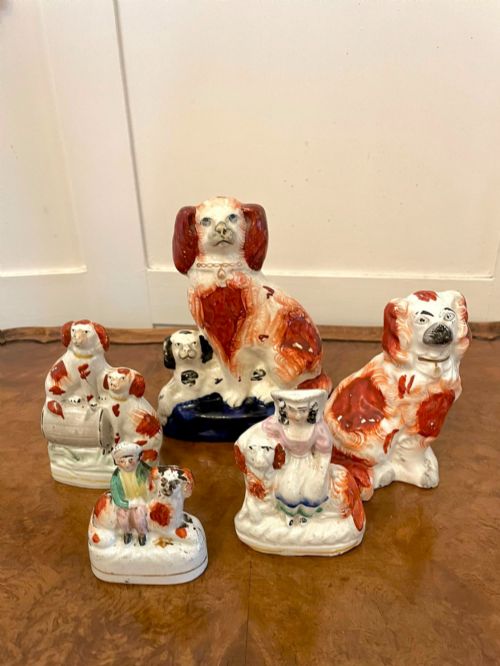
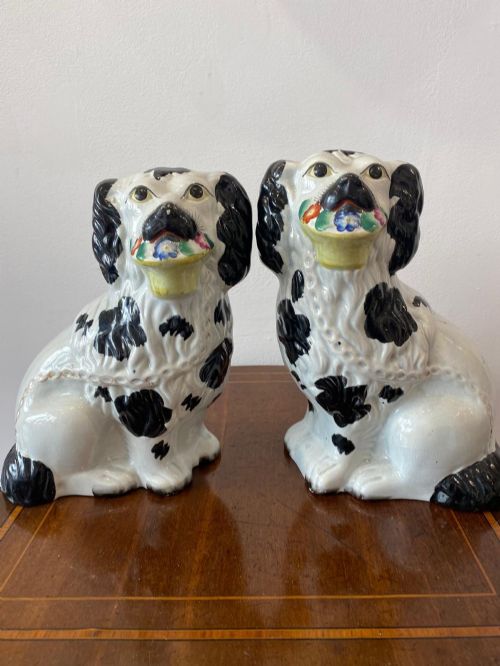
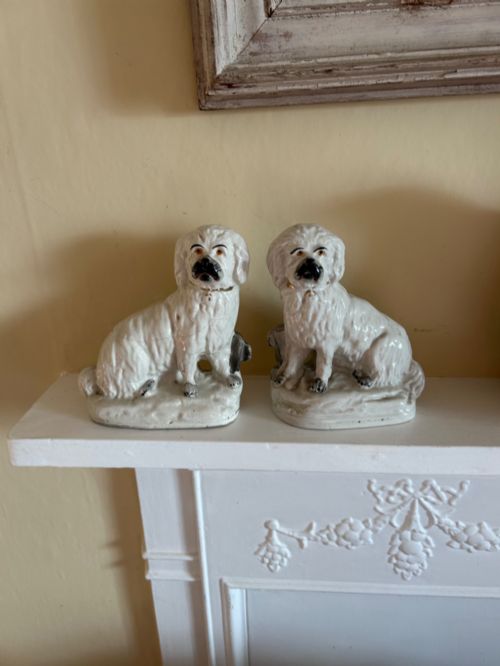
A pair of chimney dogs consists of ceramic figurines modelled as spaniels, pugs, poodles with pups, or Maltese terriers, designed to sit either side of a hearth. These decorative objects date from the Victorian period, with examples spanning the mid to late nineteenth century, specifically the eighteen sixties, seventies, eighties, and nineteen hundreds.
The pieces on this page are Staffordshire figures, produced as pottery figurines and decorative objects to adorn mantels. Buyers frequently encounter spaniels alongside other canine breeds, all finished in various glazes and enamel details.
Materials and construction
Certain models incorporate gold leaf and gilt highlights to accentuate chains, lockets, or painted eyes. The combination of earthenware and glossy glaze defines the physical presence of these Victorian mantel ornaments.
Some poodles come complete with tiny sculpted pups huddled beside them, proving that Victorian mantelpiece companions understood family life.
Judging quality and character
Scale also influences distinction, as larger figures command presence on a mantelpiece. The crispness of the ceramic detail and the preservation of the glaze separate ordinary production from finer output.
The Pair of Chimney Dogs Glossary
- Staffordshire figures
- Pottery and ceramic figurines produced in the Staffordshire potteries during the nineteenth century. These objects include animals, human figures, and architectural models made for the domestic mantelpiece.
- Earthenware
- A porous pottery body fired at lower temperatures and finished with an opaque or transparent glaze. It serves as the primary material for Victorian Staffordshire dogs.
- Enamel
- Vitreous pigments applied over the fired glaze to add colour to eyes, collars, and spots. This technique allows for bright surface decoration on ceramic bodies.
- Gilt
- A thin layer of gold leaf or gold paint applied to ceramic details such as lockets and chains. It provides metallic contrast against the white or coloured glaze.
Pair of Chimney Dogs: Frequently Asked Questions
What are chimney dogs used for?
These ceramic figures were traditionally placed on mantelpieces above fireplaces in Victorian homes. They served a purely decorative purpose, bringing colour and a sense of companionship to the hearth.
Today, collectors use them to add period charm and traditional English character to living spaces. They continue to sit comfortably on modern shelves and mantel ledges alike.
How do I date a pair of Staffordshire dogs?
Dating relies on examining the style of the modelling, the type of earthenware body, and the characteristics of the glaze. Mid-nineteenth century pieces often exhibit specific facial expressions and hand-painted enamel details typical of the era.
Later Victorian examples from the eighteen seventies and eighties show subtle shifts in proportion and glaze brightness. Comparing the stance and decorative markings helps place the piece within its historical decade.
Which dog breeds appear most often?
Spaniels are the most common breed represented among these nineteenth century pottery figures. Pugs, poodles accompanied by pups, and Maltese terriers also appear within the selection.
Each breed reflects the popularity of specific household pets during the Victorian period. Spaniels remain the quintessential form associated with fireplace mantel decoration.
How should I clean glazed ceramic figures?
Dusting gently with a soft, dry cloth is the safest way to maintain the surface of these glazed ceramics. Avoid harsh chemical cleaners or abrasive materials that might damage the enamel or gilt.
Keeping the pieces away from direct moisture and strong sunlight preserves the painted details. Careful handling ensures the fragile earthenware bodies remain intact.