


White Glazed Pottery Spaniels
White glazed pottery spaniels bring the comforting presence of Victorian hearths straight into your home with their glossy surfaces and attentive gaze.
White Glazed Pottery Spaniels
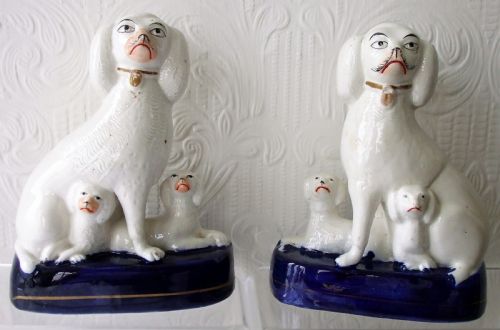
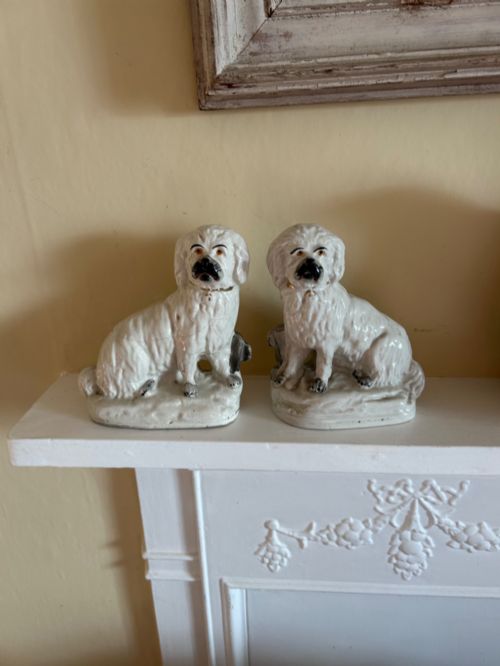
When you search for white glazed pottery spaniels, you encounter decorative figures created during the Victorian period, most frequently appearing as matched pairs designed to sit upon a mantelpiece. These ceramic dogs typically take the form of seated spaniels, though the broader category encompasses Staffordshire dog clock groups and companion animals with quill holders.
The pieces on this page span the nineteenth century, including specific dates such as eighteen-sixty and eighteen-eighty alongside items from nineteen hundred. English traditional styling dominates these ceramic figurines, reflecting the domestic tastes and mantle ornamentation popular across Victorian homes.
How they were made
Makers produced these decorative figurines in specialised potteries, firing the ceramic bodies before finishing them with bright gloss coatings and metallic lustres such as copper lustre. The resulting earthenware vessels and figures combined sturdy clay construction with polished exterior treatments.
Listings feature earthenware materials finished with white glaze, lead glaze, enamel, and gold leaf across the Victorian period.
What varies in quality
The weight of the earthenware body and the evenness of the glaze also separate finer pieces from simpler production work. Better pairs show careful matching between the left and right figures, maintaining balanced posture and symmetrical ornamentation.
Beswick
The White Glazed Pottery Spaniels Glossary
- Earthenware
- A porous type of pottery fired at lower temperatures and coated with a glaze to ensure it holds water and maintains its smooth finish. This material forms the solid structural base for nearly all the figures found on this page.
- Staffordshire
- A regional term denoting pottery manufactured in the English county renowned for its extensive ceramic production during the Victorian era. Most figures matching this search phrase originate from these traditional Midland kilns.
- Lead glaze
- A glossy coating containing lead oxide applied to pottery before firing to create a shiny, waterproof surface. It gives these nineteenth-century dogs their characteristic reflective sheen.
- Quill holder
- A functional ceramic desk accessory featuring an integrated slot or loop designed to keep writing quills upright. Several spaniel figures incorporate this practical element into their decorative form.
- Copper lustre
- A metallic glaze technique that produces a coppery, reflective sheen across the ceramic surface. Potters used this finish to highlight collars, lockets, and bases on specific nineteenth-century dog pairs.
White Glazed Pottery Spaniels: Frequently Asked Questions
Where did people display these pottery dogs?
Victorian households traditionally placed these ceramic spaniels in pairs upon the mantelpiece on either side of the fireplace clock. They often faced inward toward each other, creating a balanced decorative arrangement.
Beyond the fireplace, owners positioned them on side tables, chests of drawers, and parlor shelves where their glossy white glazes could catch the flickering light of oil lamps and candles.
How do I identify a Victorian spaniel?
Look for the characteristic earthenware body beneath the glaze, combined with nineteenth-century styling typical of English traditional potteries. Hand-painted enamel details and touches of gold leaf or copper lustre often accompany the white glaze.
Pay attention to the form and modelling, as pieces from this era frequently feature specific Victorian traits like moulded chain collars and alert, seated postures.
Were these dogs meant to be functional?
Most of these figures served purely as decorative ornaments meant to brighten a room and demonstrate domestic respectability. They brought the comfort of pet ownership into parlours without the mess of live animals.
Some specialised variants included practical additions, such as integrated inkwells or quill holders designed for use on a Victorian writing desk.
How do I clean my pottery spaniel?
Dust the glazed ceramic surface gently with a soft, dry cloth to remove everyday accumulation. Avoid harsh chemical cleaners or abrasive scouring pads that might scratch the delicate enamel or wear away the gold leaf.
If the piece requires deeper cleaning, use a damp cloth with mild soap and dry it immediately with a soft towel to protect the earthenware body.