


Staffordshire Porcelain Statue
These staffordshire porcelain statue pieces capture Victorian character through figures, animals, and royal portraits, offering lasting charm for collectors.
Staffordshire Porcelain Statue
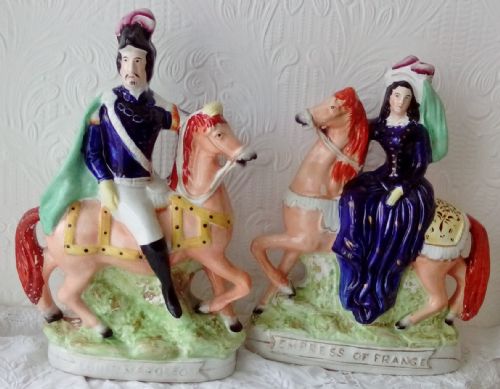
A staffordshire porcelain statue brings nineteenth-century figures, animals, and portraits into a room through earthenware and porcelain. Buyers searching this phrase most frequently encounter Victorian pairs of spaniels, greyhounds, and poodles, alongside portrait groups of royals and figures like the flower seller or huntsman.
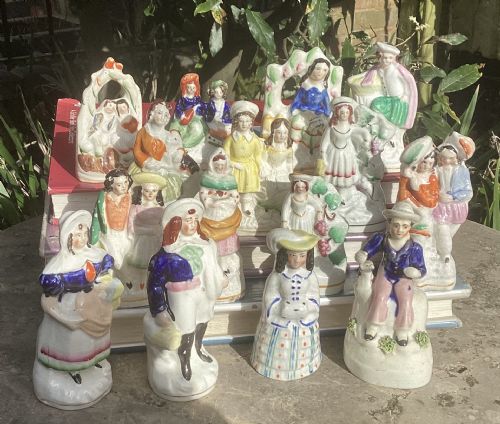
The selection ranges from miniature groups and desk accessories to large decorative figures made across the Victorian and Edwardian eras. These pieces record historical subjects and domestic animal studies through traditional English pottery manufacture.
Most examples originate from the nineteenth century, spanning decades from eighteen fifty to nineteen hundred and ten. Collectors find both single display figures and matched pairs designed for mantelpieces.
Materials and manufacture
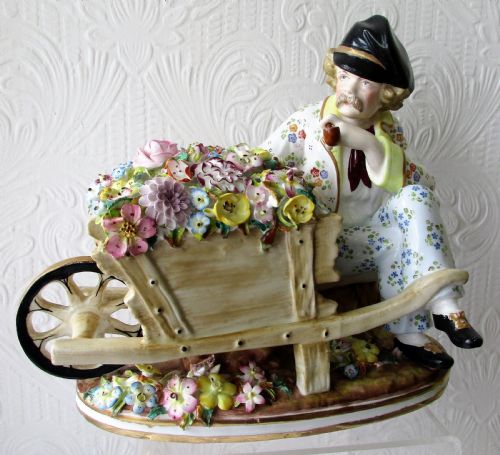
Makers shaped these items using ceramic materials such as earthenware and porcelain, applying detailed overglaze enamel colours and gold leaf highlights. Many pieces feature hand-painted surfaces and applied encrusting to build texture on cushions and clothing.
Potteries combined traditional moulding techniques with careful surface finishing to produce both figures and functional items like quill holders. Glaze finishes protect the painted details across Victorian and Edwardian examples.
Greyhounds doubled as stationery assistants by holding quills in their mouths on Victorian writing desks.
Standards of craftsmanship
The distinction between standard production and superior work appears in the depth of the glazing and the complexity of multi-figure groups like royal portraits. Matched pairs with original colour and minimal wear represent the higher end of the range.
John Bevington·Wedgwood and Co Ltd·Beswick
The Staffordshire Porcelain Statue Glossary
- Earthenware
- A porous ceramic body fired at lower temperatures than porcelain, commonly used for nineteenth-century figures. Potters glazed these bodies to create a smooth surface for enamel painting.
- Overglaze enamel
- Coloured glass decoration applied on top of the fired glaze and fixed with a second, lower-temperature firing. This technique allowed makers to achieve bright reds, blues, and greens on finished figures.
- Gilt
- A thin application of gold leaf or gold paint used to highlight collars, bases, and clothing details. Victorian makers applied this finish to add decorative richness to mantelpiece ornaments.
- Encrusting
- Small fragments of clay applied by hand to the surface of a piece to simulate flowers, foliage, or texture. This technique appears frequently on the cushions and bases of nineteenth-century animal figures.
- Quill holder
- A domestic desk accessory featuring a modelled figure with provision for holding writing implements. These functional ceramics combined decorative appeal with utility on Victorian desks.
Staffordshire Porcelain Statue: Frequently Asked Questions
What subjects do these figures show?
These pieces depict a wide range of subjects including royal portrait groups, historical figures, and literary characters. Animal studies such as spaniels, greyhounds, and poodles also appear frequently.
Makers additionally modelled everyday figures like flower sellers, milkmaids, and huntsmen. These subjects reflect Victorian popular culture and domestic tastes.
How do I date a Staffordshire figure?
Dating relies on stylistic clues, ceramic bodies, and historical subjects depicted in the piece. Nineteenth-century examples often feature characteristic Victorian enamel colours and glazing techniques.
Marked pieces or specific portrait subjects tied to historical events help narrow the manufacturing period. Edwardian pieces show subtle shifts in ceramic composition and painting style.
Were these figures meant for display?
Most items served as decorative ornaments for mantelpieces, side tables, and drawing rooms. Pairs of dogs and portrait groups were specifically proportioned for display on Victorian fireplaces.
Some forms combined display with utility, such as greyhound quill holders designed for writing desks. Their primary role remained visual enrichment of the domestic interior.
How do I care for antique porcelain?
Care requires gentle dusting with a soft, dry brush to prevent the accumulation of dirt on painted surfaces and enamel details. Water and cleaning agents should be avoided to protect overglaze decoration and gold leaf.
Placement away from direct sunlight and stable environmental conditions help preserve the integrity of nineteenth-century ceramic bodies and glazes.