




Staffordshire Pearlware Figure
These staffordshire pearlware figure examples capture Georgian and Victorian narratives in ceramic form, prized by collectors for their vivid glaze and character.
Staffordshire Pearlware Figure
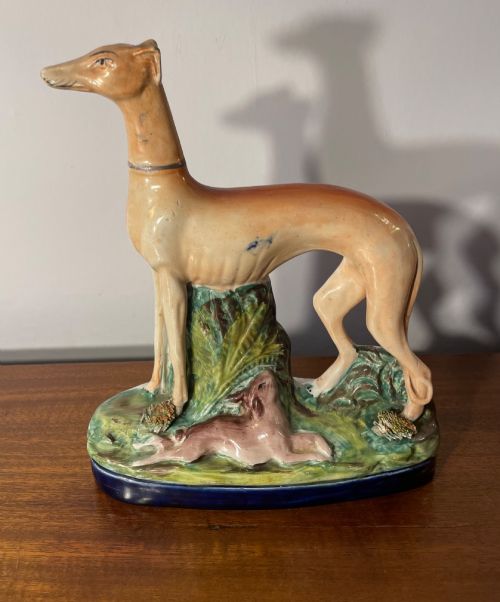
A staffordshire pearlware figure represents a diverse tradition of ceramic sculpture spanning the late eighteenth and nineteenth centuries. These objects range from mythological subjects and literary characters to rustic animal groups and spill vases designed for domestic display.
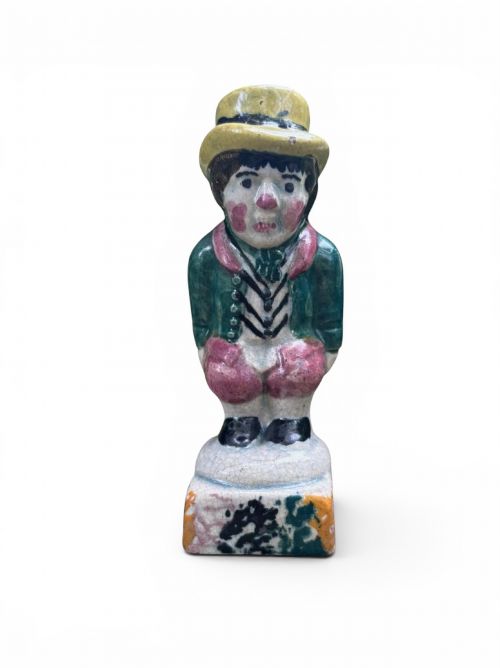
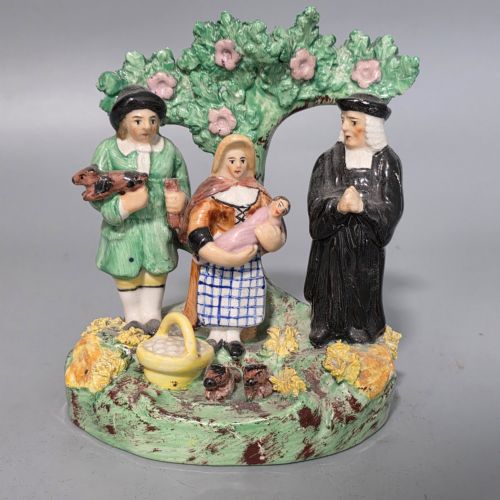
The pieces appearing on this page encompass various forms such as pairs of leopards, dramatic figure groups, and portrait busts. Collectors encounter both utilitarian items like pepper pots and purely decorative figures modelled with flat bases.
How they were made
Potters constructed these figures using earthenware bodies covered in a characteristic pearlware glaze, which used a small amount of cobalt to achieve a pale, bluish tinge. Artisans then applied enamel colours over or under the glaze to define details on the animals and figures.
Many items incorporated lead glaze to enhance the surface sheen, while specific workshops utilised press-moulding techniques to shape the ceramic bodies before hand-finishing.
A cow creamer allows milk to pour straight from the bovine mouth while a milkmaid clings firmly to its back.
What varies in quality
The handling of the pearlware glaze also distinguishes finer works, where an even, unclouded finish allows the underglaze blue tint to complement the painted enamels effectively.
Ralph Wood·Walton·Lakin & Poole·Enoch Wood·Ralph Salt
The Staffordshire Pearlware Figure Glossary
- Pearlware
- A refined earthenware developed by Josiah Wedgwood and adopted across Staffordshire, featuring a bluish glaze that pooled in recesses. It bridges the aesthetic gap between creamware and later white earthenware.
- Prattware
- A type of earthenware decorated with coloured metal oxide pigments under a clear lead glaze, typically restricted to blue, ochre, brown, and green. These pieces often include relief-moulded Toby jugs and figures.
- Bocage
- A background of applied ceramic leaves and branches often framing Staffordshire animal and human figures. This leafy arbour technique creates a dense, garden-like setting behind the main subject.
- Spill vase
- A hollow cylindrical holder incorporated into a ceramic figure group, designed to store wooden spills used for lighting candles and pipes. These practical additions are frequently modelled alongside sheep or pastoral scenes.
- Flat base
- A supportive ceramic plinth underneath a figurine, characteristic of early nineteenth-century Staffordshire production. It allowed figures to stand steadily on mantelpieces without additional feet.
Staffordshire Pearlware Figure: Frequently Asked Questions
What is pearlware?
Pearlware is a refined earthenware body developed in the late eighteenth century to imitate Chinese porcelain. Potters achieved its signature look by adding a small quantity of cobalt to the lead glaze, creating a pale bluish hue.
This subtle tint distinguishes pearlware from earlier creamware, providing a bright white foundation for subsequent enamel decoration on figures and tableware.
How old are these figures?
The pieces on this page generally date from the late eighteenth century through the Georgian and Regency eras into the Victorian period. Most examples originate between 1780 and 1840.
Stylistic cues, clothing details, and the use of the characteristic pearlware glaze help narrow down the production decade for individual sculptural groups.
Were they used daily?
While many items functioned purely as decorative ornaments for mantelpieces and cabinets, some pieces served practical purposes. Examples include pepper pots, creamers, and spill vases.
Even decorative animal groups and literary figures were intended to display moral or aesthetic taste within a middle-class interior rather than endure heavy domestic handling.
How do I identify a Walton figure?
Walton figures often feature specific structural characteristics such as a bocage background of applied foliage and distinctive bocage support pillars. Many bear impressed maker marks on the flat base.
Comparing the modelling style of sheep, lambs, and pastoral characters to documented pieces helps confirm attribution to this prominent Staffordshire pottery.