


Staffordshire Ceramic Ornament
A Staffordshire ceramic ornament brings the distinct, unpretentious character of the Victorian parlour straight to a mantelpiece.
Staffordshire Ceramic Ornament
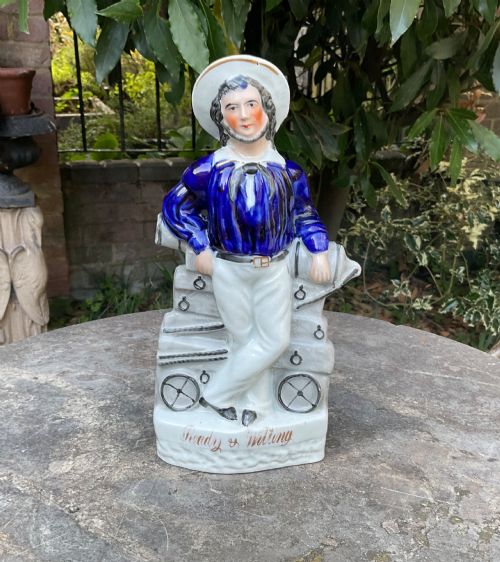
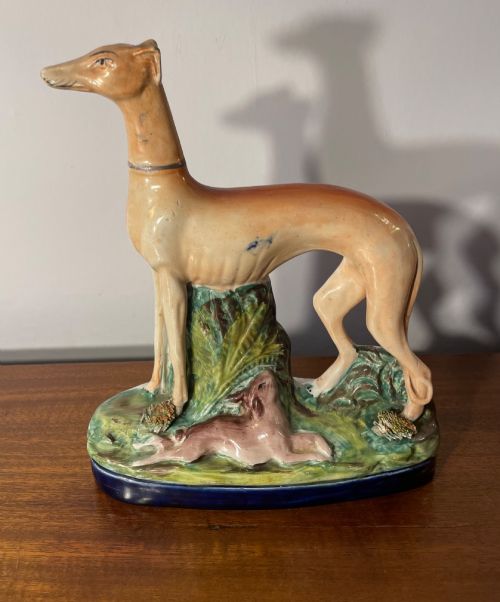
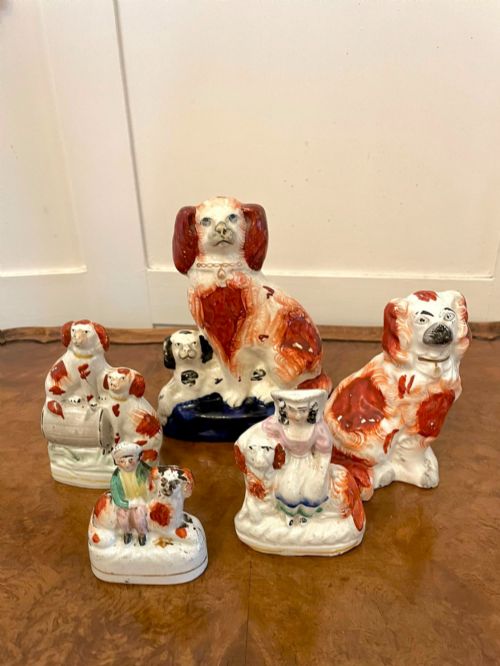
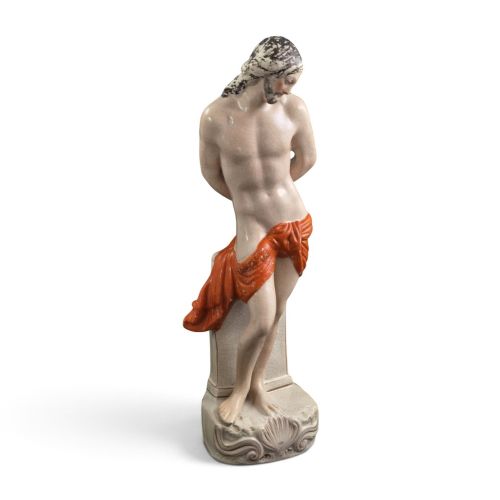
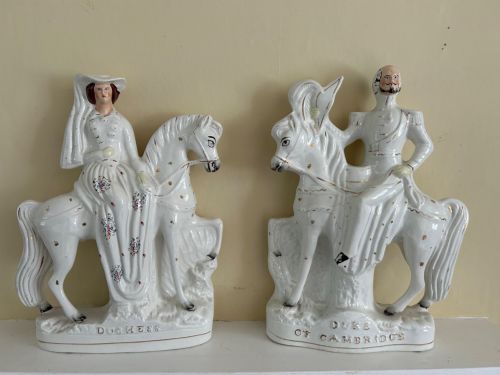
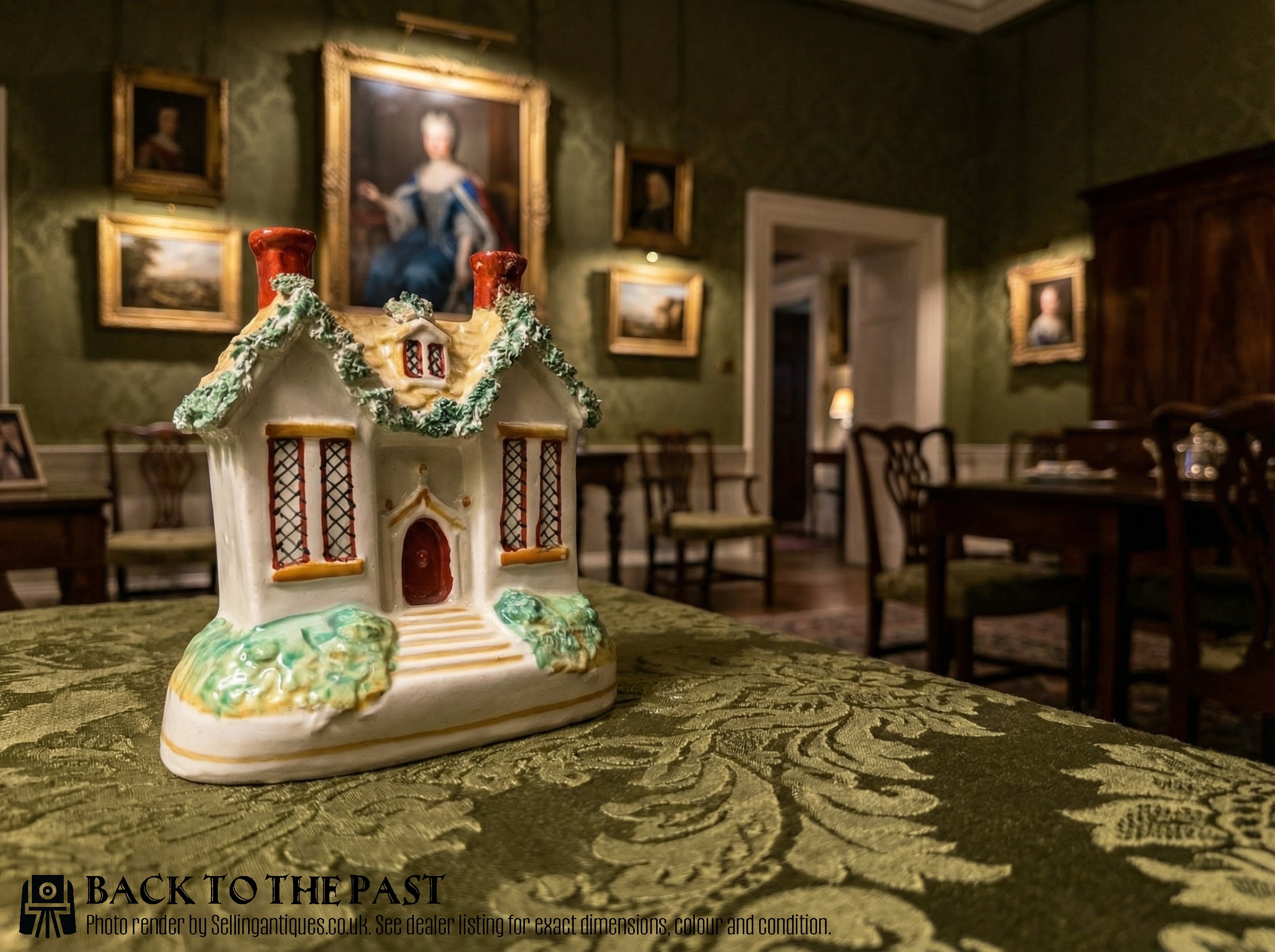
Staffordshire ceramic ornament pieces cover a wide range of decorative figures, portrait subjects, and animal groups produced primarily during the nineteenth century. These items were designed for the middle-class domestic interior, capturing everything from royal personages and literary characters to household pets.
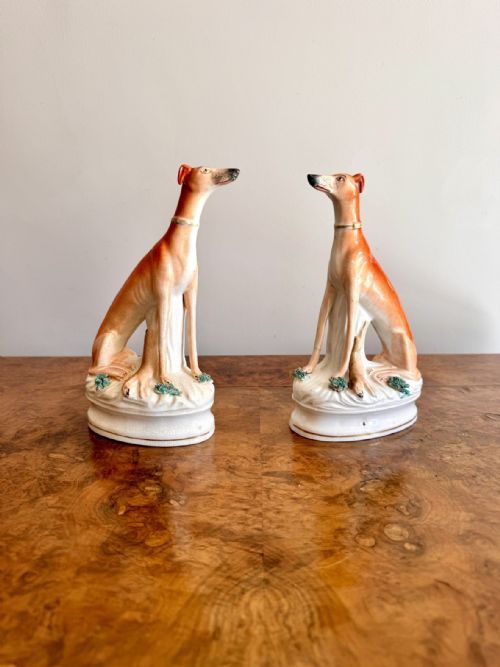
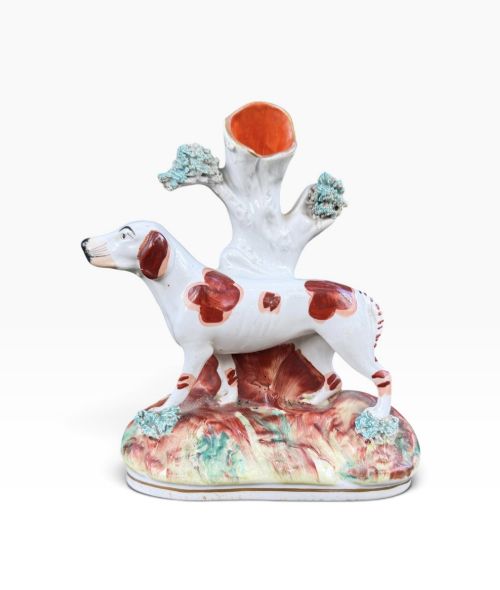
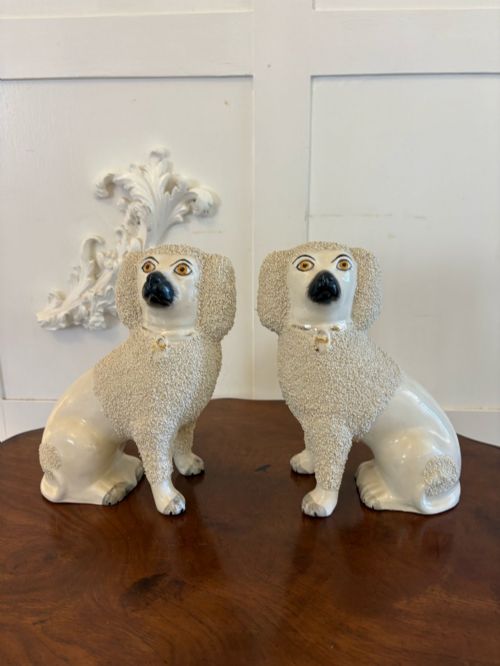
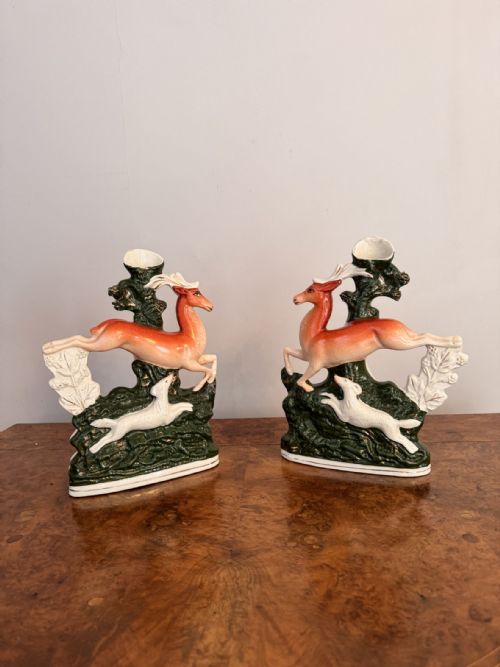
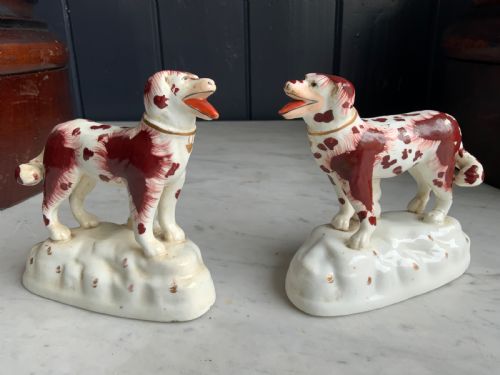
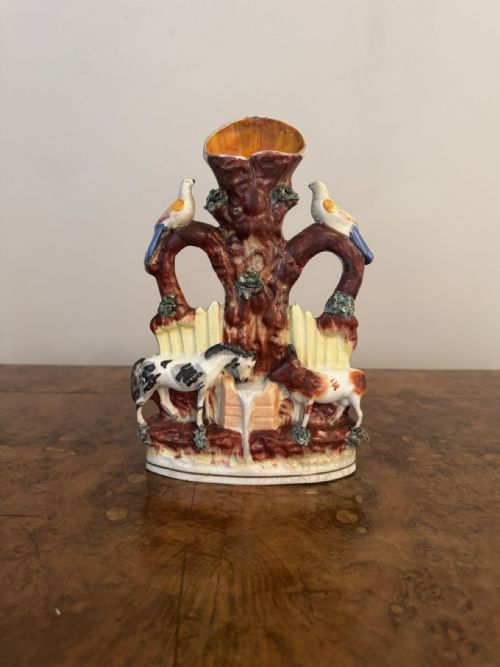
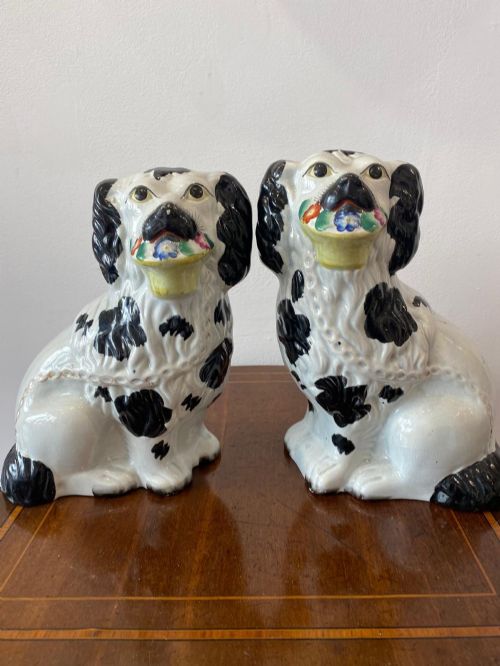
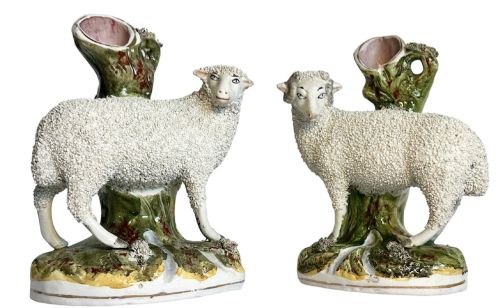
The most common form encountered on this page is the Victorian flatback figure or pair of dogs, intended to sit neatly against a wall. Animals such as spaniels, poodles, deer, and lions appear frequently, often styled as spill vases or seated companions.
Pieces span eras from Georgian pearlware groups through to late Victorian earthenware and porcelain examples. Figures range from simple folk art interpretations to detailed portraits of historical events and theatrical personalities.
Markers of quality
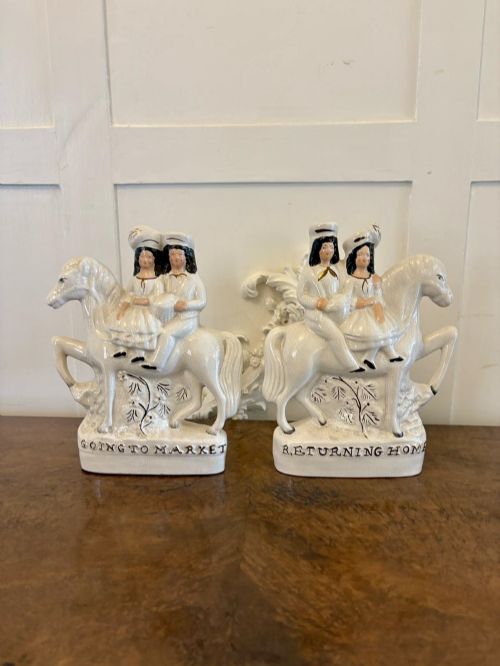
The sophistication of the subject matter and the complexity of the modelling distinguish superior pieces. Pairs that remain together with matching decoration and minimal restoration hold a stronger presence than mismatched or heavily repaired survivors.
Listings feature earthenware, porcelain, and pearlware bodies decorated with lead glaze, enamel, and gold leaf.
John Bevington·Rockingham Pottery·Ralph Wood·Longton Hall
The Staffordshire Ceramic Ornament Glossary
- Flatback
- A figure modelled with a finished front and a plain, unadorned back. This design allowed the ornament to sit flush against a cottage mantelpiece or shelf.
- Spill vase
- A hollow cylindrical vase incorporated into the design of a figure. These held wooden spills used for lighting pipes and candles.
- Pearlware
- A refined earthenware developed in the eighteenth century featuring a bluish glaze that pooled slightly in crevices. It provided a paler, whiter ground than standard creamware.
- Enamel
- Opaque colours applied over the fired glaze and fixed in a second, lower-temperature kiln. These pigments provided the bright reds, blues, and greens seen on Victorian figures.
- Treacle glaze
- A rich, dark brown lead glaze that created a glossy, translucent finish. It appears frequently on nineteenth-century animal figures and lions.
Staffordshire Ceramic Ornament: Frequently Asked Questions
How do I spot a reproduction?
Older pieces exhibit natural crazing in the glaze, softer enamel colours, and signs of age on the unglazed bases.
Modern copies often feel heavier, show bright, uniform machine painting, and lack the characteristic wear patterns of nineteenth-century items.
Why do some figures have flat backs?
Potters left the backs unmodelled and partially unglazed because these ornaments stood against walls in narrow rooms.
This technique also saved clay and prevented distortion during the high-temperature kiln firing.
What is a spill vase figure?
A spill vase combines a decorative animal or human sculpture with an integrated cylindrical holder for wooden tapers.
Households used these tapers to transfer flames from the fireplace to candles and oil lamps before matches became common.