
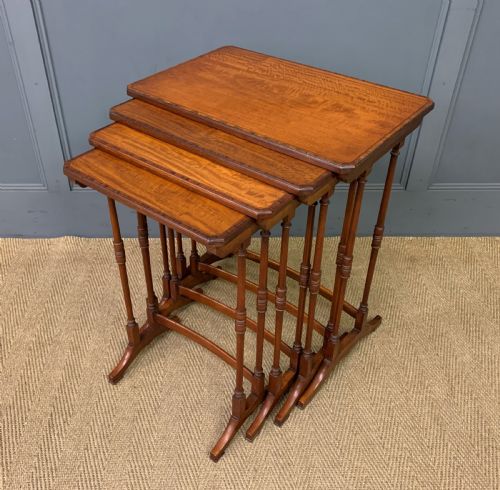


Stacked Tea Tables
Stacked tea tables are nested sets designed to save space while offering multiple surfaces, bringing versatility and traditional craftsmanship to any room.
Stacked Tea Tables
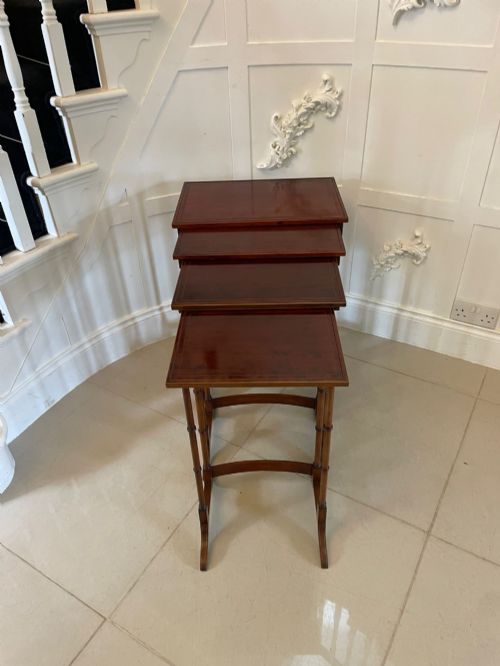
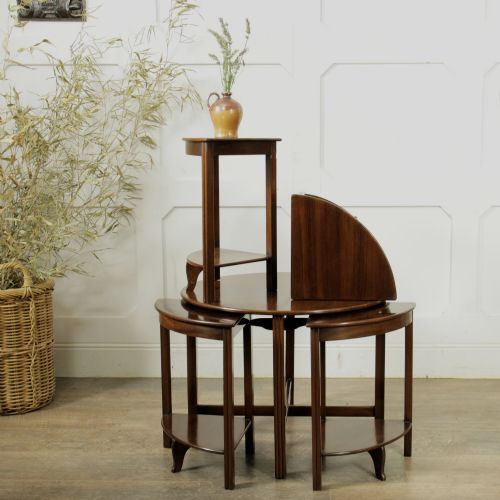
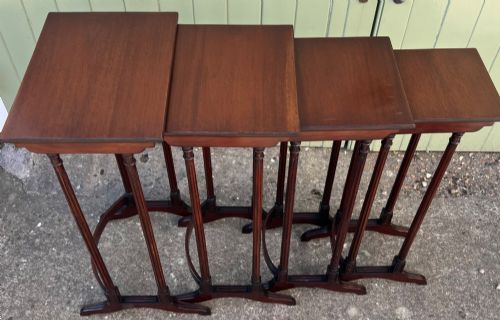
Stacked tea tables, frequently found as nests of tables in Edwardian and Victorian forms, offer a clever way to house multiple occasional surfaces within the footprint of a single piece. Buyers searching for stacked tea tables encounter pieces ranging from sets of three or four tables up to circular arrangements of five.
The selections span various origins and aesthetic influences, including English traditional designs, Chinese Qing Dynasty pieces, and Anglo-Indian work. Edwardian iterations in mahogany dominate the selection, often featuring delicate inlay work and quartetto arrangements designed to slide neatly one beneath another.
Materials and Construction
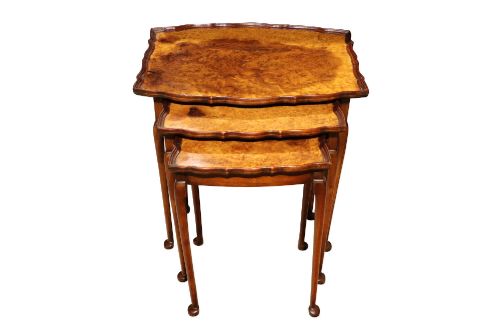
Makers utilised dense timbers such as mahogany, teak, oak, and hardwood to ensure the structural integrity required for daily nesting and extraction. Burr walnut and satinwood appear alongside boxwood inlay to create decorative contrast on top surfaces.
Construction techniques include traditional joinery adapted to slender frames, alongside specialised surface work like Chinoiserie decorated lacquer and intricate inlay. These methods allowed the smaller tables to maintain stability while fitting precisely beneath the main table.
Some Edwardian sets extend to five tables, creating a miniature geometric puzzle that requires exact sequencing to stack properly.
Factors That Distinguish Quality
Quality rests in the precision of the fit and the crispness of the timber selection, where superior sets slide together flush without binding or wobbling. The choice of figured veneers, such as burr walnut or detailed boxwood inlay, elevates the visual presence of the grouping.
Construction integrity in the joints and the condition of decorative elements like lacquer or hand-cut inlay distinguish standard utility pieces from finer examples intended for formal reception rooms.
The Stacked Tea Tables Glossary
- Quartetto
- A matched set of four small tables designed to nest together. This term frequently appears in Edwardian and Georgian style listings.
- Nest of Tables
- A group of graduated tables that fit inside one another to occupy the space of a single table. They provide flexible surface area for tea or hospitality.
- Inlay
- A technique of inserting pieces of contrasting material into a wood recessed surface to form decorative patterns. Boxwood and satinwood are common materials used for this detail.
- Hongmu
- A category of dense, heavy Chinese hardwoods often utilised for traditional furniture construction. These woods display deep natural tones and robust durability.
Stacked Tea Tables: Frequently Asked Questions
How were stacked tea tables used?
These tables served primarily during afternoon tea, allowing hosts to deploy extra surfaces for cups and plates as guests required them. Once tea concluded, the smaller tables slid back into the main frame to clear the room.
Their flexible nature meant they also functioned as occasional writing surfaces or book rests in smaller Victorian and Edwardian sitting rooms.
How do I care for inlaid wooden surfaces?
Keep wooden tables away from direct heat sources and strong sunlight to prevent the timber from drying out and the delicate inlay from lifting. Regular dusting with a soft, dry cloth preserves the finish without requiring heavy polishes.
Avoid placing damp items directly onto the polished wood to protect the grain and any lacquer decoration from water rings.
How can I tell an Edwardian set from a Victorian one?
Edwardian sets frequently exhibit lighter timber tones, slender proportions, and refined satinwood or boxwood inlay reflecting the lighter aesthetic of the early twentieth century. Victorian examples tend to use heavier mahogany stock with more robust framing and deeper traditional finishes.
Examining the underside and joint construction helps reveal the working methods typical of each period.
Are all stacked tea tables mahogany?
While mahogany is the most common timber found across these listings, the selection includes sets made from oak, teak, burr walnut, and oriental hardwoods. Chinese Qing Dynasty examples often utilise dense Hongmu, while other sets incorporate satinwood and lacquer decoration.
Each material dictates the overall weight and visual character of the nested grouping.