



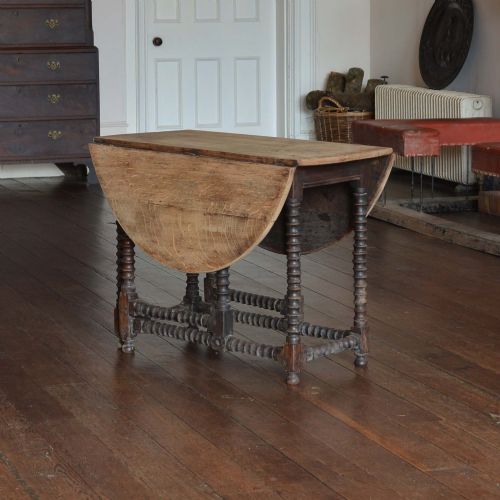


Spool Leg Side Table
These spool leg side table pieces bring turned timber character and practical surface space to a room, driven by structural bobbin details.
Spool Leg Side Table
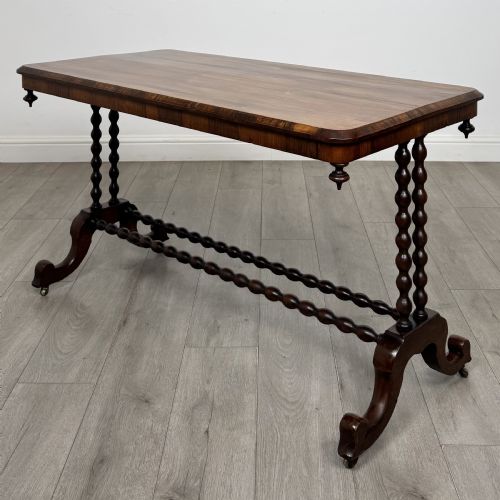
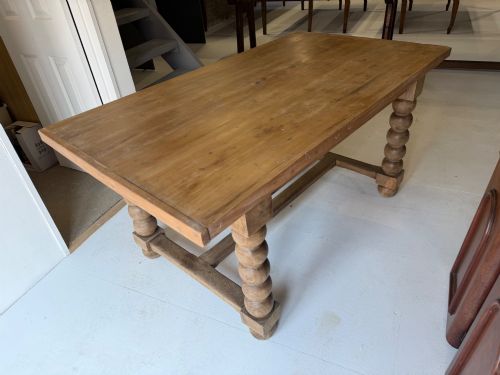
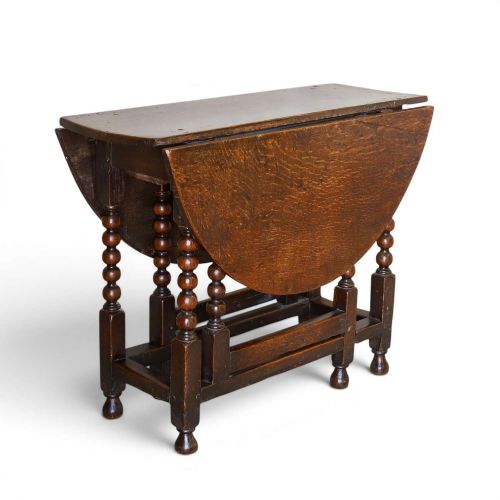
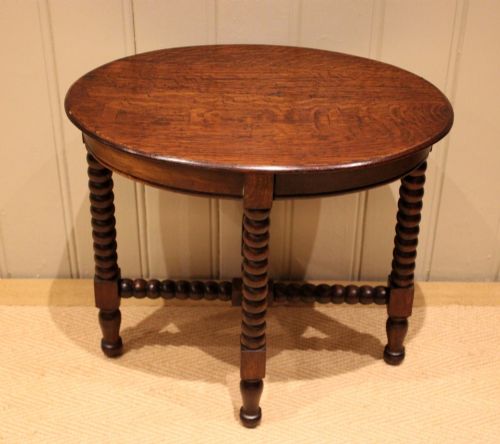
A spool leg side table combines a compact timber surface with distinct turned supports, appearing across the seventeenth, nineteenth, and early twentieth centuries. Buyers searching for a spool leg side table typically encounter oak, pine, or yew wood forms shaped as occasional, hall, or drop-leaf gateleg tables.
The aesthetic bridges several periods, from seventeenth century Jacobean and seventeenth century English designs to Victorian interpretations and Jacobean revival styles. Most pieces on offer date from the nineteenth century or the seventeen hundreds, utilising sturdy timbers for everyday use.
Forms vary from small oval shapes and cricket tables to two-drawer hall tables and gilded pieces with velvet tops. These variations offer distinct silhouettes while maintaining the defining turned leg structure.
Materials and construction
Makers shaped these pieces predominantly from solid hardwoods and softwoods such as oak, beech, pine, and yew wood, supplemented occasionally by brass accents or giltwood finishes. Woodturners formed the characteristic bobbin legs on a lathe, cutting repeating rounded collars and discs down the length of each timber post.
Joinery techniques tied these turned legs to sturdy aprons and table tops, frequently utilising pegged mortise and tenon joints in seventeenth century and revival pieces. Surface treatments ranged from simple waxed timber to red velvet inserts, fabric trim, and gilded highlights.
Listings feature woods spanning oak, pine, beech, yew wood, and giltwood, paired with textiles like velvet and fabric trim.
Judging quality in turned furniture
Quality rests in the crispness of the woodturning and the selection of timber, where tightly carved bobbins demonstrate greater skill than soft or worn profiles. Solid oak and yew wood examples show superior structural integrity compared to lighter pine or altered frames.
The harmony between the turned legs and the top defines the piece, with well-proportioned gateleg or drawer additions commanding stronger visual balance. Original surface treatments and finishes preservation also separate standard utilitarian items from finer decorative works.
The Spool Leg Side Table Glossary
- Bobbin turned
- A style of woodturning where a series of rounded, spool-like shapes are cut along the length of a leg or stretcher. This method creates a rhythmic, tactile profile popular in seventeenth-century and revival furniture.
- Gateleg table
- A drop-leaf table with hinged flaps supported by legs that swing outward like a gate. This construction provides an expandable surface while remaining compact when folded.
- Cricket table
- A small, lightweight three-legged table with a round top, traditionally used on uneven floors in cottages. The design offers natural stability.
- Jacobean revival
- A nineteenth-century historicist style copying the heavy forms and turned details of the early seventeenth century. It reinterprets earlier craftsmanship for Victorian interiors.
- Giltwood
- Timber coated with a thin layer of gold leaf or gold paint. This finish adds decorative brilliance to select antique frames and surfaces.
Spool Leg Side Table: Frequently Asked Questions
What periods do these tables come from?
The pieces span the seventeenth century through to the early twentieth century, including Victorian interpretations and later revivals.
Craftsmen recreated seventeenth-century Jacobean styles during the nineteenth century, meaning similar turned forms appear across different eras.
How do I distinguish oak from pine versions?
Oak is a heavy, dense hardwood with visible grain patterns and a naturally warm brown tone. It offers greater weight and durability.
Pine is a softer, lighter wood often painted or finished simply, typically showing a paler hue and simpler grain structures.
Where were these tables used originally?
These tables served as functional furniture in halls, parlours, and living spaces for holding small items or serving meals.
Gateleg and drop-leaf versions provided flexible surface areas that could expand when needed and fold away to save floor space.
What is a bobbin turned leg?
A bobbin turned leg is a wooden support shaped on a lathe to resemble a string of spools or bobbins. This decorative turning creates a distinctive, textured profile.
It appears on both seventeenth-century originals and nineteenth-century revival pieces.
How do I care for antique timber surfaces?
Maintain the wood by applying appropriate natural waxes periodically to nourish the dry grain and protect the finish. Avoid placing furniture in direct sunlight or near heat sources.
Keep surfaces dry and dust gently with a soft cloth to preserve the historic patina.