






Splayed Leg Tripod Table
These splayed leg tripod table pieces combine three spreading supports with a central pillar, offering a practical surface for lamps, drinks or dining.
Splayed Leg Tripod Table
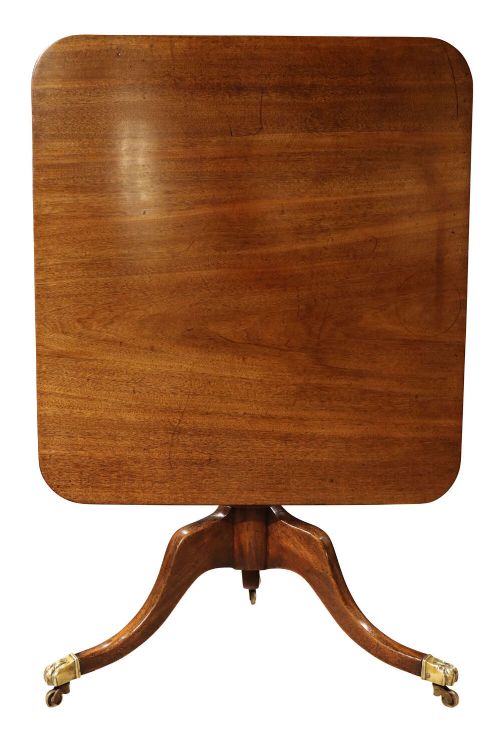
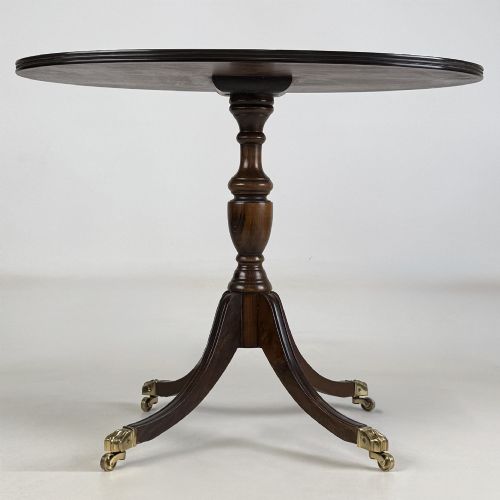
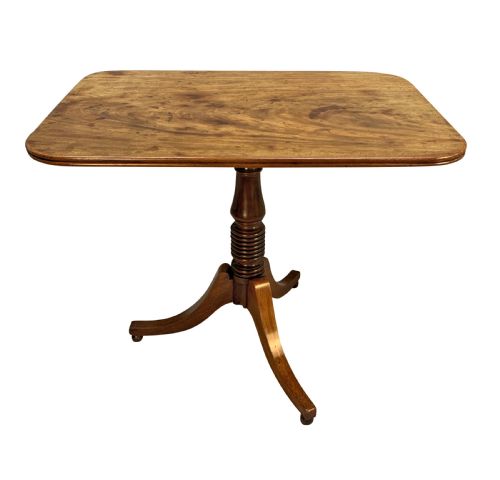
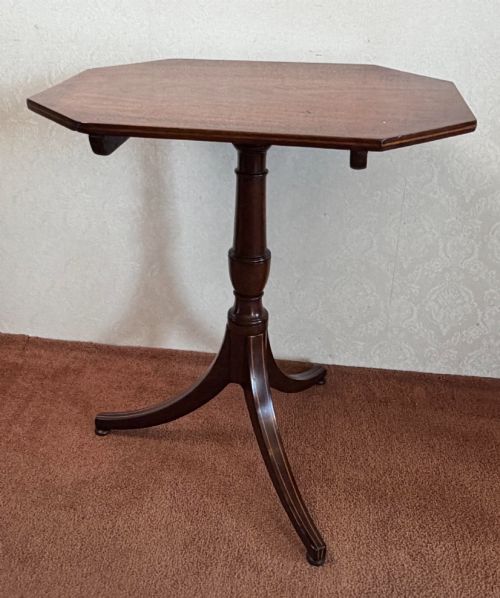
A splayed leg tripod table stands on three outward-curving legs that join a central column, providing stability on uneven floors while keeping the central floor space clear. The form appears across the Georgian, Regency and Edwardian periods, functioning variously as occasional tables, wine tables or tilt-top breakfast tables.
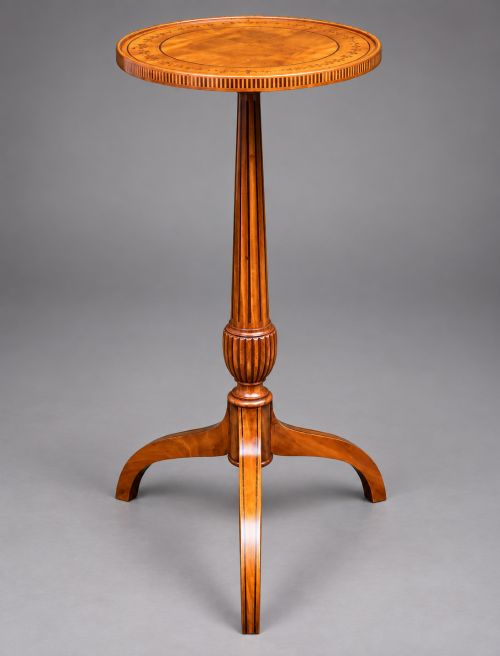
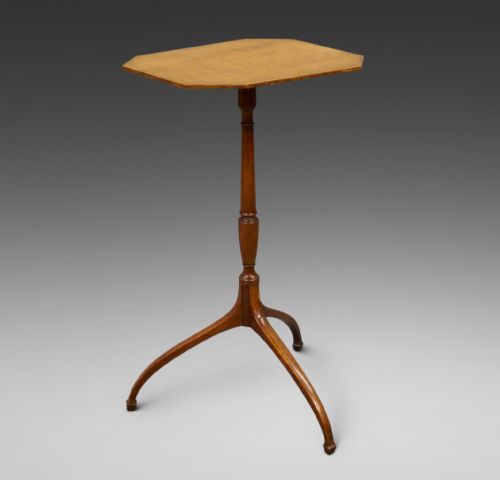
The versions most frequently met on this page date from the nineteenth century and the Georgian era, constructed primarily in mahogany or satinwood with occasional examples in oak, birch or burr veneers. Their surfaces range from circular tilt-tops to octagonal occasional tops, sometimes decorated with boxwood inlay.
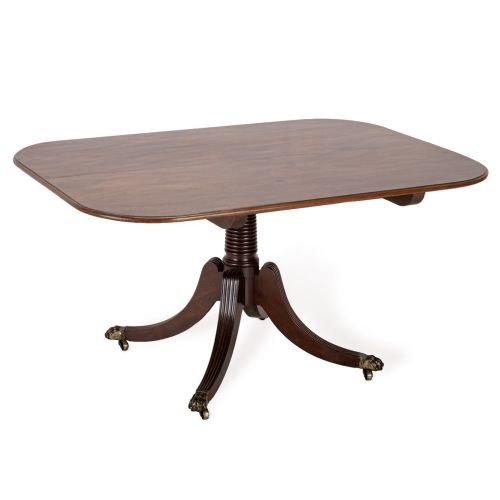
Smaller variants serve as lamp or wine tables beside seating, while larger George III examples function as dining or breakfast tables designed to seat several people. The three-legged format remains central to their design, ensuring the piece sits firmly without rocking.
How they were made
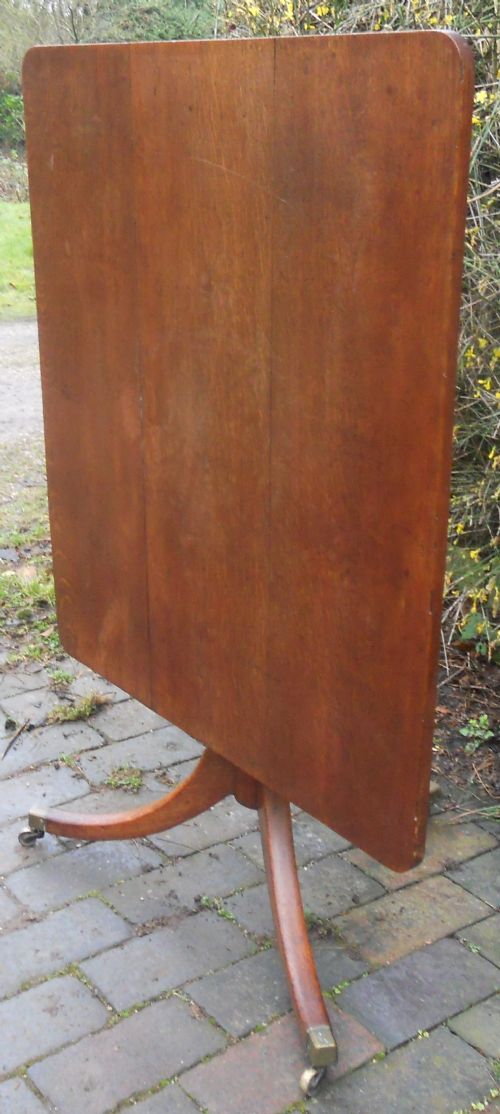
Cabinetmakers utilised solid timbers such as mahogany and oak alongside decorative veneers including satinwood, burr oak and burr yew. Tops were frequently fashioned as tilt-top mechanisms, allowing the surface to fold vertically when not in use.
Inlay work involved contrasting woods such as boxwood set directly into the primary timber of the top and legs. Brass components, including casters on Regency examples, provided mobility and protection to the feet.
Splayed Leg Tripod Table Retail Price Guide 2026
Typical asking prices for splayed leg tripod table among the pieces listed under this phrase on Sellingantiques today, from the lower quarter to the upper quarter. They describe what is for sale here now, not the wider market.
Some tilt-tops retain the original brass catches that allowed eighteenth-century diners to hide the table against the wall like an oversized wooden shield.
What varies in quality
The refinement of the timber selection dictates the visual standing of the piece, with figured grains and contrasting satinwood or boxwood inlay marking out finer examples. Construction details, particularly the jointing where the splayed legs meet the central pillar, determine the structural integrity.
Proportion and balance distinguish the work of skilled workshops from utilitarian production, visible in the sweep of the legs and the turning of the column.
Gillows
The Splayed Leg Tripod Table Glossary
- Tilt-top
- A tabletop mechanism featuring a catch that allows the surface to pivot flat for use or stand upright for storage. This clever hinge saves floor space when the furniture is pushed against a wall.
- Tripod base
- A support structure comprising three legs radiating from a central pillar. This arrangement prevents wobbling on irregular historical floorboards.
- Splayed legs
- Legs that angle outwards from the centre of the base. This stance broadens the footprint to increase stability.
- Occasional table
- A small, movable table designed for a specific, transient purpose such as holding a lamp or book. They appear in various shapes including circular and octagonal.
- Inlay
- A technique where contrasting pieces of wood are fitted into recesses flush with the surface. Boxwood and satinwood frequently serve this decorative function.
Splayed Leg Tripod Table: Frequently Asked Questions
What is a splayed leg tripod table used for?
These pieces serve multiple domestic functions depending on their top size and height. Smaller versions work well beside seating as lamp or wine tables.
Larger examples operate as breakfast or dining tables, and tilting mechanisms allow them to be stored flat against a wall when not in use.
How do I date a tripod table?
Dating relies on timber choices, decorative styles and construction methods. Georgian and Regency pieces often feature solid mahogany with turned columns, while Edwardian revivals introduce lighter woods and specific inlay patterns.
Cabinetmaking techniques change across periods, moving from heavy Georgian pedestals to lighter nineteenth-century occasional forms.
What woods were used for these tables?
Mahogany forms the primary material for the majority of Georgian and Regency pieces. Cabinetmakers also utilised oak, satinwood and birch.
Decorative elements often incorporate boxwood for stringing or inlay, alongside burr yew and burr oak veneers on the tops.