




Spiral Carved Wine Table
A spiral carved wine table brings sculptural turning and rich timber to a room, offering a compact surface suited to traditional settings.
Spiral Carved Wine Table
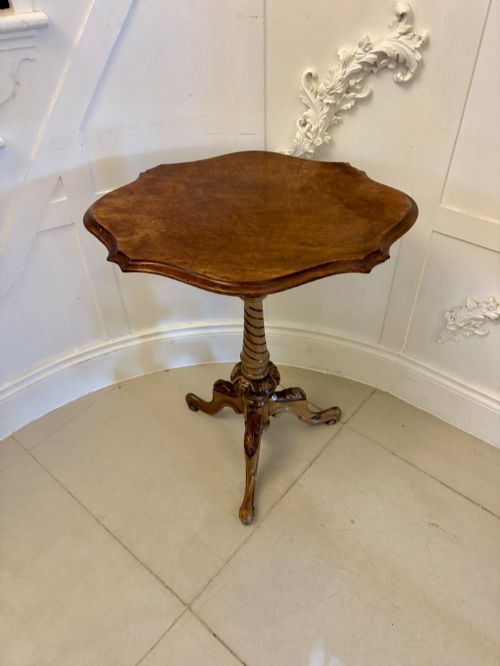
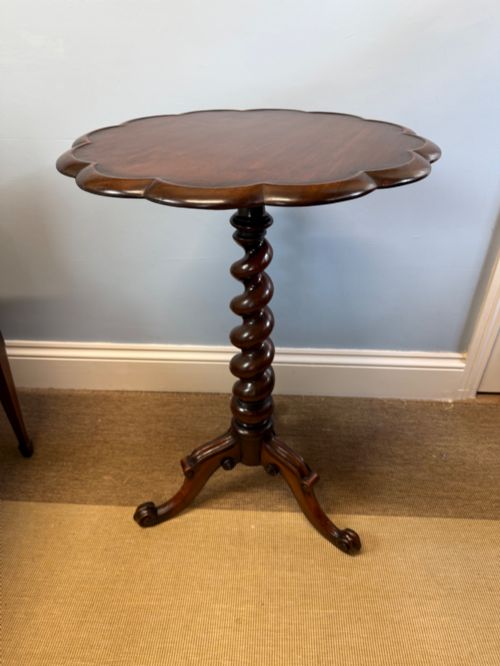
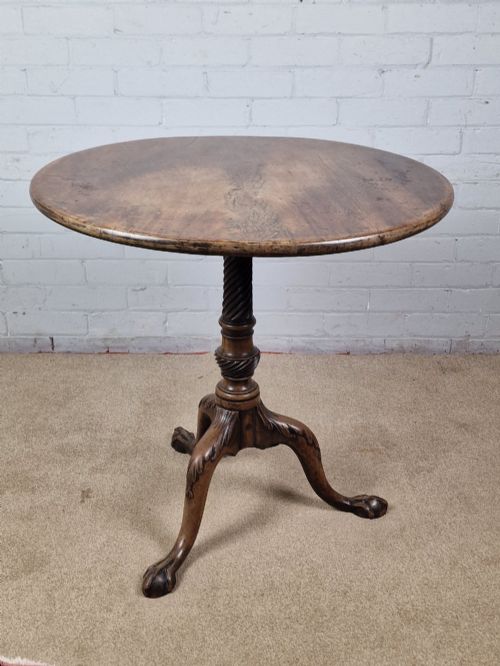
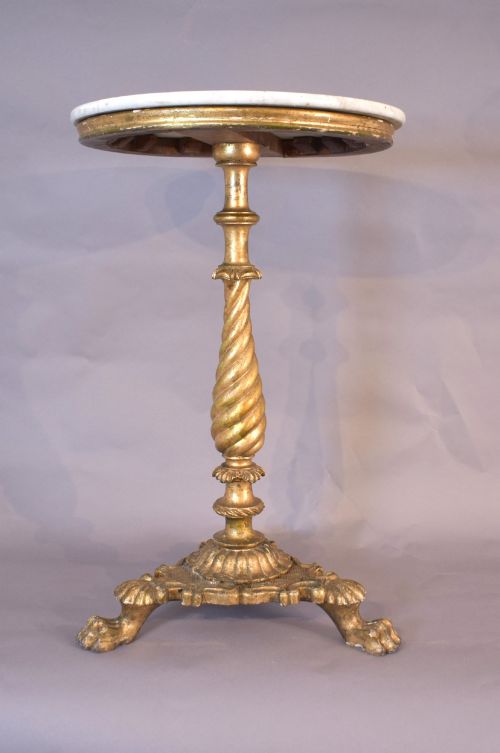
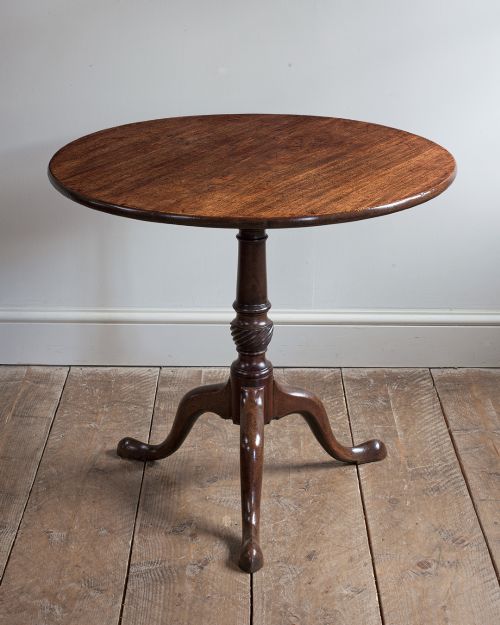
A spiral carved wine table is a small, portable support designed for holding drinks or small lamps, appearing across the eighteenth and nineteenth centuries in forms like tripod tables and tilt-top tables. These pieces often feature a pillar stem raised on three legs, making them easy to move beside a chair or sofa.
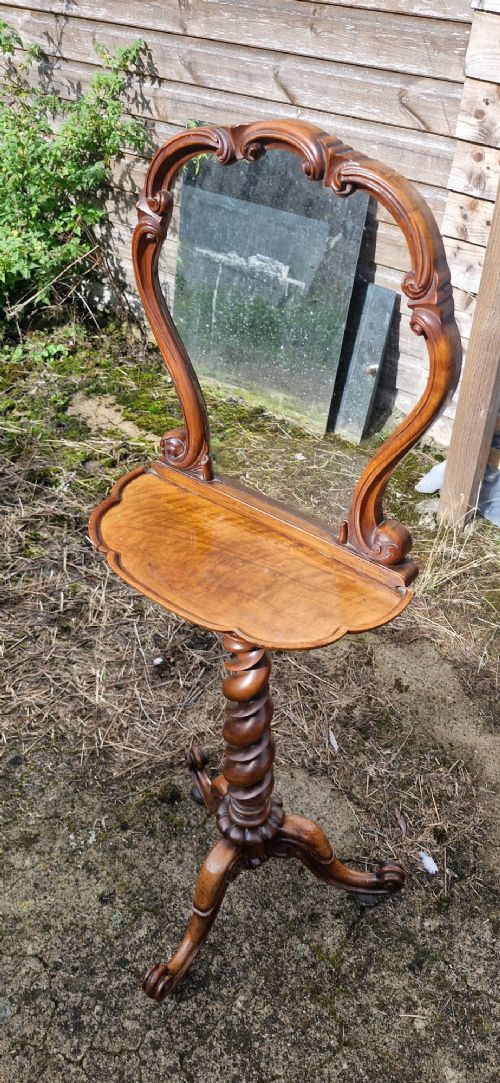
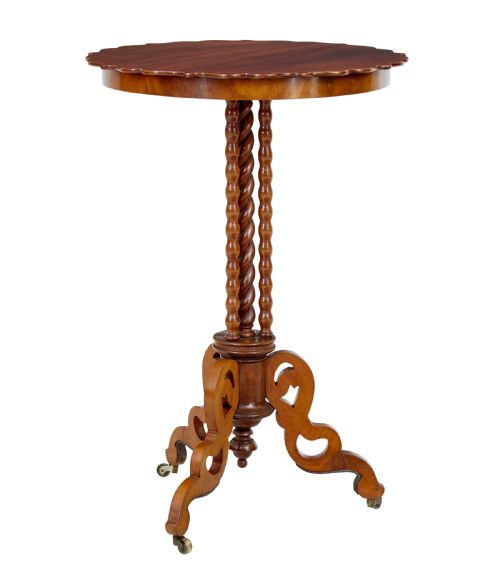
The versions most common on this page date from the Georgian and Victorian periods, executed primarily in mahogany or walnut. Makers varied the tops between round, square, octagonal and scalloped shapes, sometimes incorporating tilt mechanisms or glass backs.
Beyond the standard wine table, related occasional tables, side tables and teapoys appear in the listings, sharing similar pedestal construction and turning techniques. Buyers choose these smaller formats to add historical character without dominating a floor plan.
How they were made
Cabinetmakers constructed these tables using dense hardwoods such as mahogany and walnut, frequently selecting figured veneers or solid planks for the top. Boxwood stringing, brass fittings and paint provided decorative contrast on specific examples.
Turning the central pillar required precise lathe work to achieve the characteristic spiral fluting or bobbin profile, which was then paired with sturdy tripod legs connected by a peg or block joint.
Spiral Carved Wine Table Retail Price Guide 2026
Typical asking prices for spiral carved wine table among the pieces listed under this phrase on Sellingantiques today, from the lower quarter to the upper quarter. They describe what is for sale here now, not the wider market.
Listings span the eighteenth and nineteenth centuries, featuring periods such as Georgian, Regency, William IV and Victorian alongside materials like mahogany, walnut, burr maple and brass.
What varies in quality
Quality rests primarily in the crispness of the timber carving and the architectural balance of the tripod base relative to the top. Superior examples display deeply cut spiral stems and well-proportioned legs that integrate cleanly with the central column.
The choice of materials also marks the tier of a piece, with figured burr maple or burr walnut indicating more ambitious workshop production than plain secondary timbers.
The Spiral Carved Wine Table Glossary
- Tripod table
- A small standalone table supported by three legs radiating from a central pillar. This format allowed the piece to stand steady on uneven floors.
- Tilt-top table
- A table with a hinged top that folds flat when not in use. This mechanism enabled the furniture to be stored against a wall to save floor space.
- Teapoy
- A small box or chest on a pedestal base originally used for storing tea leaves. Later iterations served general occasional table functions.
- Boxwood-strung
- Inlaid with thin lines of pale boxwood to create geometric borders. This technique highlights the edges of table tops and drawer fronts.
- Bobbin turned
- Formed on a lathe to resemble a string of rounded wooden bobbins or beads. It appears on nineteenth-century supports and legs.
Spiral Carved Wine Table: Frequently Asked Questions
How were wine tables used historically?
These pieces served near seating areas to hold glasses, bottles or small lamps during evening gatherings. Their compact footprints allowed servants to reposition them easily within a drawing room.
Over time, owners also utilised them for display purposes, placing decorative objects or small silver items upon the raised surfaces.
How do I identify a Georgian table?
Georgian pieces typically display restrained classical proportions, often utilising solid mahogany with tripod bases and subtle mouldings. Construction details like hand-cut dovetails and pegged joints point toward this eighteenth-century era.
Subsequent Victorian examples often introduce heavier turning, inlay work, or walnut veneers while retaining the core pedestal format.
Where should I place a wine table?
A spiral carved wine table fits well beside an armchair or sofa where surface space is needed for a cup or a glass. Their slender stems and compact tops mean they occupy minimal floor space.
They also function effectively in corners or empty hallways as display points for small sculptures or decorative bowls.
What is a tilt-top mechanism?
A tilt-top mechanism uses a hinged block beneath the table surface that allows the top to rotate into a vertical position. This clever engineering enabled rooms to be cleared quickly when tables were not required.
When lowered, a small catch or wooden pin secures the top firmly in place for horizontal use.