

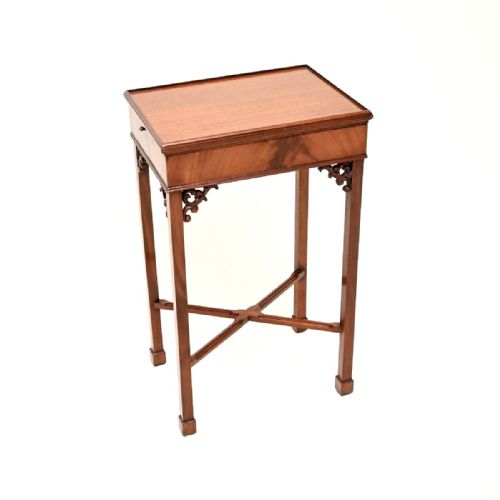


Small Mahogany Corner Table
A small mahogany corner table fits snugly into unused room junctions while offering a practical surface for display.
Small Mahogany Corner Table
A small mahogany corner table brings functional surface area to neglected room intersections using dense timber construction. The examples on this page span the Georgian, Regency, Victorian, and Edwardian periods.
Buyers seeking a small mahogany corner table will find variations such as corner washstands and Sheraton Revival hardwood corners alongside related occasional forms. These pieces utilise the natural grain of mahogany to provide understated elegance in domestic spaces.
How they were made
Makers utilised solid mahogany and hardwood, sometimes incorporating satinwood or boxwood inlay to accent the timber surfaces. Brass fittings occasionally appear on campaign or military-style pieces.
Construction methods rely on traditional cabinet-making techniques suited to supporting angular furniture. Turned legs and tripod bases provide stable support for the small tops.
Small Mahogany Corner Table Retail Price Guide 2026
Typical asking prices for small mahogany corner table among the pieces listed under this phrase on Sellingantiques today, from the lower quarter to the upper quarter. They describe what is for sale here now, not the wider market.
Some items are designed to tuck so neatly into an angle that they practically become part of the wainscoting.
What varies in quality
The sophistication of the timber figure and the crispness of any inlay dictate the visual standard of each piece. Superior examples display carefully selected grain patterns across the top and sides.
Proportion and structural joinery distinguish finer specimens from utilitarian items. The delicacy of turned legs and the precision of corner fitting reflect the skill of the original maker.
The Small Mahogany Corner Table Glossary
- Mahogany
- A durable tropical hardwood prized for its rich reddish-brown colour and fine grain. It forms the primary material for the majority of these tables.
- Sheraton Revival
- A late nineteenth and early twentieth century design movement that reinterpreted the light, neoclassical furniture styles of the Georgian era. Pieces often feature delicate inlay and refined proportions.
- Tripod base
- A three-legged support structure commonly found on occasional and side tables. This design ensures stability on uneven floors.
- Inlay
- A decorative technique where contrasting woods like satinwood or boxwood are inserted into recesses in the primary surface. It creates geometric or floral patterns.
Small Mahogany Corner Table: Frequently Asked Questions
Where should I place a corner table?
These pieces fit naturally into empty room intersections where standard rectangular furniture would block walkways. They make effective display surfaces for lamps or decorative objects.
Their compact footprint allows them to utilise awkward spaces in hallways, bedrooms, or reception rooms without cluttering the floor area.
How do I care for mahogany?
Keep the timber away from direct sunlight and heat sources to prevent the wood from drying out or fading. Regular dusting with a soft, dry cloth preserves the polished finish.
Occasional treatment with appropriate furniture wax maintains the moisture and lustre of the mahogany surface.
How can I tell the period?
Examine the construction methods, secondary timbers, and decorative motifs such as inlay or leg turnings. Georgian and Regency pieces show hand-cut joinery and period-specific proportions.
Edwardian and Sheraton Revival items often exhibit lighter construction and revivalist detailing that reflects early twentieth-century manufacturing standards.
Are these tables sturdy?
The three-legged tripod designs and corner-fitting frames offer inherent stability when placed correctly against walls. Their small scale means they are intended for lighter domestic use.
Heavier items should not be placed on delicate examples, but they safely hold lamps, books, and ornamental objects.