





Splay Leg Sofa Table
These splay leg sofa table pieces offer elegant proportions and useful surfaces, combining period charm with functional design for any room.
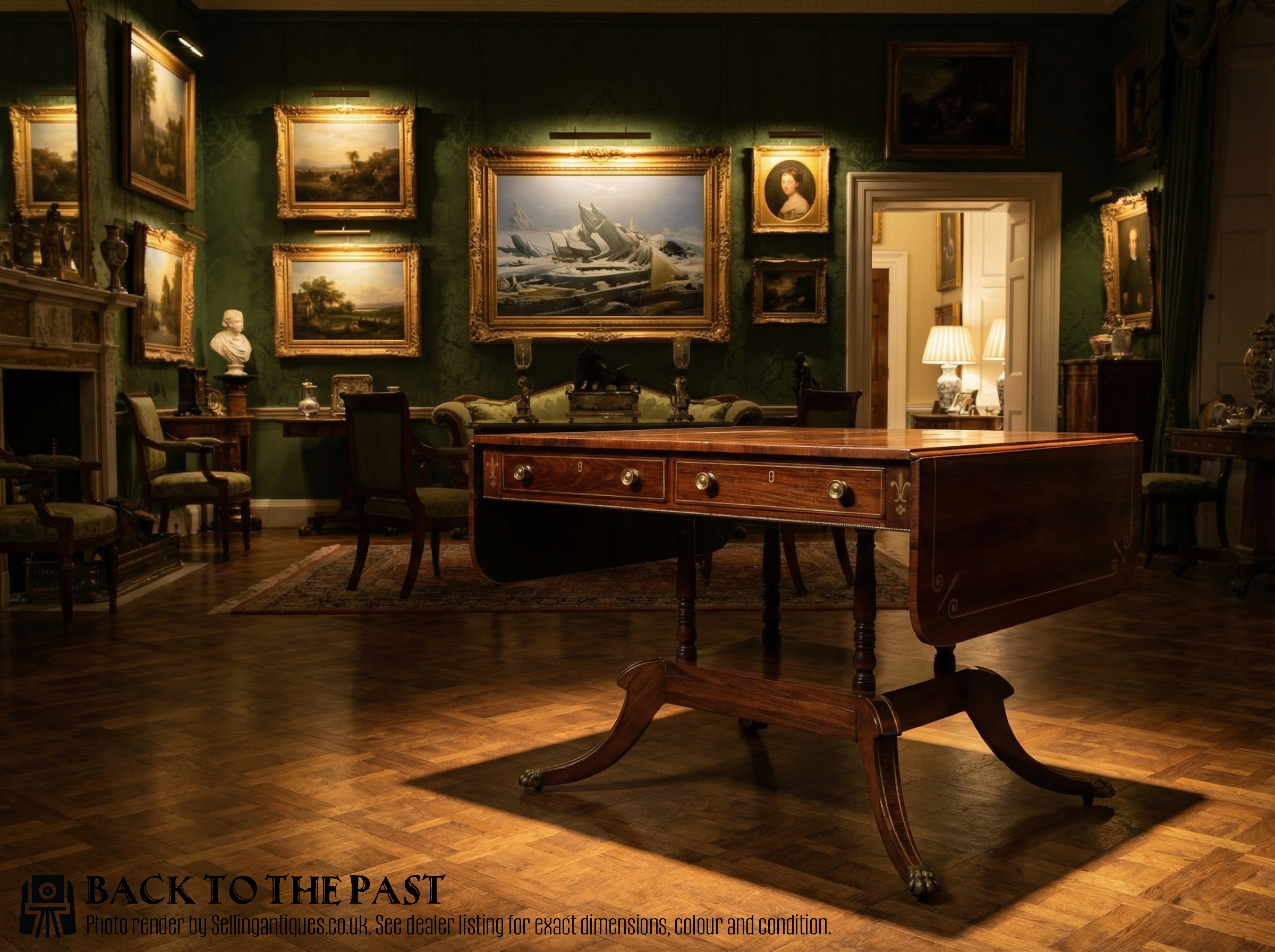
Splay Leg Sofa Table
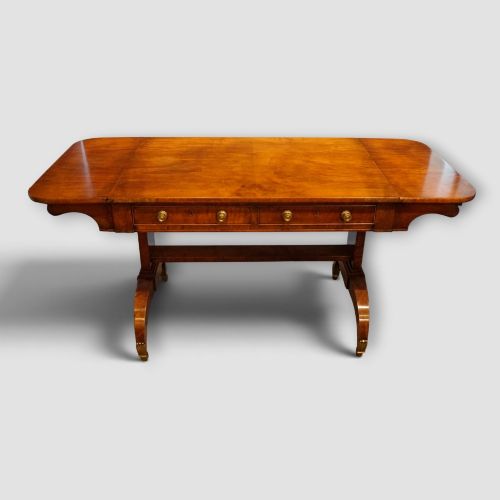
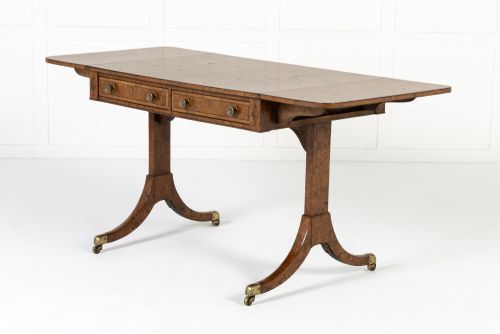
A splay leg sofa table is a versatile piece of antique furniture designed to sit comfortably in front of a sofa or stand freely in a room. The form emerges most frequently in Regency and Georgian periods, showcasing classic timber construction and distinctive angled supports.
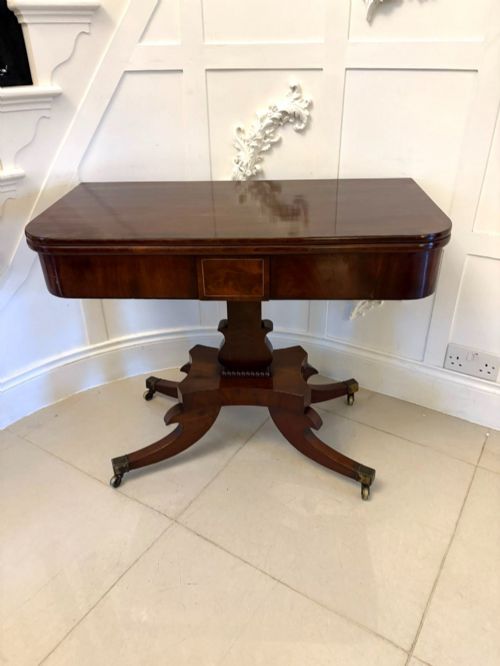
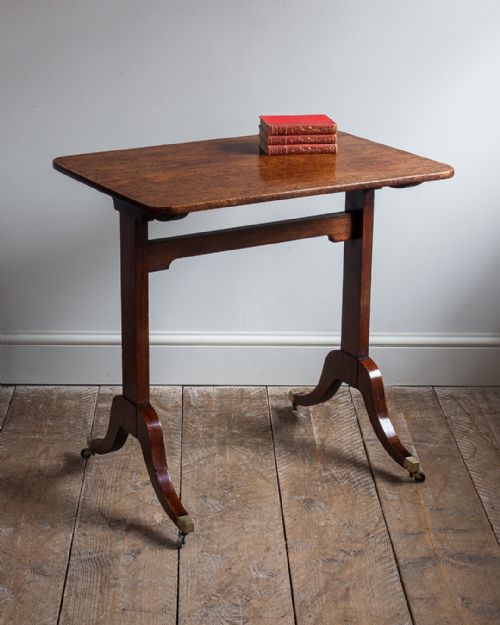
Buyers encountering this selection will discover various interpretations, including freestanding sofa tables, games tables, and occasional variants. Mahogany and rosewood dominate the physical evidence, often enhanced by satinwood inlay or brass mounts.
Origins span the eighteenth and nineteenth centuries, with later revivals appearing from the early twentieth century. These tables retain their original utility, offering drop leaves and drawers suited to contemporary living spaces.
Materials and construction
Makers relied heavily on dense tropical hardwoods like mahogany and rosewood, selected for durability and rich grain patterns. Timber surfaces were frequently finished with subtle stringing in satinwood or ebony to define the edges.
Brass formed an essential component, appearing as fine inlay work along table tops or as functional mounts and castors on the splay legs. Construction techniques involved precise joinery to support hinged flaps and freestanding stability.
Splay Leg Sofa Table Retail Price Guide 2026
Typical asking prices for splay leg sofa table among the pieces listed under this phrase on Sellingantiques today, from the lower quarter to the upper quarter. They describe what is for sale here now, not the wider market.
The listings demonstrate a strong preference for mahogany and rosewood across Regency and Georgian periods.
Distinguishing quality
The degree of refinement in timber selection and inlay work separates standard examples from exceptional ones. Figured mahogany or carefully matched rosewood veneers indicate higher workshop standards.
Proportion and execution of the splay legs define the architectural success of the piece. Crisp brass mounts and well-executed secondary woods reveal the original maker's investment of time and skill.
Gillington of Dublin
The Splay Leg Sofa Table Glossary
- Splay leg
- A support that angles outward from the vertical centre of the table. This configuration provides both stability and a distinctive profile characteristic of the period.
- Regency
- A British design period spanning the early nineteenth century. Characterised by classical influences, dark woods, and brass ornamentation.
- Inlay
- A technique where contrasting materials are set into recesses flush with the surface. Satinwood and ebony were frequently utilised for linear decoration.
- Pembroke table
- A small table with hinged flaps on two opposite sides. It shares many structural similarities with the sofa table form.
Splay Leg Sofa Table: Frequently Asked Questions
What is a splay leg sofa table used for?
These tables served originally as convenient surfaces near seating areas for writing, needlework, or holding tea service. Their drop leaves allowed them to expand or contract depending on the immediate need.
Today, they function brilliantly as console tables, desks, or freestanding room dividers. Their finished backs make them suitable for placement away from walls.
How do I identify a Regency sofa table?
Regency examples typically exhibit dark timbers such as mahogany or rosewood, often accented with brass inlay and mounted on splay leg supports with castors. The lines draw inspiration from classical Greek and Roman forms.
Look for crisp brass work and fine secondary timbers inside the drawer boxes. Construction methods and patination on the wood help confirm the period.
Can I use an antique sofa table every day?
These pieces were built from robust hardwoods designed for active domestic service. Regular use helps maintain the dry wax finish and deepens the natural patination.
Care should be taken with moisture and direct heat, placing coasters under glasses. Gentle polishing preserves the historic surface without stripping character.
What is the difference between George III and Regency pieces?
George III furniture generally reflects earlier Georgian restraint, favouring solid mahogany construction with understated carving and bracket feet. Proportions are balanced and architectural.
Regency design introduces bolder contrasts, exotic veneers, and gilt bronze or brass mounts. The silhouette becomes lighter and more adventurous, embracing splay leg arrangements.