
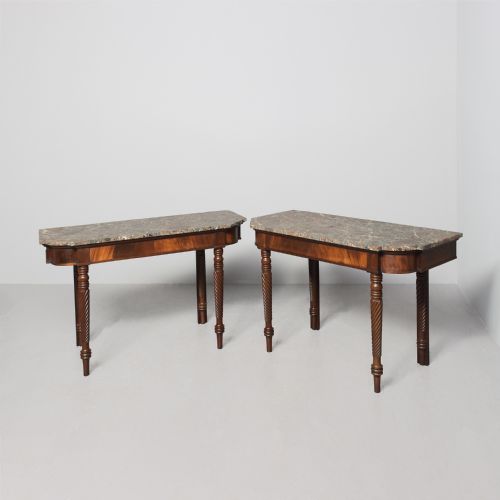
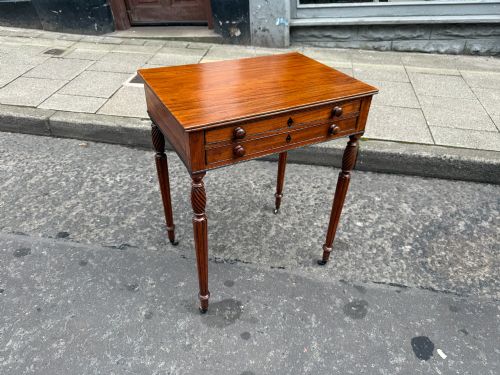
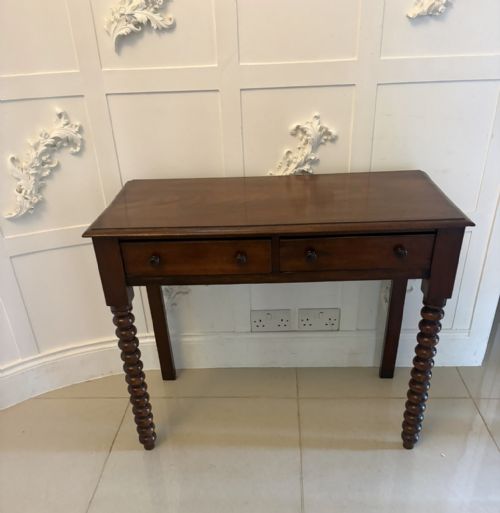
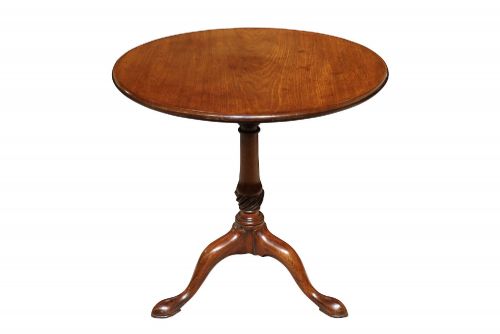


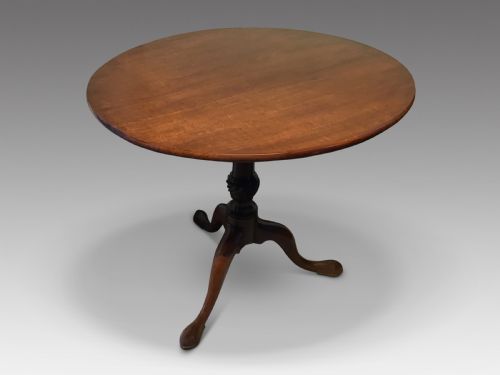


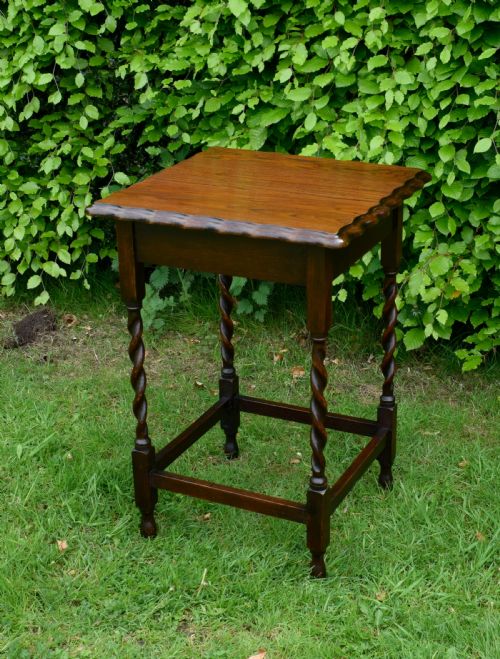

Spiral Turned Side Table
These pieces known as a spiral turned side table bring structured form and warmth to a room through distinctive twisted timber work.
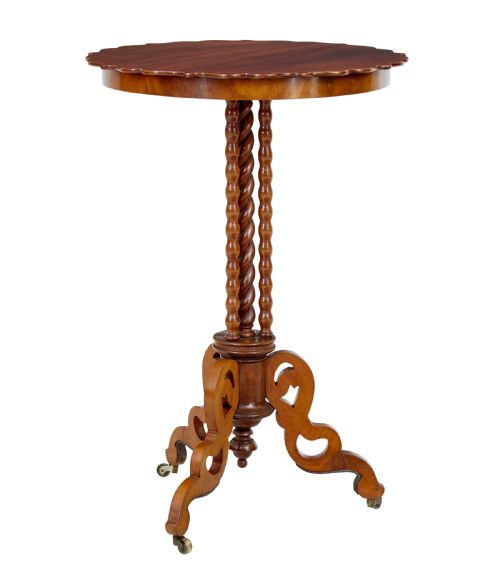
Spiral Turned Side Table
A spiral turned side table brings distinct character to a room through architectural timber shaping.
The selections range from seventeenth-century marquetry pieces to nineteenth-century walnut and mahogany examples.
These items appear in various forms including occasional tables, console tables, and tea tables.
Construction and timber choice
Cabinet makers utilised dense hardwoods such as mahogany, walnut, and oak to carve stable supports.
Inlaid surfaces often incorporated satinwood and boxwood stringing to create geometric or floral patterns.
Specialised turning lathes shaped the timber columns into uniform spirals and bobbin motifs.
Some tables feature feet turned so sharply they look ready to walk across the floor by themselves.
Assessing craftsmanship and condition
Superior examples demonstrate crisp, deep carving along the twisted stems without modern sanding softening the edges.
The harmony of proportion between the turned base and the timber top dictates the visual success of the piece.
The Spiral Turned Side Table Glossary
- Barley twist
- A cylindrical timber column carved into a helical screw pattern resembling a stalk of barley. This technique became popular during the seventeenth century and returned during later revival periods.
- Marquetry
- The art of applying fitted pieces of wood veneer to a structure to form decorative patterns. Craftsmen utilised different coloured timbers to achieve pictorial depth.
- Tripod table
- A small freestanding table supported by a central pillar above three splayed legs. These agile items served various functions in Georgian and Victorian interiors.
- Parquetry
- Geometric wood mosaic work used for floors and table surfaces. Makers arranged contrasting timber blocks to create repeating patterns.
Spiral Turned Side Table: Frequently Asked Questions
How do I date a spiral table?
Examine the timber species, construction joints, and the sharpness of the turning work. Earlier pieces often display pegged joints and native hardwoods like oak.
Later Victorian revivals utilise denser mahogany or walnut with machine-finished consistency and different secondary woods beneath the surface.
Where should I place a side table?
These tables suit hallways, beside seating areas, or against plain walls where the turned legs remain fully visible. Their compact footprint allows them to occupy awkward corners without crowding a room.
Keep them away from direct heat sources and strong sunlight to protect the polished timber and delicate veneer work.
How do I care for antique timber?
Dust the surface regularly with a soft, dry cloth and apply a quality beeswax periodically to nourish the wood. Avoid silicone polishes that build up a sticky residue over time.
Maintain a stable room humidity to prevent the timber top from warping or the delicate veneer from lifting.