


Antique Square Tripod Table
An antique square tripod table balances a pedestal base with a practical top, offering a versatile surface for daily use in any room.
Antique Square Tripod Table
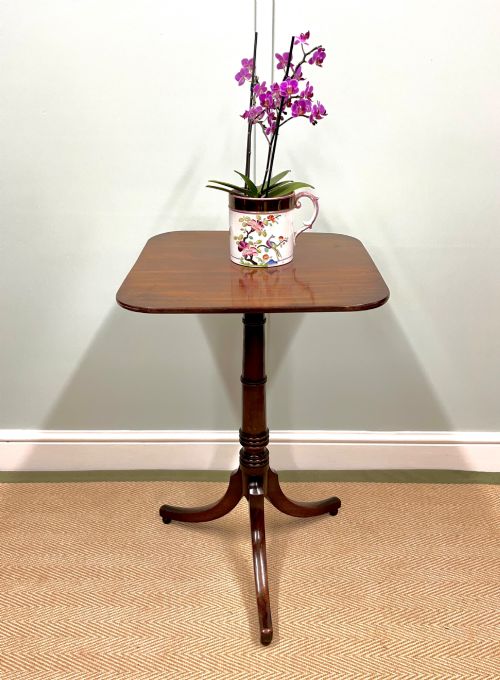
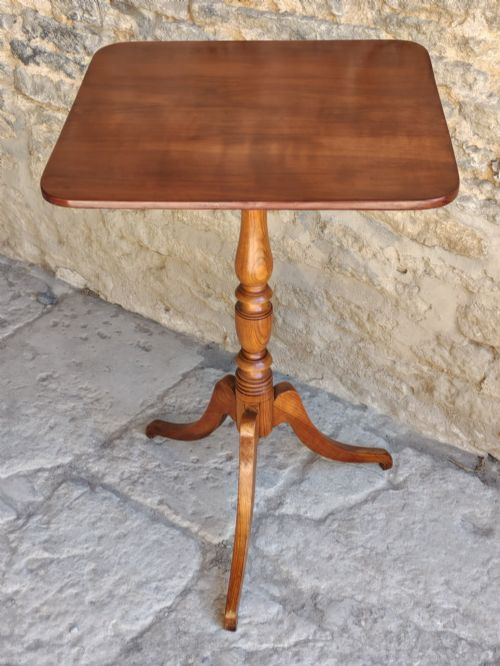
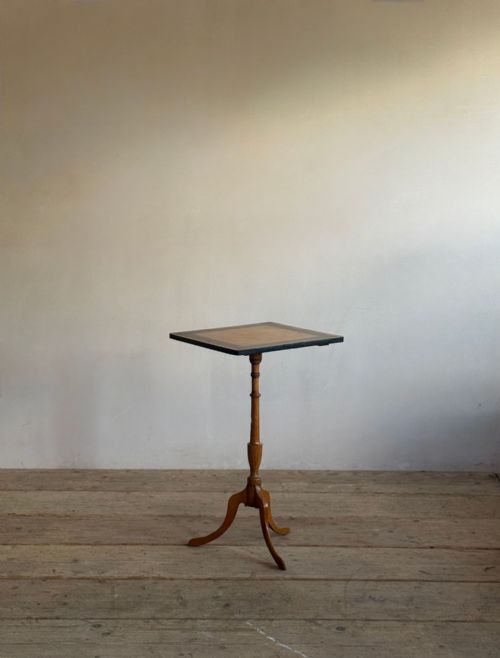
When you search for an antique square tripod table, you are looking at small tables supported by a central pillar and three feet. The selection spans the 18th century, Georgian, Regency, and Victorian periods, with pieces appearing in forms such as wine tables, side tables, and occasional tables.
Mahogany dominates the listings, alongside fruitwood, burr yew, rosewood, oak, palm wood, and alder root. You will encounter occasional variations like penwork decoration or a gallery top, built to serve as lamp tables or kettle stands.
The top of the table often connects to the stem via a tilt mechanism or a fixed mount, sometimes designed to snap into place. These pieces range from restrained country furniture to finely proportioned Georgian and Regency designs.
How they were made
Cabinetmakers utilised dense timbers such as mahogany, oak, and fruitwood for durability and stability on a three-point base. Turning techniques shaped the central pedestals and legs, while joinery methods secured the square tops to the pillars.
Specialised surfaces involved decorative details like penwork in ink, or distinct finishes applied to burr yew and alder root veneers. Tilt-top mechanisms required precise fitting of wooden catches and brass hinges to allow the surface to pivot smoothly.
Materials across these listings include mahogany, oak, fruitwood, rosewood, burr yew, palm wood, and alder root.
What varies in quality
Quality rests in the choice of timber and the proportion of the three legs relative to the square top. Selected grains in mahogany or burr yew elevate a piece from a utilitarian stand to a polished example of period cabinetmaking.
The integrity of the pedestal joint and the smoothness of the tilt mechanism dictate daily utility. Subtly turned stems and well-carved snake or spade feet separate workshops of high skill from straightforward domestic production.
The Antique Square Tripod Table Glossary
- Tripod table
- A small freestanding table supported by a central pillar resting on three legs. This construction prevents wobbling on uneven floors.
- Tilt top
- A table surface hinged to the pillar so it can be flipped vertically when not in use. This allowed the table to be stored flat against a wall.
- Snap top
- A tabletop secured by a spring catch mechanism that locks the surface horizontally. It prevents the top from pivoting unexpectedly during use.
- Gallery top
- A raised rim edging the tabletop, often pierced or fretted. It kept small items like cups or wine bottles from sliding off.
- Penwork
- Surface decoration created using ink and fine nibs to draw intricate patterns onto the wood. It was popular during the Georgian period for light occasional pieces.
Antique Square Tripod Table: Frequently Asked Questions
What were square tripod tables used for?
These tables served as mobile surfaces for tea, wine, or holding lamps and kettles beside seating. Their compact footprint allowed them to be moved easily around a room as needed.
They also functioned as display stands for decorative objects or reading materials. In domestic spaces, their versatility made them practical additions to parlours and drawing rooms.
How do I identify a Georgian tripod table?
Georgian examples often feature solid mahogany construction with substantial pillar turnings and tripod legs ending in pad or snake feet. Proportions tend to be balanced, prioritising structural sturdiness.
Look for hand-cut joinery methods underneath the top and around the block connecting the stem to the legs. Age is evident in the timber's dry, patinated finish rather than modern synthetic varnishes.
What is the difference between a tilt top and a snap top?
A tilt top simply uses a hinge allowing the surface to drop vertically against the pedestal. You lift the table top to pivot it on its axis.
A snap top includes a wooden or brass latch mechanism that locks the surface rigidly into place when lowered. This keeps the table top stable and level for daily use.
How do I care for a vintage wood table?
Keep the wood away from direct heat sources and strong sunlight to prevent the timber from splitting or warping. Dust regularly with a soft dry cloth and avoid silicone-based polishes.
Apply a microcrystalline wax occasionally to feed the grain and protect the finish. Ensuring the central mechanism remains clean prevents undue wear on the moving parts.