
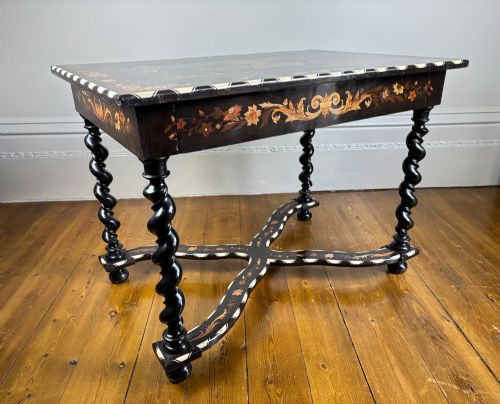
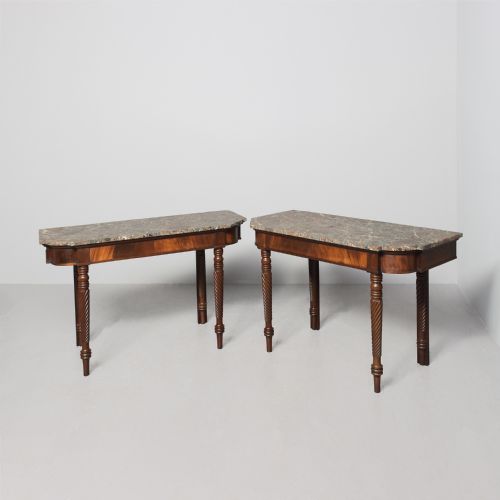
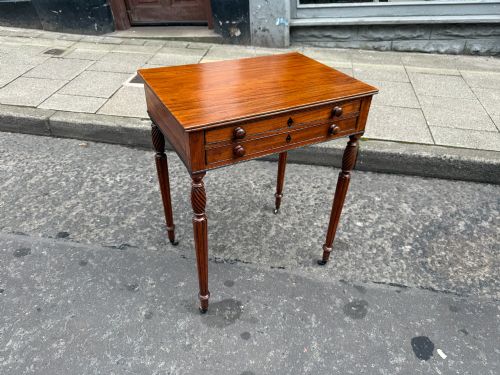
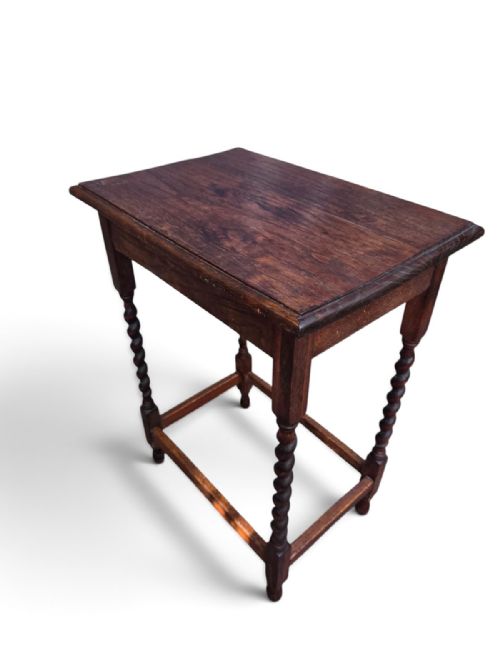




Spiral Leg Side Table
A spiral leg side table brings sculptural timberwork and compact utility to a room, offering rich period character alongside daily surface space.
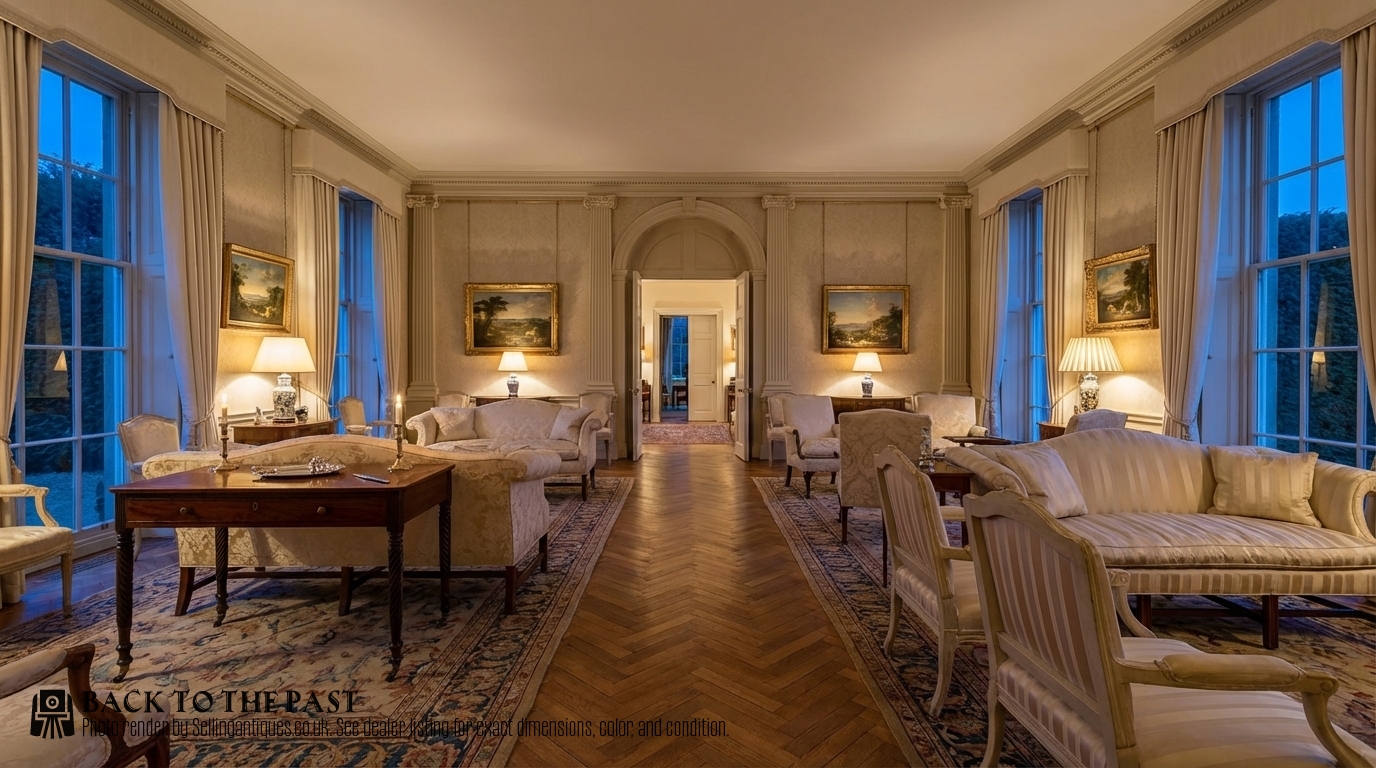
Spiral Leg Side Table
A spiral leg side table brings functional surface area to a room while displaying the distinctive turned timber supports found across various historical periods. When searching for a spiral leg side table, buyers encounter examples ranging from 17th-century interpretations to later revival pieces, encompassing forms such as occasional tables, lamp tables, and compact console tables.
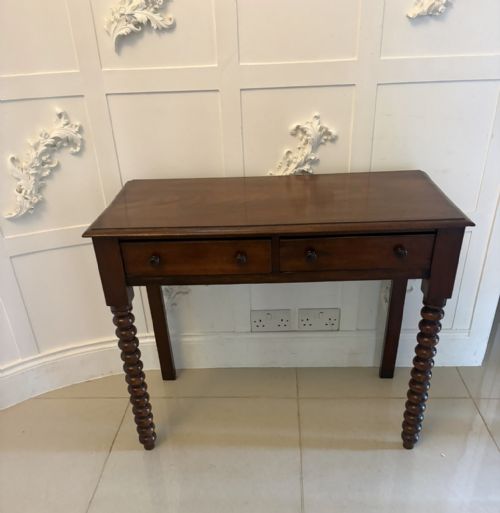
The materials utilised in these pieces reflect centuries of cabinet-making traditions, with mahogany, oak, walnut, and rosewood appearing frequently alongside occasional accents of boxwood, satinwood, and marble. Makers combined these dense timbers with structural supports referred to historically as barley twist or bobbin turning, creating a visual rhythm that defines the profile of the furniture.
Originating in domestic interiors for service and display, these tables suit modern living spaces as bedside stands, lamp supports, or hallway surfaces. The selection spans several eras including Georgian, Victorian, Regency, and Edwardian periods, demonstrating how the characteristic twisted turning endured through successive design movements.
Materials and construction methods
Cabinet-makers relied on dense hardwoods such as mahogany, oak, walnut, and rosewood to construct the frames and legs of these tables. These timbers provided the structural integrity required to support turned components without splitting under daily use.
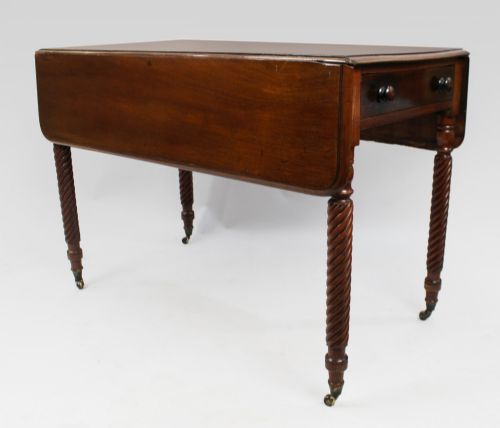
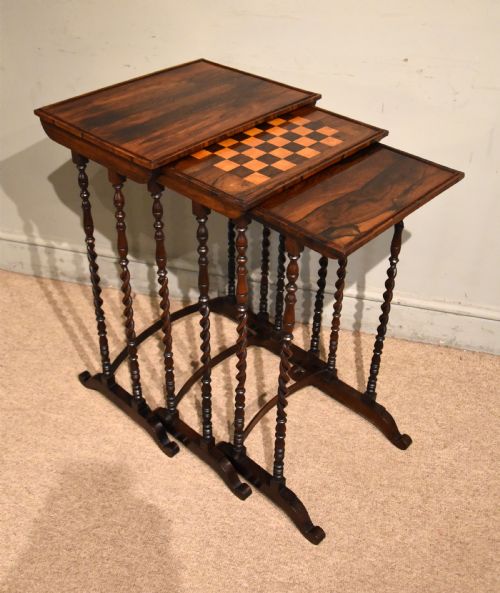
The characteristic spiral or barley twist legs were shaped using lathe-turning and hand-carving techniques. Craftsmen carved the helical grooves into solid timber posts, matching the twist precisely across all four legs or a central column.
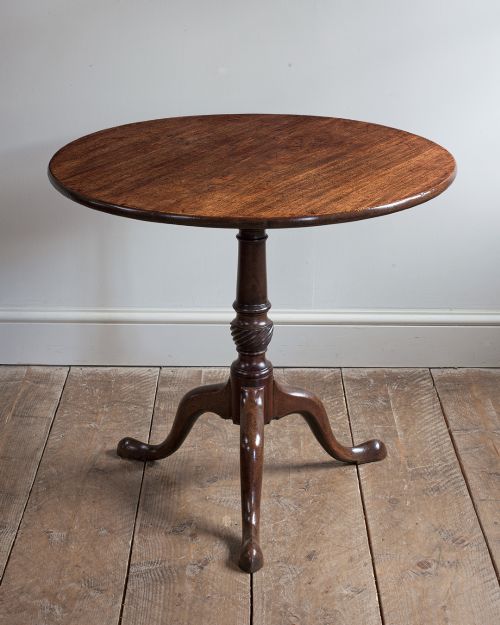
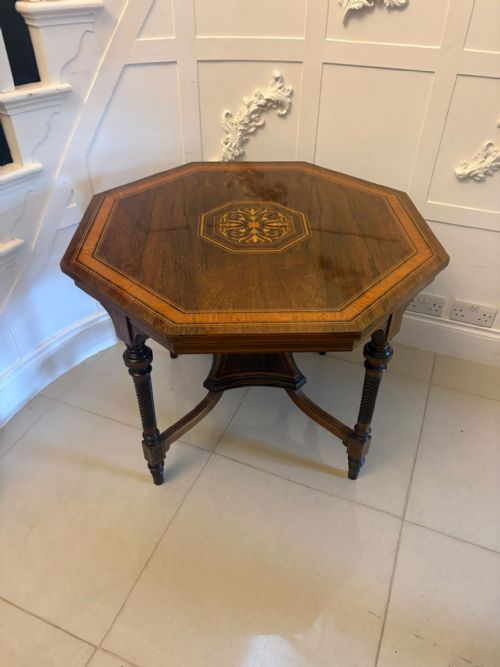
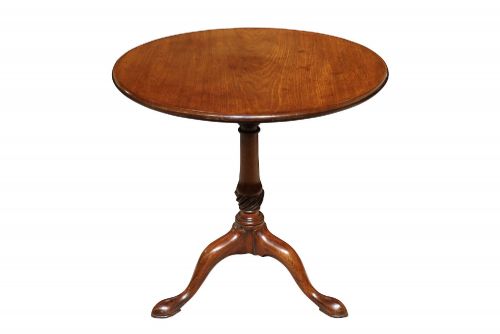
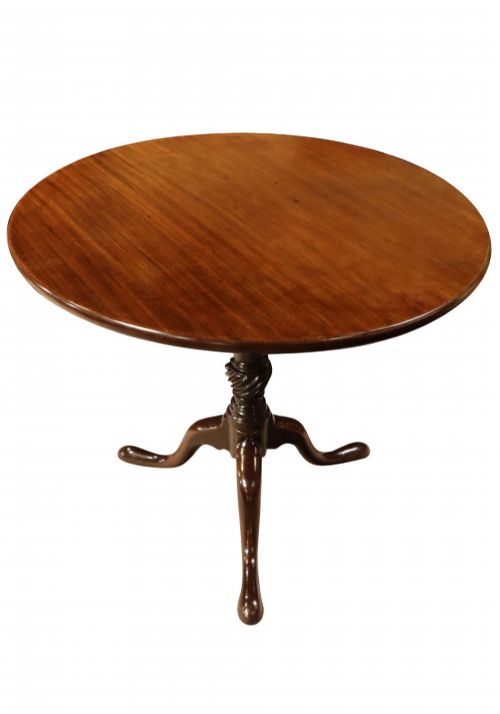
Surfaces frequently feature decorative elements such as parquetry, marquetry inlay, or birdcage mechanisms allowing the top to tilt and rotate. Joinery techniques included mortise and tenon frames, securing the turned legs firmly to the rails and tabletops.
Some tables hide clever birdcage mechanisms beneath their tops, letting proud owners tilt the surface upright when not in use to admire the joinery.
Assessing quality and craftsmanship
Quality rests heavily on the crispness and symmetry of the hand-turned spiral twist work across the legs. Finer examples display deeply carved, evenly proportioned rotations without the flatness or mechanical regularity seen in later machine-produced substitutes.
The choice and figuring of the timber dictate the visual hierarchy of the piece, with richly grained mahogany, burr walnut, and figured rosewood commanding greater attention. Secondary timbers used for drawer linings and internal framing also indicate the standard of construction applied by the maker.
Stability and proportion separate superior specimens from simpler utility pieces, ensuring the table stands firmly on its turned supports while maintaining balanced visual weight between the top and the base.
The Spiral Leg Side Table Glossary
- Barley twist
- A type of turning resembling a helical screw or twisted rope. This decorative form gained prominence in 17th-century furniture and returned in later revival periods.
- Occasional table
- A small, versatile table designed for specific, intermittent use within a room. These pieces function easily as lamp stands, tea tables, or small display surfaces.
- Marquetry
- The art of applying fitted pieces of wood veneer to a structure to form decorative patterns or pictures. Craftsmen utilised contrasting timbers like boxwood and satinwood to achieve distinct tonal effects.
- Birdcage
- A timber framework beneath a table top allowing it to rotate and tilt. This mechanism typically appears on tripod occasional tables from the 18th century.
- Bobbin turning
- A method of lathe-turning timber into a series of rounded, spool-like shapes resembling bobbins strung together. It appears frequently on late 19th-century occasional and side tables.
Spiral Leg Side Table: Frequently Asked Questions
Where should I place a spiral leg side table?
These compact tables fit well beside seating areas as lamp or occasional surfaces, or in hallways as decorative display points.
Their narrow footprints and varied heights allow them to integrate into both traditional and contemporary interiors without overwhelming the room.
How do I distinguish 17th-century twists from later revivals?
Early examples often display hand-carved irregularity and are constructed from native oaks or early imported walnuts with distinct patina.
Later Victorian and Edwardian revival pieces usually exhibit machine-standard precision and employ denser tropical hardwoods like mahogany or rosewood.
What is the difference between a side table and a console table?
Side tables typically feature four legs and stand freely within a room, offering general surface utility for lamps or books.
Console tables are traditionally designed to sit flush against a wall, sometimes relying on structural support from the vertical surface behind them.
Can I use an antique tripod table for daily dining?
Tripod tables with tilt-top or birdcage mechanisms are primarily built for decorative display, correspondence, or holding small items.
Placing heavy dining objects upon them risks straining the central column and the pivot mechanism beneath the top.