



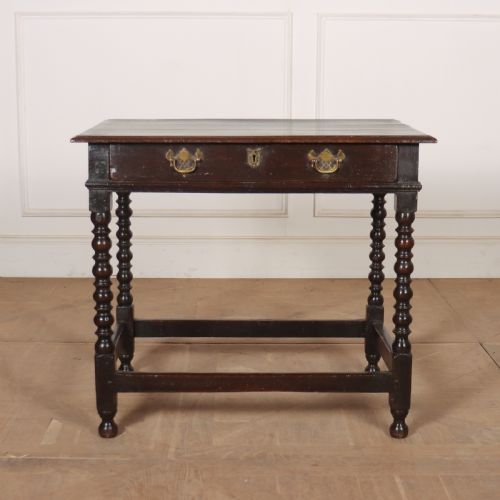


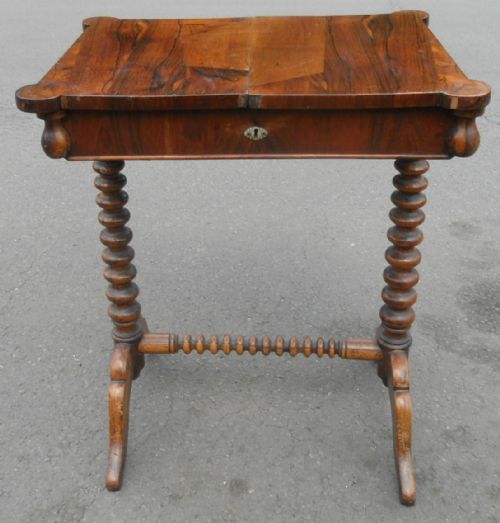
Bobbin Leg Desk
These bobbin leg desk examples bring centuries of turned woodwork into modern rooms.
Bobbin Leg Desk
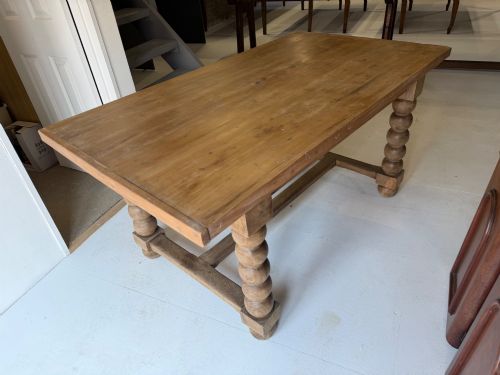
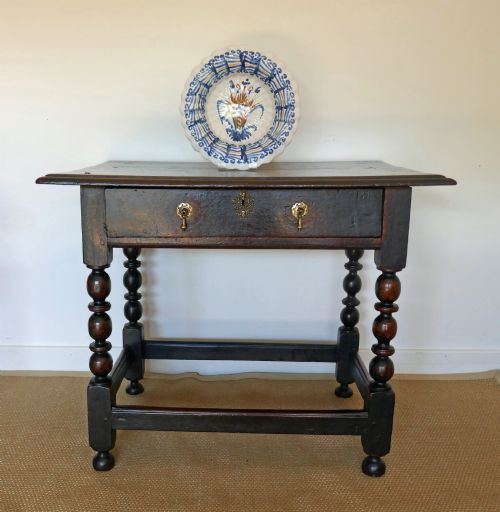
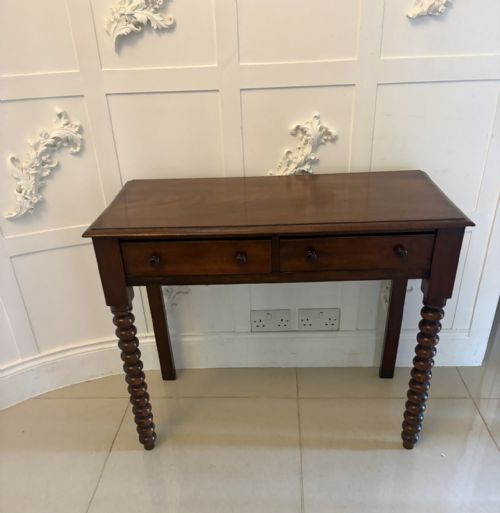
When you search for a bobbin leg desk, you are looking for writing tables and side furniture defined by spool-turned supports. The pieces found on this page span from the seventeenth century through the nineteenth century, taking in Victorian interpretations and earlier provincial forms.
The most likely version you will meet is an oak or mahogany side table adapted for writing, alongside occasional tables that share the characteristic turned underframe. These pieces combine utilitarian surfaces with the repetitive, rounded profiles characteristic of early turner's work.
How they were made
Makers shaped the distinctive legs using a lathe to cut symmetrical spool or bobbin motifs into solid timbers such as oak, beech, walnut, and fruitwood. These turned elements were then joined with pegged mortise and tenon construction to support heavy timber tops.
Surfaces often relied on the natural grain of woods like mahogany, rosewood, and elm, sometimes enhanced with marquetry or left with a plain rustic finish. Brass fittings appear on later writing drawers, while earlier examples depend entirely on timber construction.
Bobbin Leg Desk Retail Price Guide 2026
Typical asking prices for bobbin leg desk among the pieces listed under this phrase on Sellingantiques today, from the lower quarter to the upper quarter. They describe what is for sale here now, not the wider market.
Listings feature oak, mahogany, rosewood, beech, walnut, and fruitwood, spanning the seventeenth to nineteenth centuries.
What varies in quality
Quality rests in the crispness of the turning on the legs and the choice of primary timber, where dense oak or figured rosewood outrank softer secondary woods. The depth of the turning and the proportional balance between the underframe and the top dictate the visual weight of the piece.
Condition is judged by the integrity of the joints and the survival of the original surface patination rather than by cosmetic perfection. Pieces that retain their original timber colour without excessive modern intervention command greater attention.
The Bobbin Leg Desk Glossary
- Bobbin turning
- A form of woodwork created on a lathe, producing a series of rounded, spool-like shapes along the length of a leg or stretcher. This technique was popular in the seventeenth century and revived during the Victorian era.
- Mortise and tenon
- A traditional joint where a projecting tongue fits snugly into a corresponding hole, securing the frame without reliance on modern adhesives. It forms the structural backbone of older tables.
- Patina
- The surface sheen and colour acquired by wood through decades of handling, light exposure, and polishing. It serves as an indicator of age and genuine use.
- Marquetry
- The art of applying decorative veneer pieces to a structure to form intricate patterns or pictures. It appears on select tables using contrasting woods.
Bobbin Leg Desk: Frequently Asked Questions
What is a bobbin leg?
A bobbin leg is a support shaped on a lathe to resemble a string of beads or wooden spools. This style requires precise hand-turning to maintain uniform rhythm along the timber.
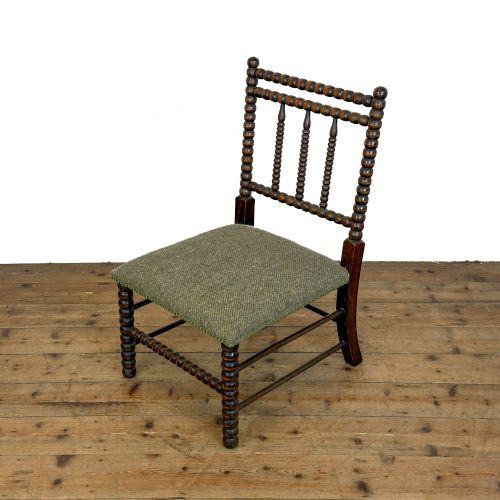
Craftsmen utilised this method extensively during the seventeenth century, and later Victorian makers revived the design for tables and seating.
How do I date an old desk?
Dating relies on examining the timber species, construction methods, and tool marks left on the underside of the top. Seventeenth-century examples typically use heavy oak with hand-pegged joints.
Later nineteenth-century interpretations often feature machine-sawn elements and different secondary woods like beech or mahogany inside the drawers.
Are these tables sturdy enough for daily use?
Most surviving tables have endured centuries because their underlying frame construction is fundamentally sound. The turned stretchers connecting the legs add stability to the base.
Placing them away from extreme temperature fluctuations protects the old timber and keeps the joints secure for regular use.
What woods were used?
Tables in this group are constructed from a variety of native and exotic hardwoods. Oak and elm appear frequently in earlier pieces, while mahogany and rosewood define later examples.
Makers selected these materials for their strength and ability to hold fine turned details on the legs.