

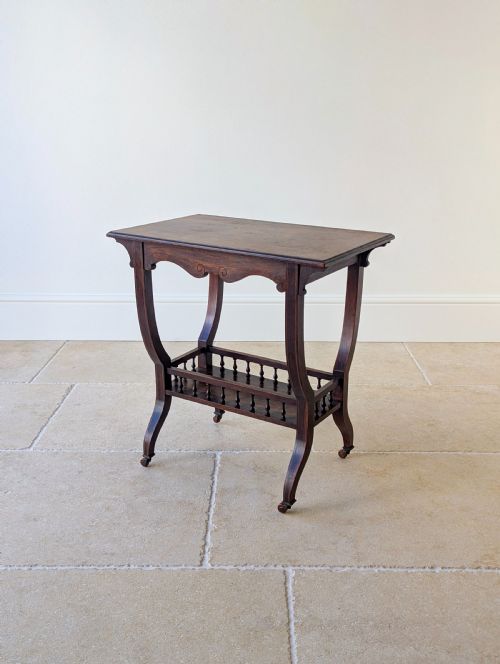


Spindled Side Table
A spindled side table brings slender turned supports and compact surfaces to a room, offering a functional spot for lamps, books or drinks.
Spindled Side Table
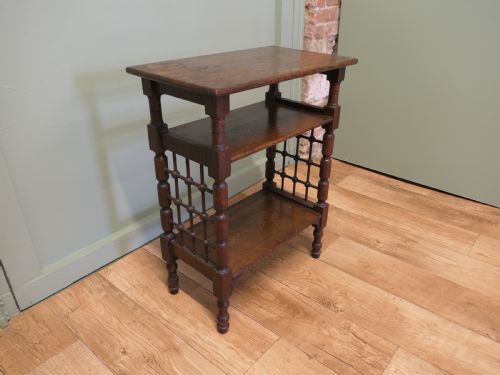
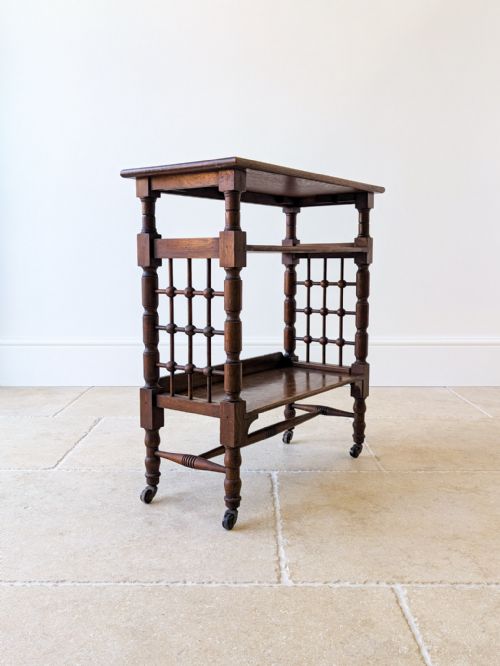
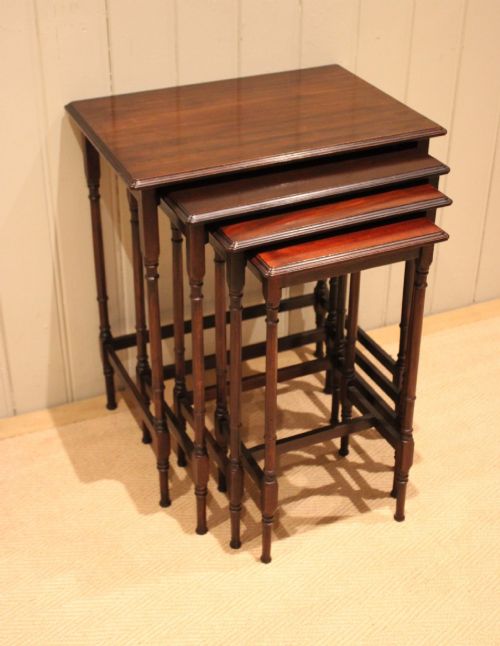
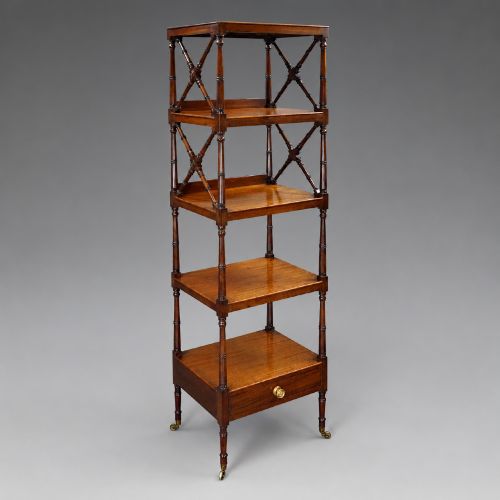
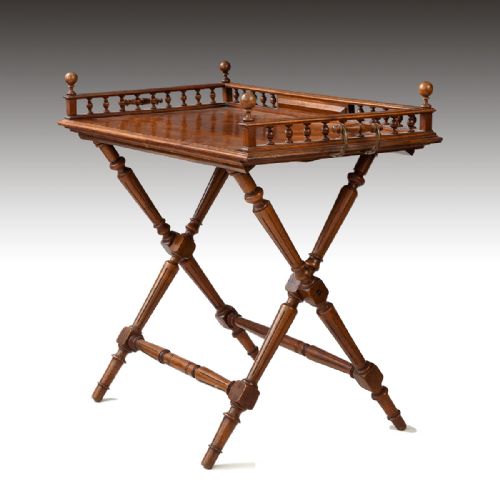
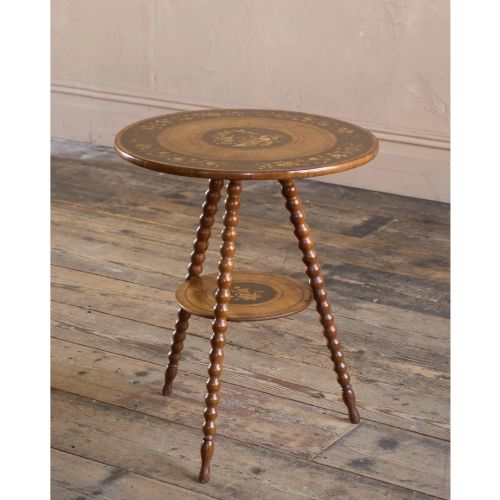
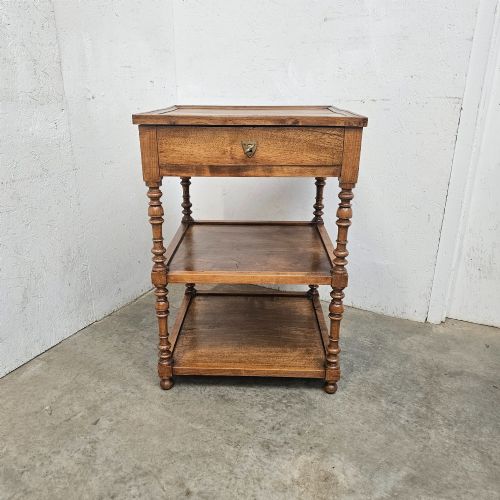
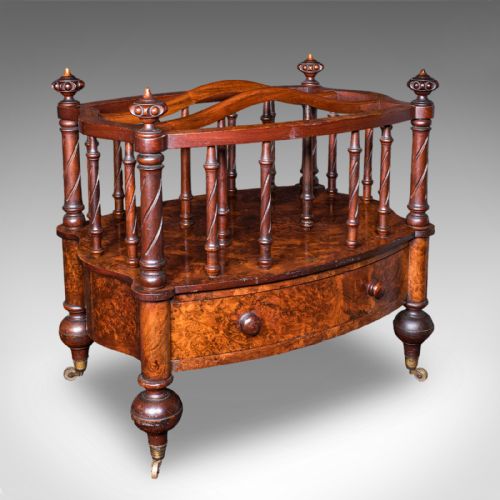
A spindled side table incorporates turned vertical components, ranging from delicate bobbin legs to structural spindle bases, supporting small wooden tops. These pieces emerge across the eighteenth, nineteenth and early twentieth centuries in forms such as occasional tables, wine tables, lamp tables and smaller etageres.
You are most likely to encounter Victorian and Edwardian examples constructed from walnut, mahogany or ebonised wood, alongside Arts and Crafts designs in oak. They function primarily as versatile surfaces for domestic spaces, serving beside chairs, sofas or in hallways.
The lineage stretches from Georgian tripod designs and George III gallery tables through to Aesthetic Movement ebonised pieces and Edwardian occasional tables. Makers such as Leonard Wyburd and Liberty and Co. contribute specific Arts and Crafts interpretations to this wider group of turned-leg furniture.
How they were made
Makers construct these tables using timbers including oak, walnut, mahogany and rosewood, alongside ebonised wood and applied brass elements. The structural integrity relies on traditional joinery combined with turned wood components produced on a lathe to create bobbin, spindle and pillar supports.
Surface treatments vary from polished natural grain and marquetry inlay to black lacquer and ebonised finishes characteristic of the Aesthetic Movement. Smaller examples incorporate tiered platforms, galleried edges and revolving mechanisms supported by tripod or four-legged turned bases.
Listings feature periods from the seventeenth century through the Edwardian era, utilising oak, walnut, mahogany, rosewood and ebonised wood.
What varies in quality
Quality rests upon the crispness of the turning on the spindles and the selection of timber figures, such as burr walnut or figured mahogany, used for the top. Finer examples display precise joinery in the underframe and subtle proportions that balance the slender vertical elements against the surface.
The distinction between standard production and superior work lies in the integration of design details, such as inlaid marquetry, gallery rails or specialised bases like revolving book stands and gate-leg configurations. Untouched patination and original surface finishes also elevate the standing of a piece.
Leonard Wyburd·Liberty and Co
The Spindled Side Table Glossary
- Spindle
- A slender, turned piece of wood forming part of a leg, gallery or structural support. These components are shaped on a lathe to create decorative profiles.
- Ebonised
- Wood treated with a dark stain or finish to imitate ebony. This technique appears frequently on nineteenth-century Aesthetic Movement furniture.
- Occasional table
- A small, movable table designed for specific, intermittent use in a living space. Examples include lamp tables, wine tables and reading stands.
- Etagere
- A piece of furniture consisting of a set of open shelves for displaying small objects. These often share compact footprints with side and occasional tables.
Spindled Side Table: Frequently Asked Questions
What is a spindled side table used for?
These tables provide a compact surface for everyday items such as reading lamps, drinks or small ornaments. Their modest scale allows them to fit beside armchairs, sofas or in narrow hallways.
Historically, specific variations accommodated books, magazines or wine glasses, functioning as versatile additions to period interiors.
How do I date a turned wood table?
Dating relies on identifying timber choices, construction methods and stylistic movements. Eighteenth-century versions often feature solid oak or mahogany with tripod bases, while Victorian and Edwardian examples introduce ebonised finishes, rosewood and machine-turned spindles.
Examining the secondary woods underneath and the wear patterns on the feet provides further clues regarding age and origin.
What is an Aesthetic Movement side table?
Aesthetic Movement tables, popular in the late nineteenth century, emphasise artistic design over strict historical revival. They frequently utilise ebonised wood surfaces, geometric lines and subtle brass details.
These pieces often incorporate spindle galleries or bobbin-turned legs, reflecting the era's interest in simplicity and craftsmanship.
Are these tables sturdy enough for daily use?
Despite their slender proportions and delicate spindles, these tables are constructed using traditional joinery designed for practical domestic tasks. Solid hardwood frames and sturdy underframes provide adequate stability for lamps and books.
Care should be taken with pieces featuring delicate galleries or intricate inlaid tops to avoid impact damage.