
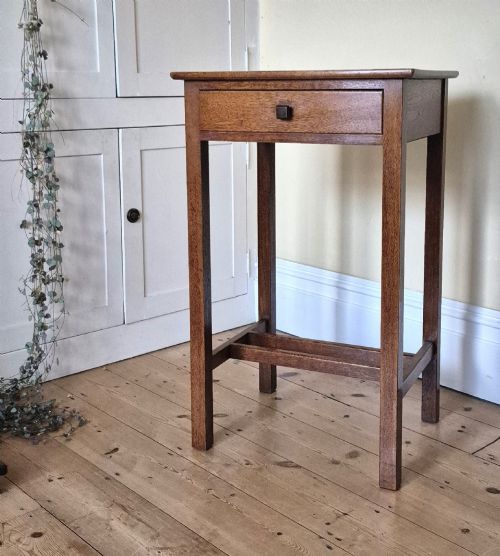


Craft Movement Table
A craft movement table brings honest timber and utility into a room, spanning the late nineteenth and early twentieth centuries.
Craft Movement Table
A craft movement table represents the intersection of Arts and Crafts ideals, the Aesthetic Movement, and Anglo-Japanese design principles. These pieces serve practical functions in domestic spaces as side tables, occasional tables, and lamp tables.
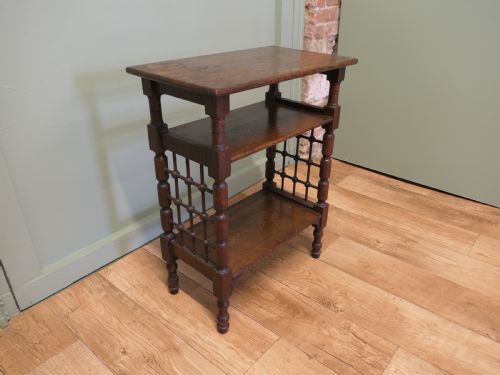
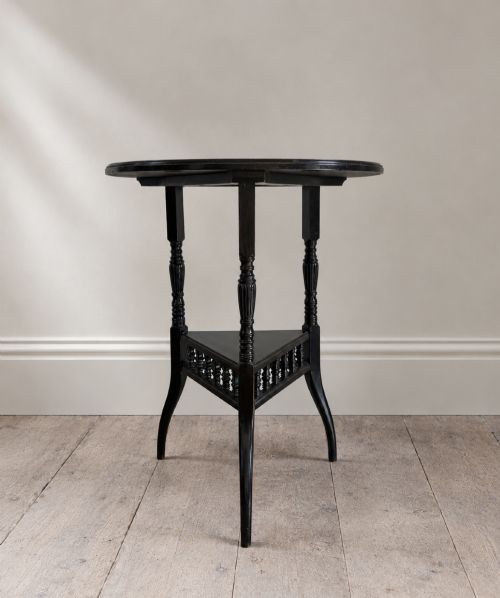
The versions most commonly met on this page date from the late nineteenth century through to the early decades of the twentieth century. They manifest in forms ranging from simple single drawer oak designs to ebonised occasional tables and multi-tiered pieces.
Makers and designers working within these aesthetic traditions include Liberty and Co, Leonard Wyburd, and EW Godwin. Their creations rely on solid construction and thoughtful proportion rather than excessive ornamentation.
Materials and construction methods
Construction relies heavily on timbers such as oak, mahogany, ebonised hardwood, walnut, and beech. These woods are selected for their grain and durability, forming the sturdy structural foundation of each table.
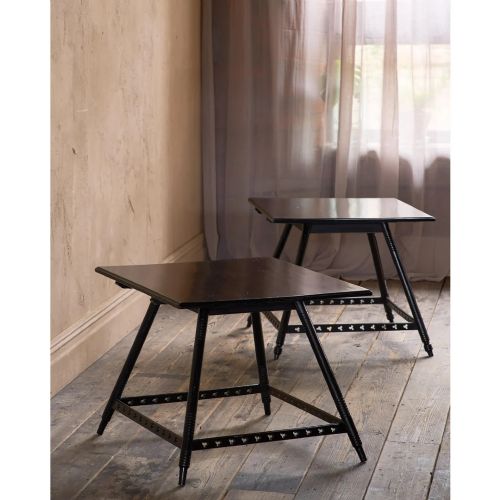
Surface treatments include ebonisation to mimic Japanese aesthetic preferences, alongside fine carving and brass fittings. Joinery is exposed and celebrated as part of the visual language rather than concealed.
Even a humble table can secretly harbour a tile depicting the days of the week.
Judging the quality of a piece
Quality in a craft movement table rests upon the integrity of the timber selection and the precision of the construction. Superior examples display thoughtful grain matching and robust joinery that withstands daily use.
Association with notable firms or designers elevates a piece, as seen in items bearing the hallmarks of Liberty and Co or the specific stylistic influence of Leonard Wyburd and EW Godwin. The refinement of the carving and the depth of the ebonisation further separate standard production from superior craftsmanship.
Leonard Wyburd·Liberty and Co·Morris and Co
The Craft Movement Table Glossary
- Arts and Crafts
- A design movement valuing traditional craftsmanship, simple forms, and natural materials over mass production. It emerged in the late nineteenth century as a reaction against industrialisation.
- Aesthetic Movement
- A late nineteenth-century doctrine supporting art for art's sake, which favoured asymmetrical compositions and Japanese-inspired motifs. Ebonised wood is frequently utilised in this context.
- Ebonised
- Wood treated with a dark stain or finish to resemble ebony, a technique popular in Anglo-Japanese and Aesthetic Movement furniture. It provides a striking, uniform black surface.
- Occasional table
- A small, movable table designed for a specific, intermittent function in a room, such as holding a lamp or books. These pieces often feature multiple tiers or folding mechanisms.
Craft Movement Table: Frequently Asked Questions
What defines a craft movement table?
A craft movement table is defined by its adherence to Arts and Crafts, Aesthetic, or Anglo-Japanese design principles, prioritising structural honesty and utility.
These pieces typically utilise solid timbers like oak and mahogany, often featuring simple lines or ebonised finishes rather than heavy Victorian ornamentation.
How do I date these tables?
Dating relies on examining the materials, construction methods, and stylistic cues present in the piece, with most examples originating between 1880 and 1930.
Makers' marks, specific retail labels from firms like Liberty and Co, and characteristic woods such as ebonised hardwood help narrow down the period of production.
Where were these tables used?
These tables were designed for domestic living spaces, serving as functional surfaces in reception rooms, halls, and parlours.
Smaller occasional and side tables were easily moved to hold lamps, decorative items, or reading materials wherever needed in the home.
Are these tables solid wood?
Construction primarily involves solid hardwoods including oak, mahogany, walnut, and beech, chosen for their strength and appearance.
Makers avoided excessive veneer in favour of honest material use, ensuring the timber's natural grain remained visible.