




Spindle Back Office Chair
A spindle back office chair offers solid everyday support and sturdy construction, combining traditional woodworking methods with practical work spaces.
Spindle Back Office Chair
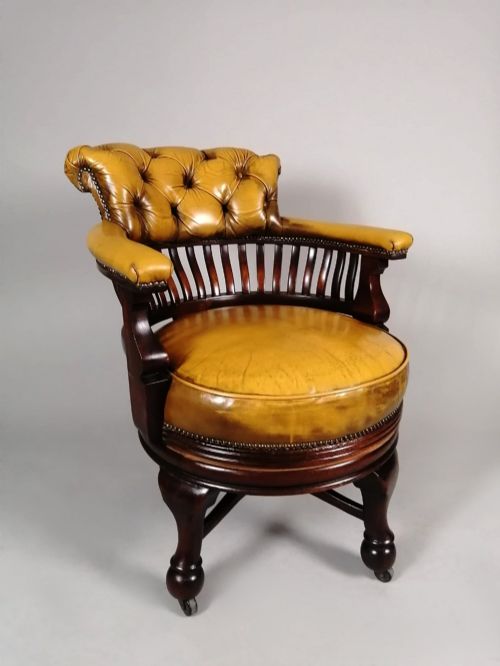
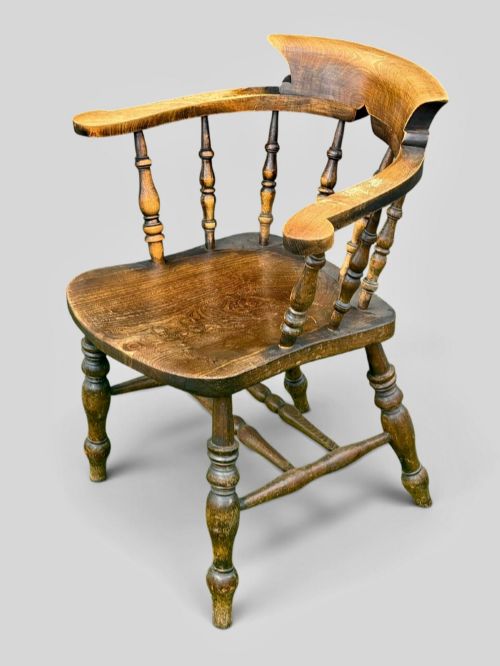
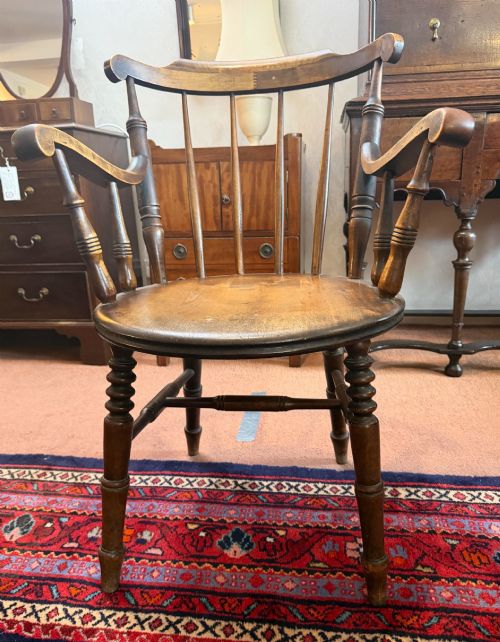
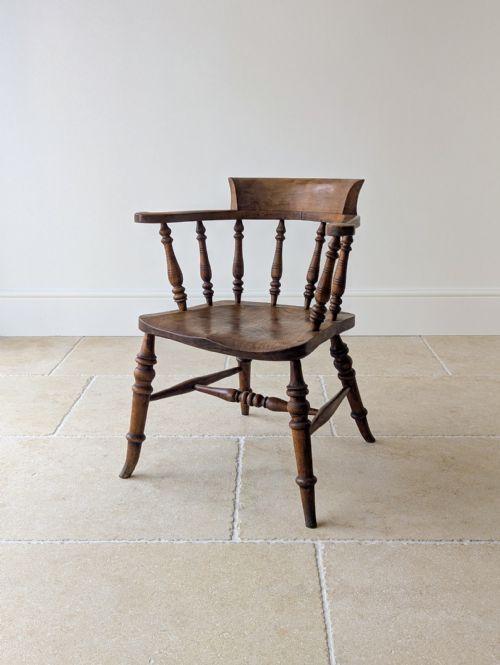
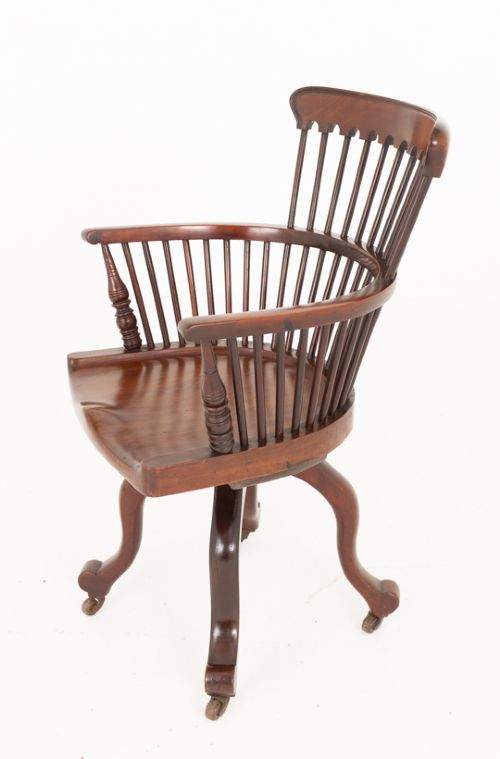
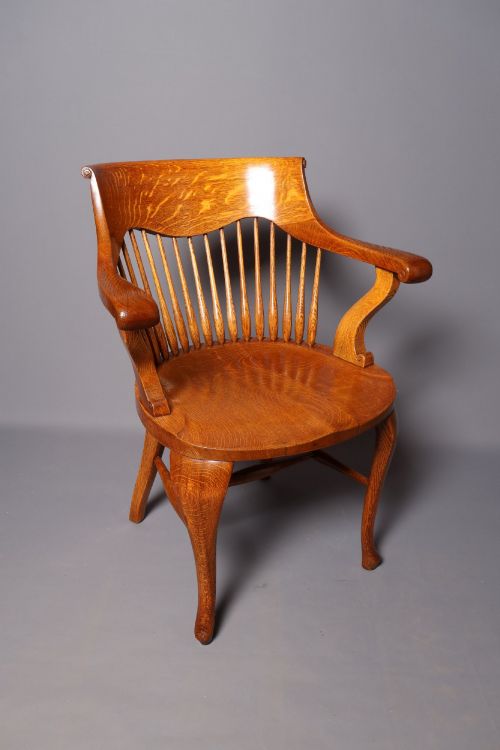
A spindle back office chair is a utilitarian seat designed for work, combining the turned vertical spindles of traditional country seating with the swivel mechanisms and armrests needed for a desk. These pieces generally appear from the Victorian and Edwardian periods, stretching into the early twentieth century.
How they were made
Makers utilised a combination of hardwoods and softwoods selected for strength and flexibility. Elm seats provide a tough, stable base, while beech, ash, and oak form the bentwood rails and turned spindle backs.
Joinery relies on traditional methods such as steam bending for the continuous arm and back bows, secured with wedged tenon joints. Metal swivel mechanisms, brass castors, and leather upholstery appear on later or more elaborate revolving variants.
Spindle Back Office Chair Retail Price Guide 2026
Typical asking prices for spindle back office chair among the pieces listed under this phrase on Sellingantiques today, from the lower quarter to the upper quarter. They describe what is for sale here now, not the wider market.
The listings span the Victorian, Edwardian, and Interwar periods, utilising oak, elm, mahogany, beech, ash, leather, brass, and iron.
What varies in quality
Quality depends upon the choice of timber and the crispness of the turned spindles. Denser woods like oak, mahogany, and yew provide greater durability and finer grain detail than softer utility timbers.
The sophistication of the mechanical swivel and tilt apparatus distinguishes standard seating from higher grade library and office chairs. Robust iron and brass undercarriage systems ensure smoother rotation and greater longevity.
Kendrick and Jefferson·Edward William Godwin
The Spindle Back Office Chair Glossary
- Spindle back
- A chair back constructed from a series of turned vertical wooden rods or shafts. These members support the sitter's back while keeping the frame light and rigid.
- Smokers bow
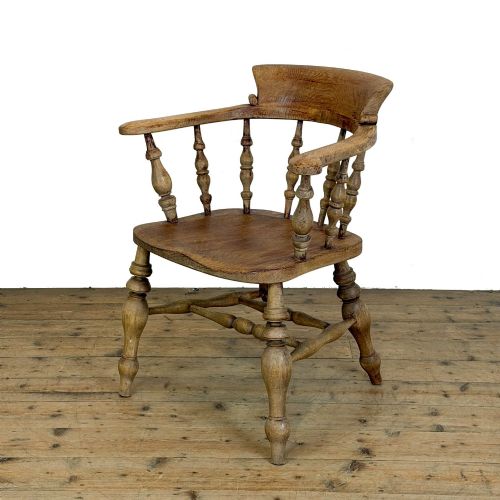
- A sturdy low-backed armchair with a rounded wooden rail and turned spindles, closely related to the Windsor chair. It serves as a comfortable precursor to the office desk chair.
- Captains chair
- A robust armchair featuring a rounded continuous arm and back rail supported by numerous spindles. They frequently sit on low wooden bases or heavy timber legs in office settings.
- Revolving mechanism
- The swivel and height adjustment hardware beneath the seat, often incorporating cast iron and brass. This allows the sitter to turn easily between different tasks at a desk.
- Bentwood
- Wood that is shaped by steaming or boiling until pliable, then clamped into a curved form as it dries. This technique creates strong, continuous structural rails without weak joints.
Spindle Back Office Chair: Frequently Asked Questions
What is a spindle back office chair?
A spindle back office chair is a traditional work seat featuring a curved wooden back filled with turned vertical spindles. They are built for durability and long hours at a desk.
These chairs bridge the gap between rustic country seating and formal office furniture. Many incorporate swivel mechanisms or stationary wooden frames suited for studies and libraries.
How do I tell Victorian from Edwardian chairs?
Victorian models frequently utilise heavy timbers like oak, ash, and elm with darker finishes and substantial turned components. They often reflect robust construction methods designed for heavy daily use.
Edwardian examples often showcase lighter mahogany or oak frames with refined proportions. The turning on the spindles tends to be simpler and cleaner than earlier nineteenth century designs.
Were these chairs used for writing desks?
Yes, many of these pieces were specifically designed for office, study, and library environments. The revolving bases and armrests made them practical for administrative tasks.
Some variants include upholstered leather pads on the seats for added comfort during long periods of seated work.
How do I care for a wooden swivel chair?
Keep wooden surfaces clean with a soft cloth and feed the timber periodically with appropriate wax or polish. Avoid placing the chair near direct heat sources to prevent the wood from splitting.
Inspect the mechanical swivel and castors under the seat regularly to ensure moving parts remain clean and operational.