




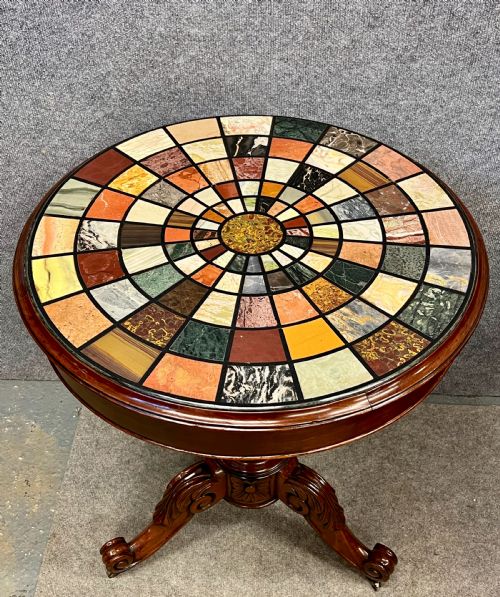

Specimen Marble Centre Table
A specimen marble centre table brings together geological variety and cabinet-making, offering a commanding centrepiece for any room.
Specimen Marble Centre Table
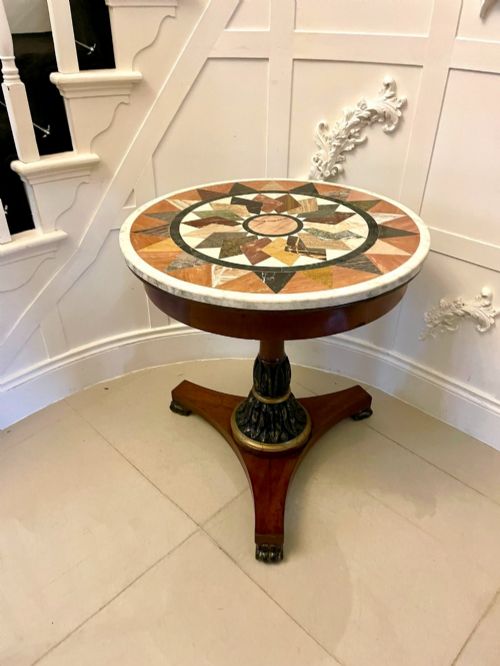
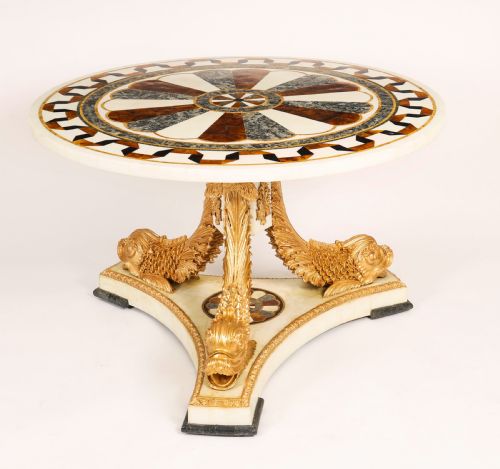
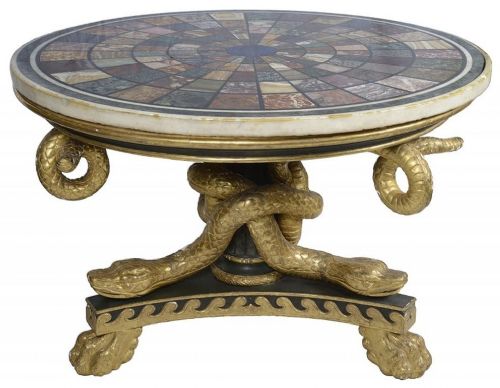
A specimen marble centre table combines a stone top composed of numerous inlaid geological samples with a robust timber or gilded base. These works serve as prominent freestanding furniture, historically designed to sit in the middle of a grand saloon or drawing room.
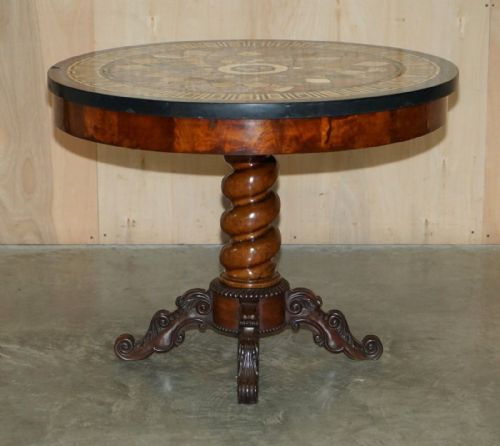
The selections span multiple eras, with nineteenth-century examples and Regency pieces appearing frequently alongside Italian creations and Grand Tour souvenirs. Buyers encounter circular lamp tables, low occasional pieces, and large walnut or mahogany formats featuring intricate pietra dura or micro-mosaic work.
Maltese and Florentine origins emerge alongside English interpretations, showing how artisans across Europe utilised local marbles and imported stones. The resulting surfaces display geometric patterns, avian motifs, or classical architectural fragments embedded within slate or marble matrices.
How they were made
The stone tops rely on precise cutting and fitting of individual marble, slate, and pietra dura fragments, secured into a backing slab to form seamless geometric or pictorial compositions. Workshops selected stones for contrasting colours and natural veining, often polishing the entire face to a high gloss.
Bases utilise dense timbers such as mahogany and walnut, alongside gilded wood, brass accents, and carved supports like dolphins or swans. Cabinet-makers joined these structural elements to bear the considerable weight of the stone top.
Listings feature walnut, mahogany, slate, and giltwood supporting surfaces paired with pietra dura, micro-mosaic, and multi-coloured specimen marble tops.
What varies in quality
The distinction lies in the complexity of the stone layout and the precision of the inlay work, where tight joints between individual marble specimens separate standard production from exceptional artistry. Artisans who incorporated micro-mosaic details or pictorial bird motifs achieved a higher level of execution.
The integrity of the supporting base matters equally, judged by the crispness of the carving on mahogany, walnut, or giltwood frames. Tables that maintain structural harmony between a heavy stone top and a well-proportioned base represent the upper tier of manufacture.
Woodley family
The Specimen Marble Centre Table Glossary
- Specimen marble
- A table top composed of many different varieties of marble and hardstones arranged in geometric or pictorial designs. This technique showcases the collector's interest in geology and travel.
- Pietra dura
- An artistic technique using cut and fitted, highly polished coloured stones to create images. Craftsmen utilised this method on stone tabletops to depict birds, flowers, and ornaments.
- Micro-mosaic
- Very small glass tesserae assembled to form detailed pictures or patterns. These minute compositions often appear as central medallions within stone tabletops.
- Grand Tour
- A traditional trip of Europe undertaken by upper-class Europeans for pleasure and education. Travellers frequently purchased inlaid stone tables as souvenirs of their journey through Italy and Malta.
- Giltwood
- Wood that has been treated with gold leaf or gesso and gold paint. This finish frequently decorates the frames and stands of nineteenth-century tables.
Specimen Marble Centre Table: Frequently Asked Questions
Where did these tables originate?
Many examples originate from workshops in Italy and Malta, alongside English production drawing on imported materials and continental designs. Artisans in Florence and Rome catered particularly to travellers acquiring souvenirs.
English cabinet-makers also produced matching bases to display imported stone tops, combining domestic timber construction with foreign mosaic work.
How were they used historically?
These tables served as focal points in large reception rooms, libraries, and drawing rooms where guests gathered. Their decorative tops provided a conversation piece for discussing geology, art, and travel.
Smaller circular versions functioned as lamp tables or occasional furniture, while larger formats anchored the middle of formal rooms.
What woods support the stone tops?
Makers relied on durable timbers such as mahogany and walnut to bear the substantial weight of the stone surfaces. Giltwood and ebonised frames also appear, reflecting Regency and Victorian aesthetic preferences.
Structural supports sometimes incorporated carved wooden elements like swans or dolphins to complement the classical themes of the stone top.
How do I distinguish Regency from Victorian examples?
Regency tables often display cleaner neoclassical lines, sometimes featuring brass inlay, giltwood, or specific architectural forms associated with the early nineteenth century. Mahogany and specific leg configurations help identify this earlier phase.
Victorian pieces frequently embrace bolder proportions, walnut construction, and elaborate revival styles such as Florentine Renaissance or Victorian Empire.
Can these tables be used daily?
They suit modern living spaces as centre tables, lamp tables, or coffee tables, provided they are placed on stable, level flooring. The heavy stone tops require minimal maintenance beyond careful dusting.
Owners should protect the polished surface from acidic liquids and excessive moisture to preserve the historical stone work.