



Brown Marble Centre Table
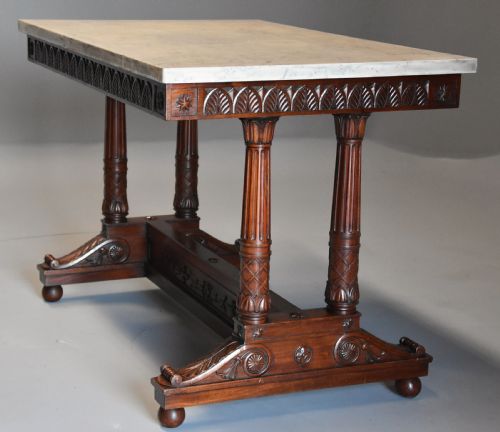
These brown marble centre table pieces combine heavy stone tops with timber bases, offering a central surface that anchors a room.
Brown Marble Centre Table
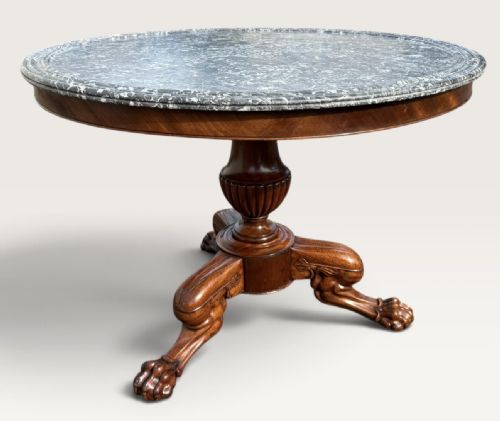
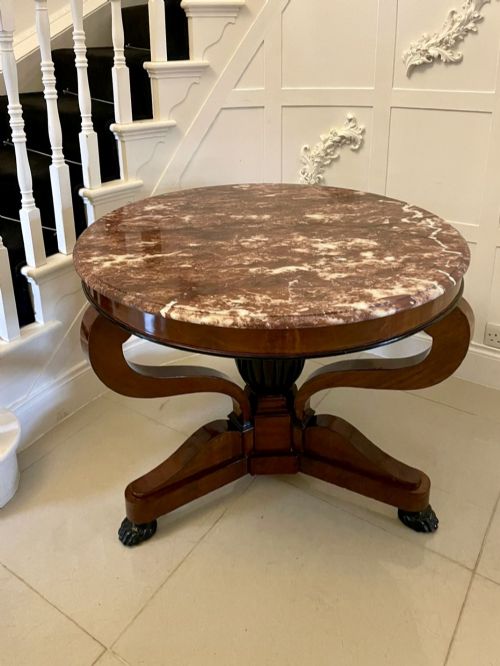
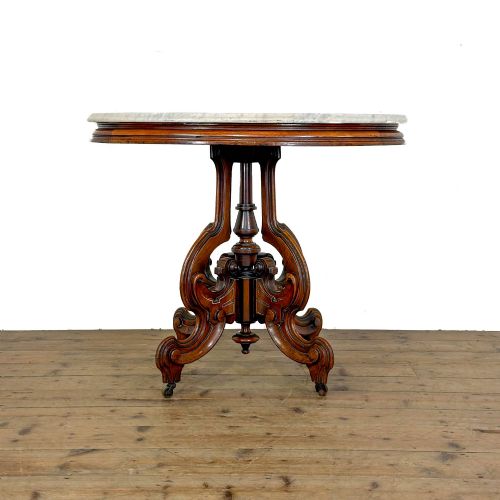
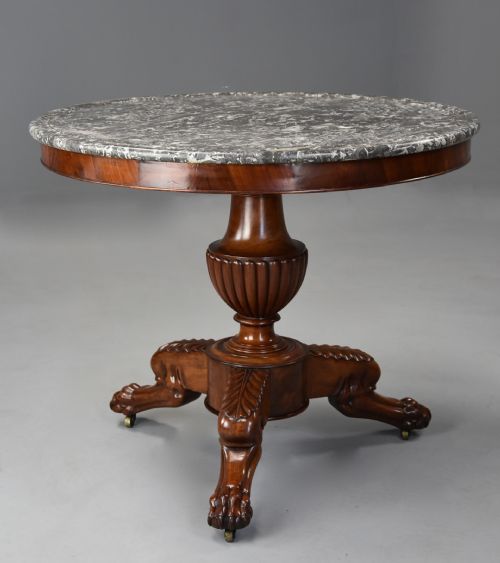
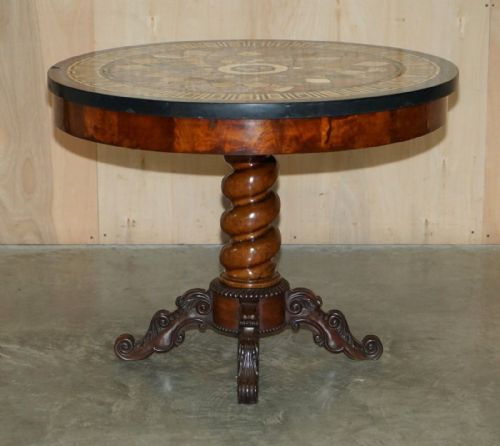
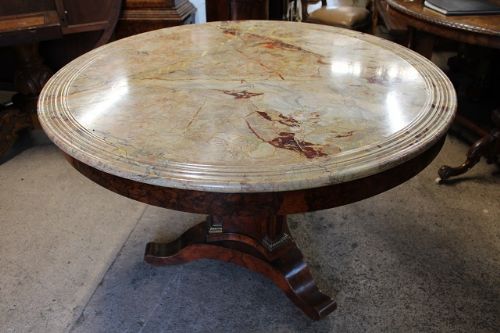
When you search for a brown marble centre table, you are looking at substantial circular or rectangular tables designed to stand free in a room rather than against a wall. The most common form on this page is the circular Gueridon or centre table, supported by a central pillar or tripod base.
The material evidence spans the nineteenth century, including Victorian, Regency, and William IV periods, alongside French Empire and Restoration styles. These pieces function as centre tables, side tables, and occasional tables, often featuring distinct veined or specimen marble tops.
Origins stretch across British and continental workshops, with French design strongly represented through walnut, burr elm, and flame mahogany constructions. Buyers encounter both monumental specimen marble surfaces and simpler veined stone variants paired with timber frames.
Materials and construction
Makers built these tables using dense timbers such as mahogany, walnut, burr elm, and oak for the structural bases and pedestals. Flame mahogany veneers and figured grain patterns added visual movement to the timber skirts and columns.
Heavy marble tops, including plain veined varieties and intricate Pietra Dura or specimen stone mosaics, rest upon these wooden frames. Brass mounts, parcel gilt details, and carved wooden elements provide decorative accents to the bases.
Listings feature nineteenth-century periods, including Victorian, Regency, and 1830s eras, alongside French Empire and William IV styles.
Distinctions in quality
The ambition of the stone top sets the baseline for quality, moving from simple veined brown marble to multi-toned specimen and Pietra Dura mosaics. Superior examples integrate detailed brass mounts and finely carved timber bases that balance the heavy stone above.
Timber selection dictates the character of the base, where burr elm, flame mahogany, and figured walnut exhibit rich natural grain patterns. The integration between the stone top and the wooden underframe shows the precision of the joinery and overall structural stability.
JACOB
The Brown Marble Centre Table Glossary
- Gueridon
- A small round table on a central pillar, originating in seventeenth-century France. These pieces often serve as lamp tables or centre tables.
- Pietra Dura
- An artistic technique using cut and fitted polished coloured stones to create geometric or pictorial designs. This work frequently appears on specimen marble tabletops.
- Specimen marble
- A tabletop composed of various types of marble arranged in geometric patterns or specimen panels. This technique showcases different geological colours and textures.
- Parcel gilt
- Partially gilded woodwork where gold leaf highlights specific carved details or mouldings. It contrasts with the dark timber of the table base.
- Flame mahogany
- Mahogany veneer cut to display a distinctive wavy, flame-like grain pattern. Cabinet makers used this on prominent surfaces like table tops and pedestals.
Brown Marble Centre Table: Frequently Asked Questions
What is a brown marble centre table used for?
These tables provide a solid circular or rectangular surface designed to stand in the middle of a room. They function as centre tables, lamp tables, or large occasional surfaces.
Historically, their heavy stone tops and decorative timber bases allowed them to anchor a reception room or salon. Today, they serve similar display purposes while offering a durable, heat-resistant stone surface.
How do you style a brown marble centre table?
Allow the table to stand free in the middle of a room where its circular form and stone top are fully visible. Keep objects on the surface minimal to showcase the marble grain or specimen inlay.
Pair the piece with seating that complements the nineteenth-century French or British aesthetic of the timber base. Ensure adequate floor space around the pedestal for comfortable movement.
How can I tell the period of a centre table?
Examine the timber species, base construction, and the style of the carving to identify the era. Pieces from the Regency and William IV periods often feature distinct classical motifs and heavier pedestals.
Victorian and later nineteenth-century examples introduce varied wood veneers like burr elm and walnut alongside French-influenced Gueridon proportions.
What is the difference between a side table and a centre table?
Centre tables are finished on all sides to stand in the open space of a room. Side tables are traditionally built to sit flush against a wall.
Tables designed for the centre often feature a central pillar or four-sided pedestal base accessible from any angle.
Are these marble tops original to the tables?
Nineteenth-century makers frequently paired heavy stone slabs with matching timber pedestals designed to bear the weight. Veined marble and specimen tops form an integral part of the original design for these tables.
Inspect the fit of the stone within the wooden frame and check the support structure underneath to understand its construction.