

Regency Triform Pedestal Table
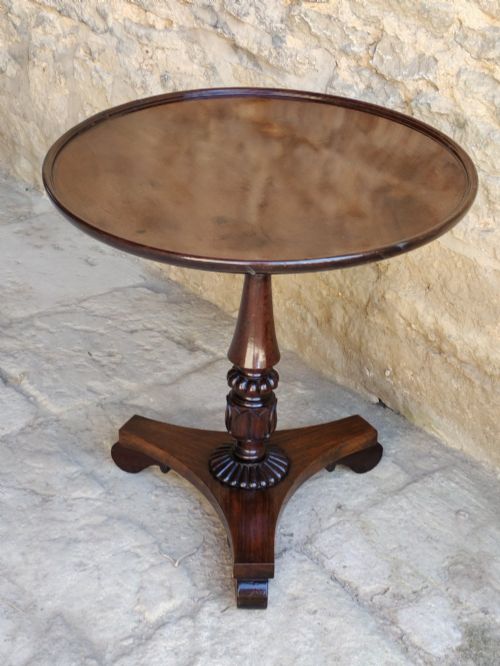
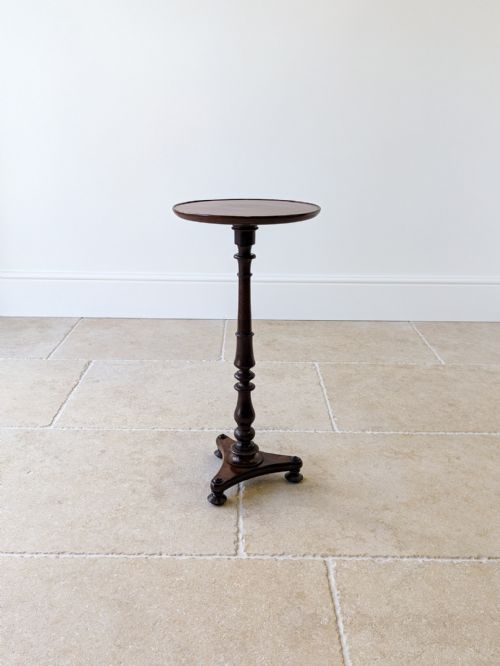
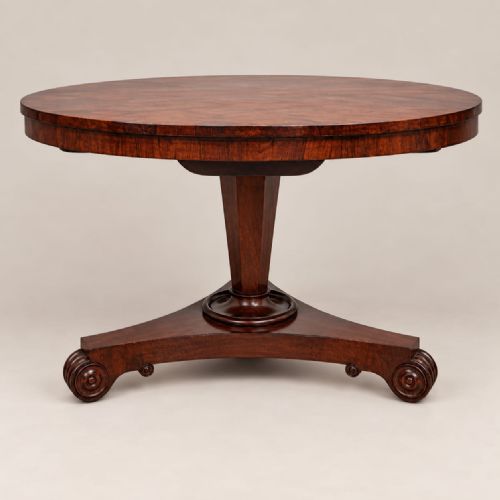
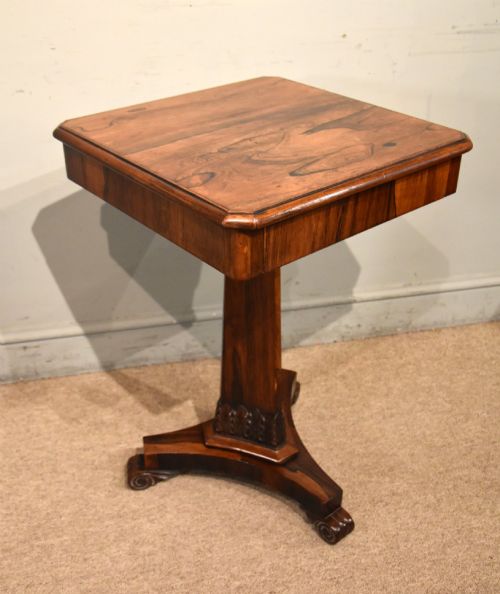
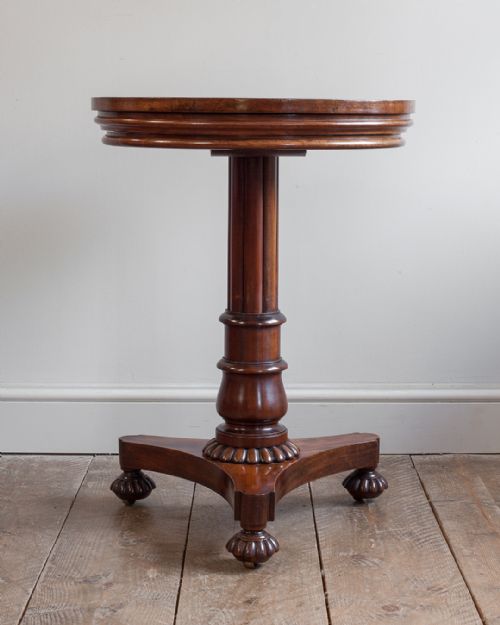
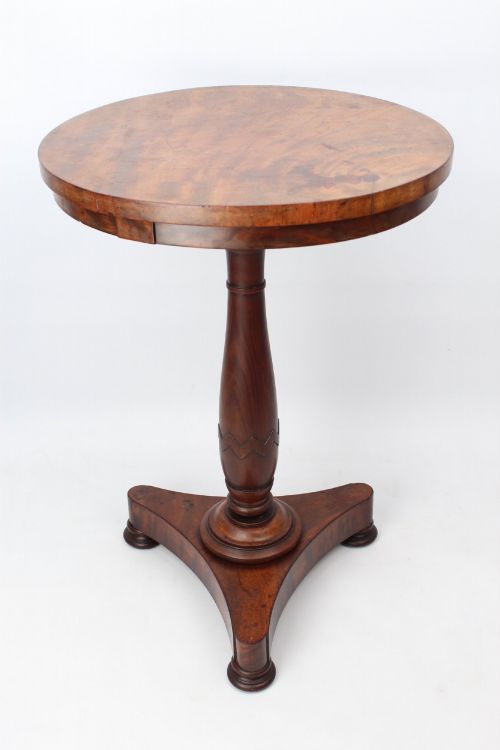
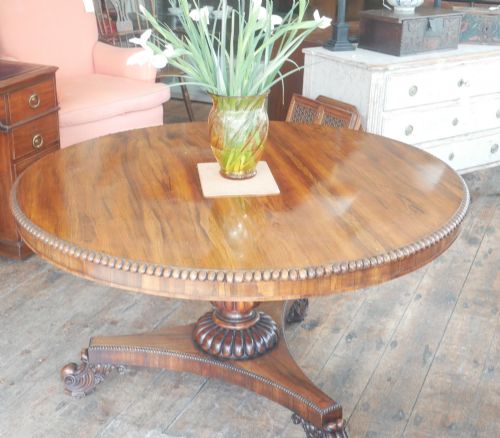
A regency triform pedestal table brings architectural presence to a room, resting on a three-sided base that grounds the design with characteristic nineteenth-century balance.
Regency Triform Pedestal Table
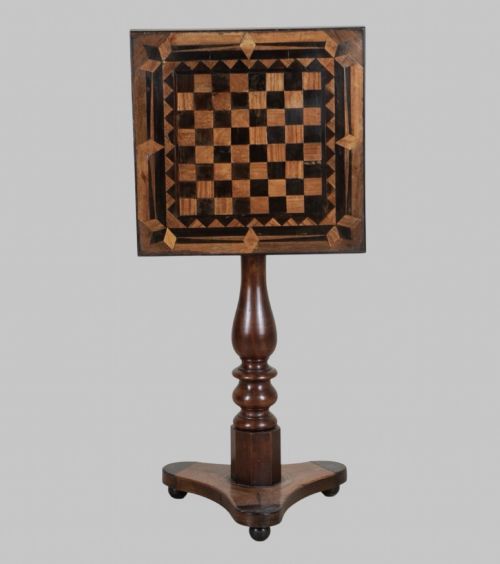
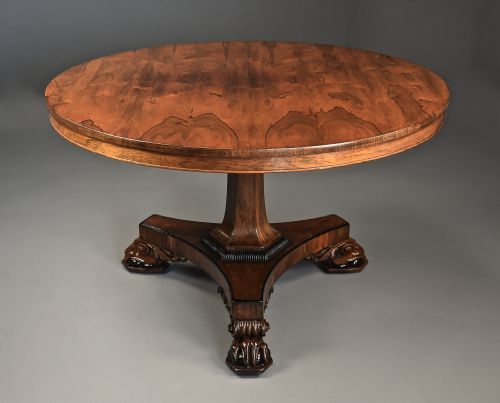
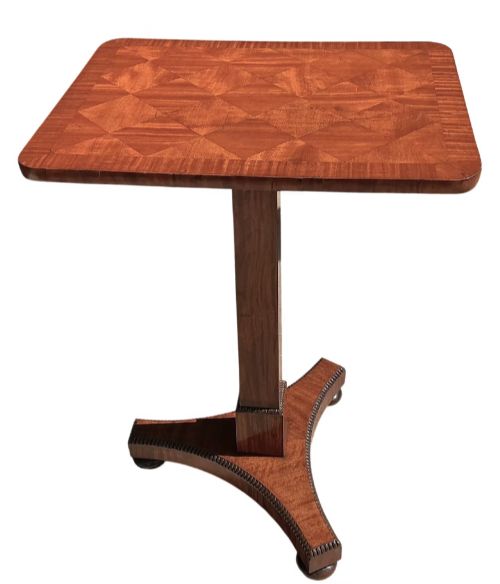
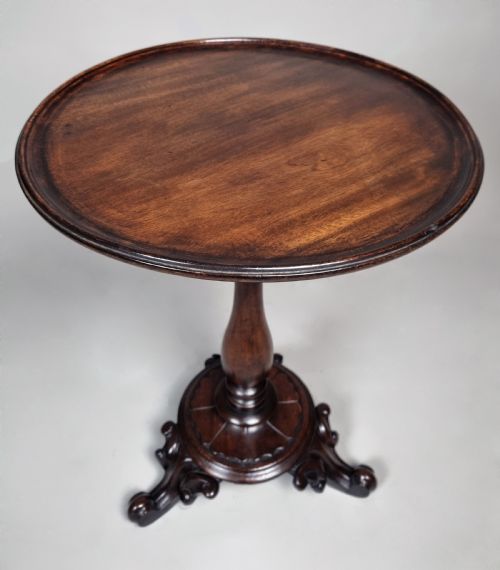
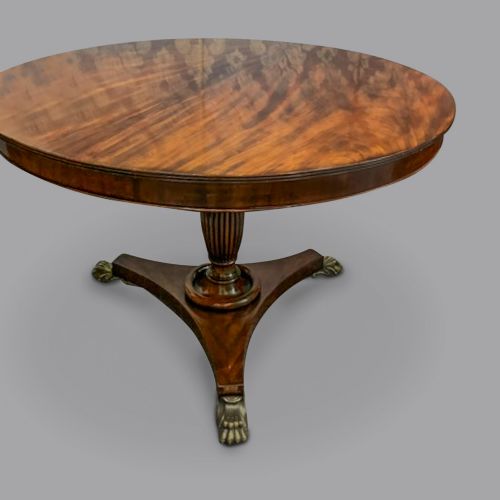
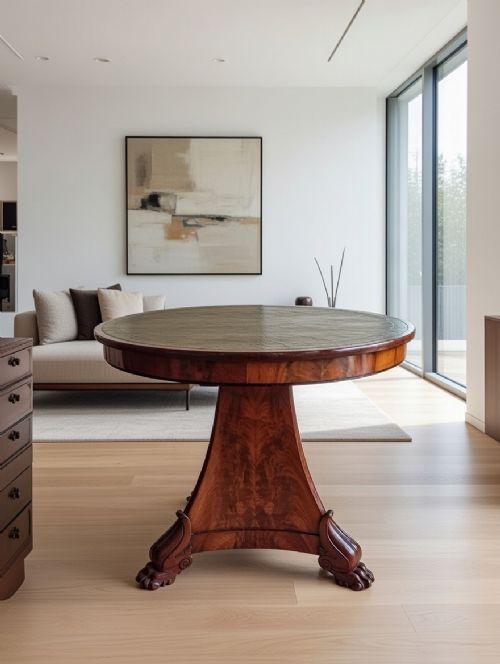
A regency triform pedestal table typically manifests as a centre table, breakfast table, or occasional piece supported by a distinct three-sided pedestal base. The evidence shows these pieces span the Georgian, Regency, and William IV eras, stretching from around eighteen hundred into the twentieth century through later revivals.
Buyers most frequently encounter circular or square top formats configured for dining, games, or display. Rosewood and mahogany dominate the offerings, often complemented by marble tops, brass details, or intricate inlay work.
Materials and Construction
Cabinetmakers built these tables using dense timbers such as rosewood, mahogany, and pollard oak, frequently applying finely figured veneers over secondary woods. Tops often feature tilt mechanisms, telescopic columns, or specialised inserts like leather and specimen marble.
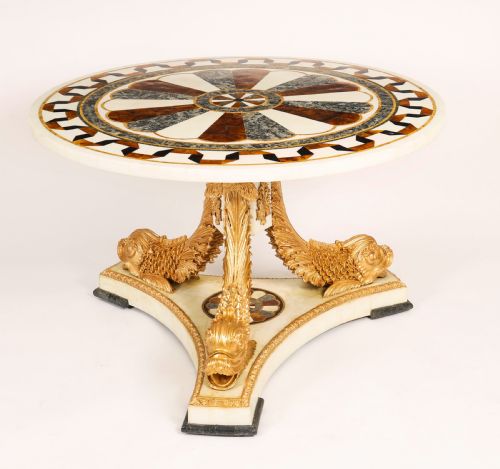
Supports rely on a central pillar descending to a triform plinth, sometimes incorporating parcel gilding, brass mounts, or carved dolphin motifs. Joinery combined traditional framing with structural framing to sustain the heavy stone or timber tops.
Form variations include centre tables, occasional tables, breakfast tables, wine tables, and plant stands.
Distinctions in Quality
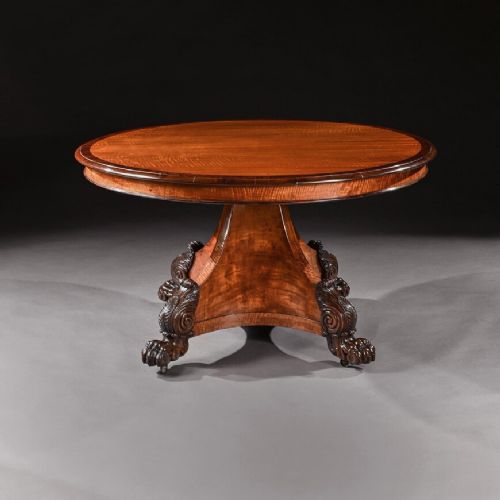
The standard of a regency triform pedestal table depends heavily on the selection of timber veneers and the crispness of any carving on the triform base. Superior examples exhibit tightly figured rosewood or mahogany paired with precise brass inlay or undamaged marble surfaces.
Structural integrity of the central column and the stability of the three-footed plinth separate master workshops from provincial joinery. Finer pieces demonstrate seamless operation in tilt-top mechanisms and harmonious proportions between the top and the pedestal.
Peters of Genoa·Walker-Lancaster·Gillows·George Bullock
The Regency Triform Pedestal Table Glossary
- Triform base
- A three-sided pedestal support that underpins the central column of the table. This configuration provides a stable footprint while offering distinct geometric lines characteristic of the period.
- Tilt top
- A tabletop hinged to the central pillar so it can pivot vertically when not in use. This mechanism allowed tables to be stored against walls in smaller rooms.
- Gueridon
- A small decorative stand or table, often round and supported by a central column or figures. The form frequently utilises marble tops and giltwood or painted finishes.
- Specimen marble
- A tabletop composed of various coloured marbles arranged in geometric patterns or mosaics. These surfaces often appear on chess tables and high-status occasional pieces.
Regency Triform Pedestal Table: Frequently Asked Questions
What rooms suit a triform pedestal table?
These tables function well as central freestanding pieces in entrance halls or principal reception rooms where the three-sided base can be viewed from all angles. Their compact footprint also makes them practical as large lamp tables or breakfast spots.
Larger variants serve effectively in dining capacities, while smaller occasional or wine formats fit easily beside seating areas.
How do I distinguish William IV from Regency pieces?
William IV furniture generally displays heavier proportions, bolder scrolling on the pedestal base, and darker rosewood veneers compared to earlier Regency designs. The earlier pieces often favour lighter mahogany or satinwood with restrained neoclassical detailing.
Examining the turning of the central column and the profile of the triform feet usually clarifies the transition between the eras.
Can these tables be used for daily dining?
Many period examples were specifically constructed as breakfast or dining tables with robust tilt mechanisms and heavy pedestal supports. They handle regular domestic use provided the finish is protected from excessive moisture and heat.
Using coasters and placemats preserves the polished rosewood or mahogany surfaces during everyday meals.
What is the purpose of a tilt top?
The tilting mechanism allowed historical households to clear floor space quickly by tipping the tabletop vertical when the furniture was not in active use. This feature reflects the flexible room layouts of nineteenth-century domestic interiors.
In modern settings, the mechanism permits easier movement and positioning of the heavy tables.