
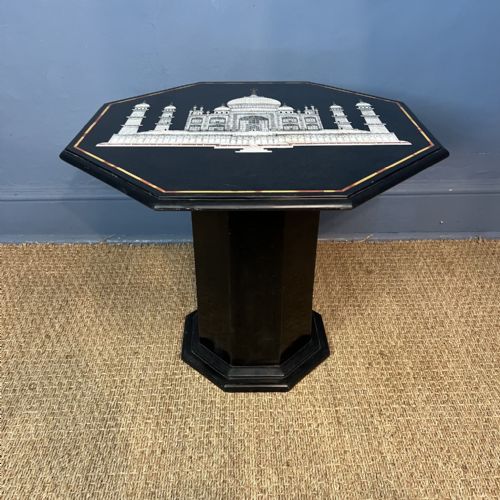
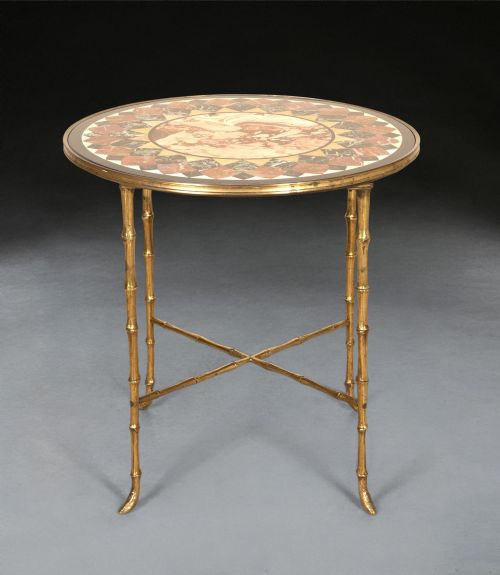
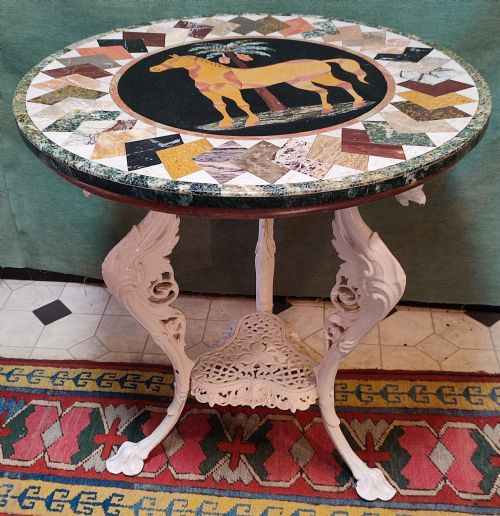


Inlaid Marble Accent Table
An inlaid marble accent table brings a rich geological surface into a room, combining stone work with timber or metal frames.
Inlaid Marble Accent Table
When you search for an inlaid marble accent table, you encounter compact furniture designed for display and convenience across various historical periods. The selections span Victorian, Edwardian, and earlier nineteenth-century examples alongside Chinese export and Anglo-Indian pieces.
The forms vary from circular centre tables and lamp tables to occasional tables, plant stands, and bedside chests. These items utilise stone tops paired with supportive frames of mahogany, walnut, rosewood, hardwood, or cast iron.
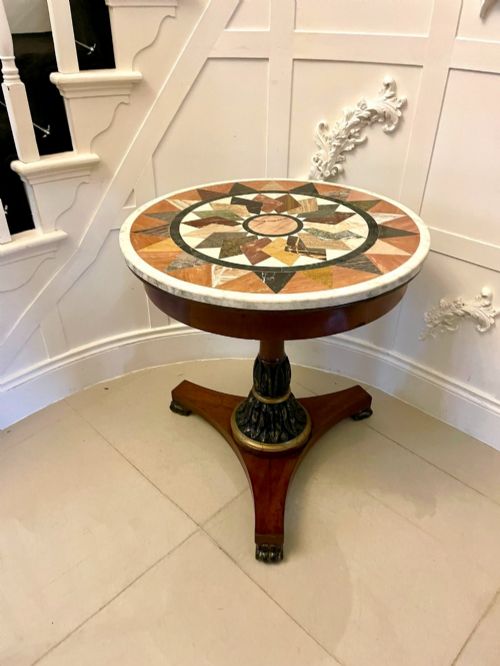
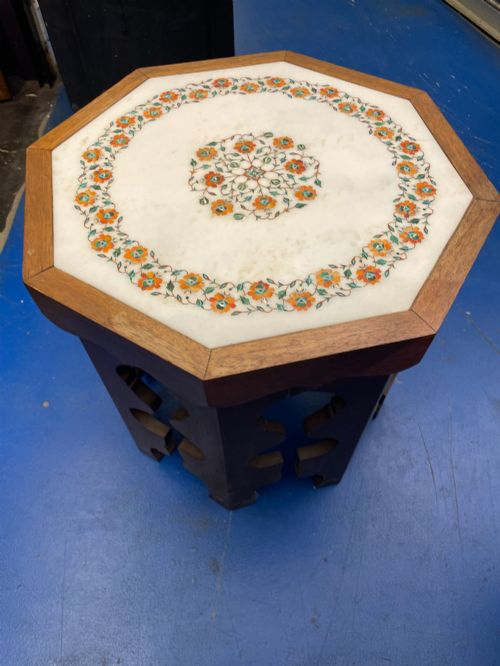
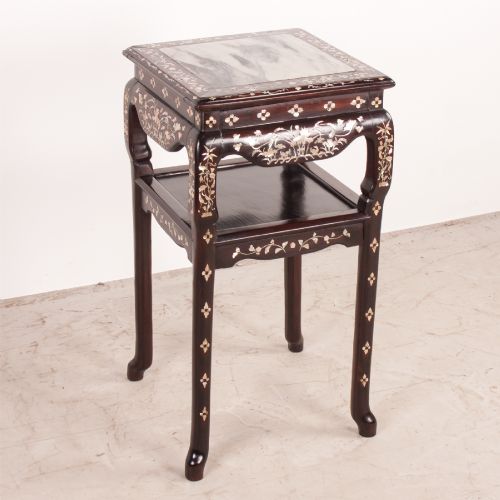
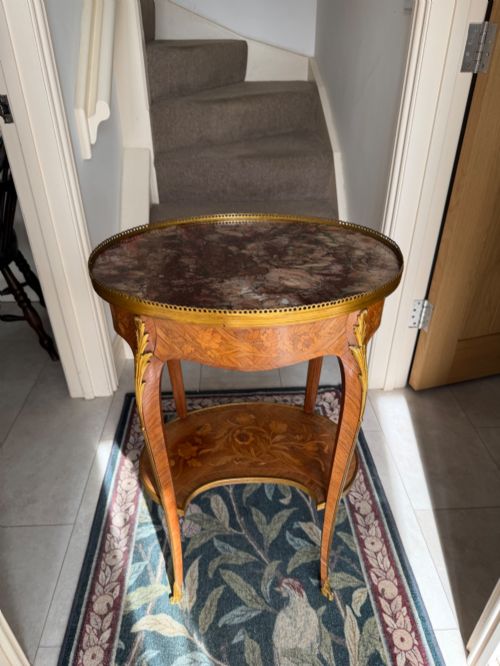
Origins stretch from European workshops influenced by French Louis XV and Neoclassical styles to Asian production centres utilising mother-of-pearl and hardwood. Buyers frequently meet circular specimen marble tops and pietra dura work among these listings.
Materials and construction methods
Construction relies on combining solid timbers or cast iron with precision-cut stone. Marble and specimen marble surfaces are fitted into wooden frames or mounted on metal bases.
Decorative surface work involves pietra dura techniques, mother-of-pearl inlay, and marquetry using ebony, satinwood, and kingwood. Artisans assemble intricate geometric or pictorial stone patterns to form smooth tabletops.
The listings demonstrate a heavy reliance on marble and specimen marble surfaces paired with mahogany, rosewood, and hardwood.
Factors separating tiers of quality
The distinction between standard and superior pieces rests upon the precision of the stonework and the complexity of the timber or mother-of-pearl inlay. Finer examples display tight joins in multi-toned specimen marble and seamless integration between the stone top and the supporting base.
The choice of secondary woods and the sophistication of the revival style, whether Louis XV or French Neoclassical, dictate the overall refinement of the piece. Superior craftsmanship shows in the crispness of carved details on hardwood or cast iron structures.
The Inlaid Marble Accent Table Glossary
- Specimen marble
- A tabletop composed of numerous small, distinct pieces of various coloured marbles fitted together to form a geometric or pictorial design.
- Pietra dura
- An artistic technique using cut and fitted polished coloured stones to create mosaics and decorative imagery.
- Marquetry
- The art of applying pieces of veneer to a structure to form decorative patterns, frequently utilising contrasting woods.
- Guéridon
- A small French table supported by one or more columns, originating in the seventeenth century.
- Mother-of-pearl
- An iridescent inner layer of shell used to create inlaid decorative motifs in wood surfaces.
Inlaid Marble Accent Table: Frequently Asked Questions
How do I care for marble tops?
Marble requires gentle cleaning with a soft damp cloth and neutral soap to protect the polished surface. Avoid acidic liquids and harsh chemicals that etch or discolour the stone.
Using coasters and mats prevents scratching and staining on both the marble and the surrounding inlaid wood or metal frames.
Where were these tables made?
Production spans European workshops in France, Britain, and the Netherlands alongside Asian centres in China and India. Each region contributed distinct framing timbers and specific inlay traditions.
European makers often favoured geometric specimen marble, while Chinese export pieces frequently incorporated hardwood and mother-of-pearl.
How do I identify the period?
Dating relies on combining the construction style of the base, the timber species used, and the specific technique of the stone inlay. Victorian and Edwardian examples often feature distinct turnings and cast iron supports.
Stylistic cues from French Neoclassical or Louis XV revival designs help narrow down the decade of manufacture alongside material availability.