


Specimen Display Dome
A specimen display dome brings natural history indoors, protecting delicate taxidermy and botanical arrangements beneath clear blown glass.
Specimen Display Dome
A specimen display dome serves to house and protect fragile natural history objects, keeping dust from delicate mounts. When you search for a specimen display dome, you encounter Victorian and Edwardian examples designed for scientific curiosity and interior decoration.
The most common forms on this page include tall glass covers paired with ebonised wood or beech bases, created to hold birds, small mammals, skulls, and botanical specimens. These Victorian and Edwardian pieces reflect a nineteenth-century fascination with the natural world.
Originating predominantly from English workshops, these display cases range from small domestic glass bell jars to wide professor's domes. Each object provides a clear view of its internal taxidermy composition from every angle.
How they were made
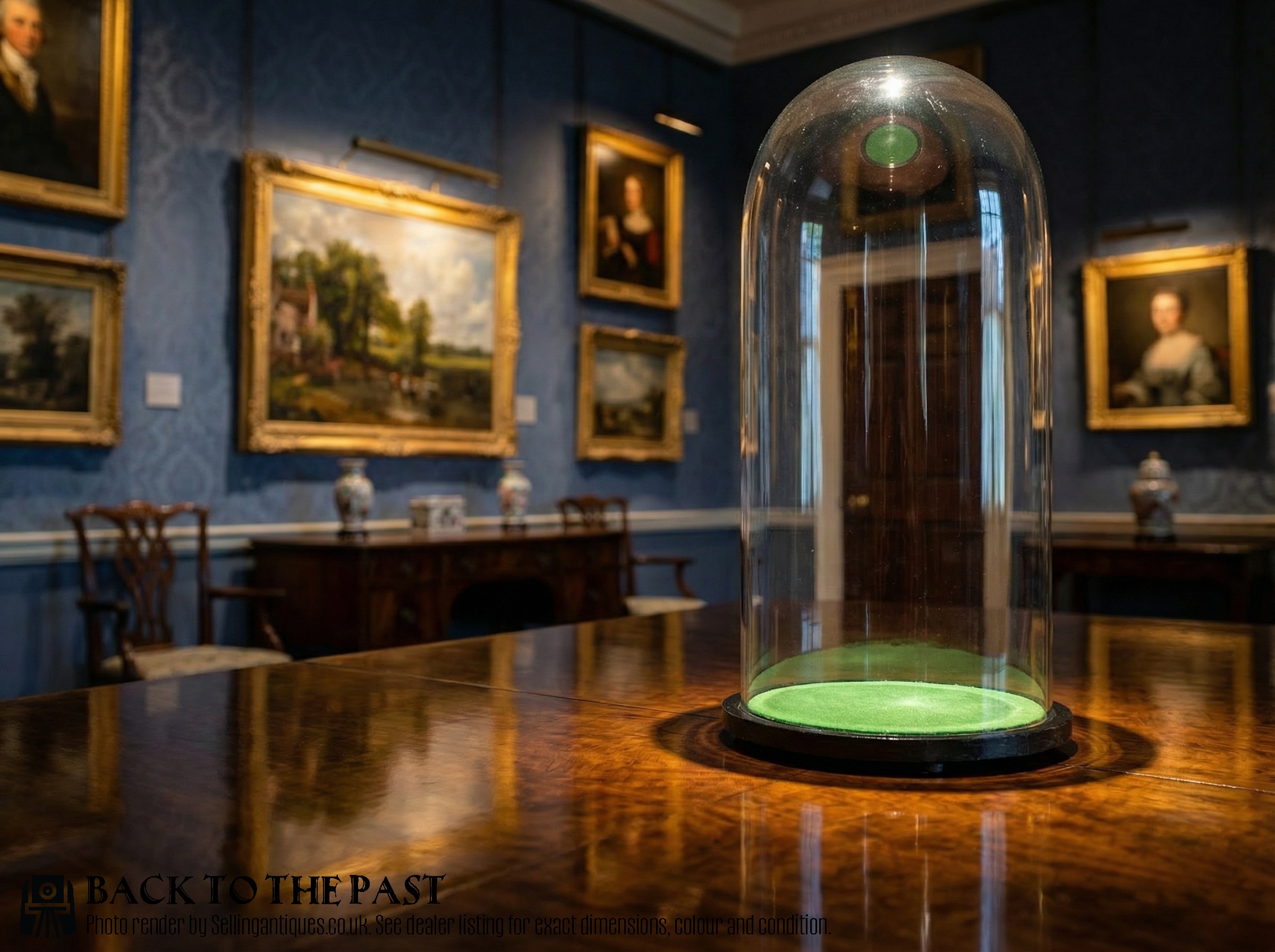
Glassmakers blew the clear covers by hand or in simple moulds, resulting in undulating surfaces and tiny air bubbles trapped within the material. These transparent bell jars and tall cloches sit snugly upon turned wooden bases, often finished in ebonised polish.
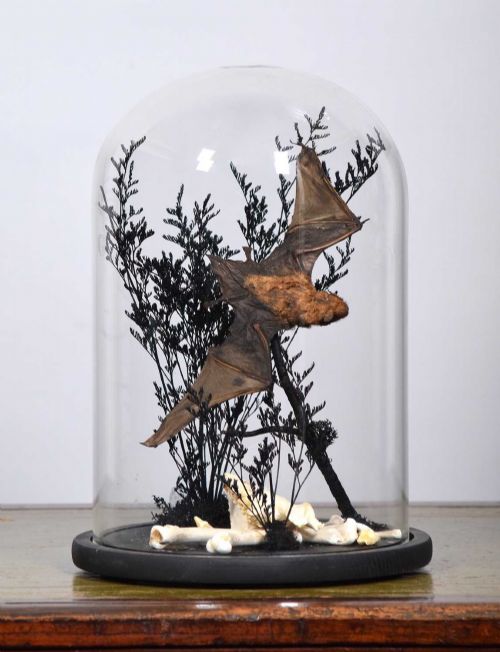
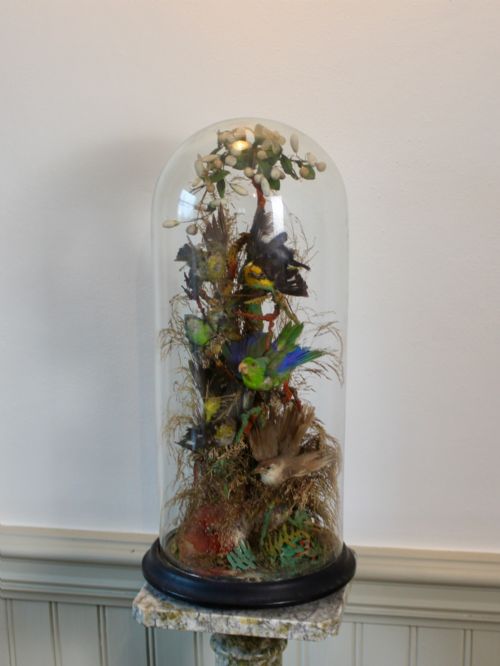
Makers constructed the internal displays using natural vegetation, feathers, bone, fabric, and fur alongside taxidermy specimens. Artisans arranged birds and animals upon twigs or artificial terrain, fixing them securely inside the enclosed showcase.
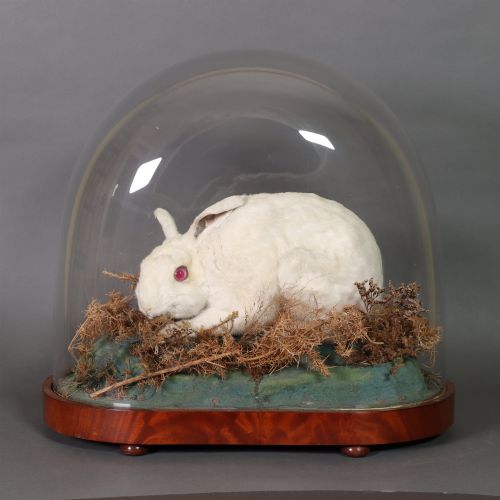
An albino rabbit stares out from beneath its glass roof, perfectly content to spend eternity indoors.
What varies in quality
The clarity and thickness of the blown glass establish the baseline quality of the dome, with older vessels showing characteristic ripples and weight. Bases turned from solid beech or finished with deep ebonised wood display superior joinery and stability compared to simpler platforms.
James Gardner·A Pollard
The Specimen Display Dome Glossary
- Dome
- A rounded glass cover used to protect and display fragile objects. It sits upon a flat base, typically made of wood.
- Cloche
- A bell-shaped glass vessel traditionally used in gardens or for tabletop displays. This term often describes smaller glass covers on this page.
- Ebonised wood
- Timber treated with a dark stain or chemical process to imitate ebony. This finish appears frequently on nineteenth-century display bases.
- Taxidermy
- The art of preparing, stuffing, and mounting the skins of animals for display. Victorian practitioners arranged these specimens inside glass enclosures.
- Showcase
- A glazed cabinet or glass-covered enclosure designed to exhibit items. These cases kept dust away from delicate feathers and bone.
Specimen Display Dome: Frequently Asked Questions
What fits inside a specimen dome?
These glass vessels house preserved birds, small mammals, skulls, butterflies, and botanical vegetation.
Interior arrangements range from single taxidermy specimens to multi-bird compositions created during the nineteenth century.
How do I date an antique dome?
Examine the glass for bubbles, thickness, and slight irregularities indicative of nineteenth-century hand-blowing techniques. Turned wooden bases and framing styles also help distinguish Victorian examples from later Edwardian pieces.
Makers' marks or labels beneath the wooden base can provide more precise origin details.
Where should I place a dome?
Position your display on a sturdy table or sideboard away from direct sunlight to protect fragile feathers and fur. Stable placement prevents accidental knocks to the tall glass cover.
Ensure the room maintains moderate humidity to preserve both the wooden base and internal taxidermy.