

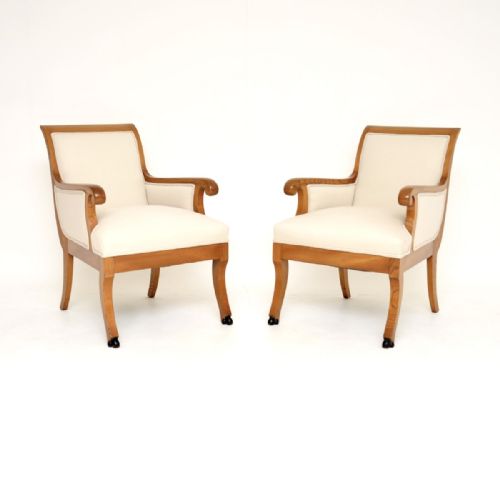


Solid Wood Carver Chair
A solid wood carver chair brings sturdy timber construction and generous proportions to a dining table or desk.
Solid Wood Carver Chair
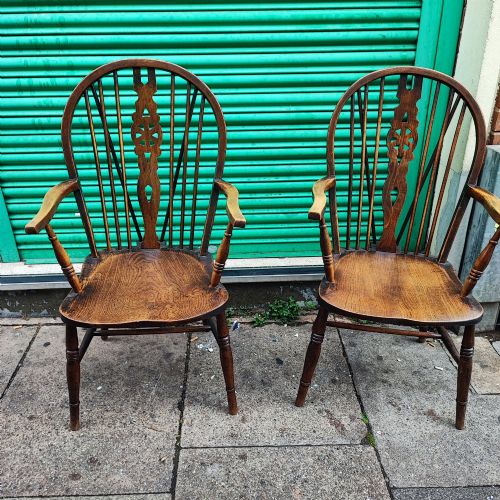
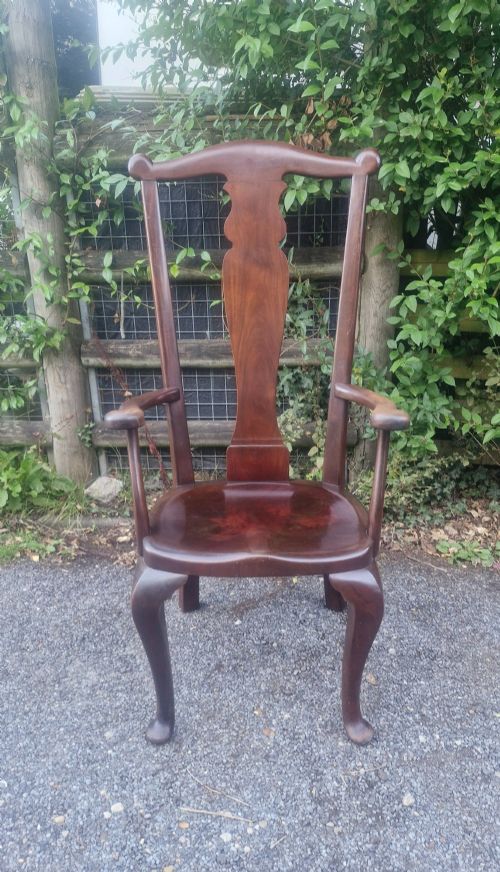
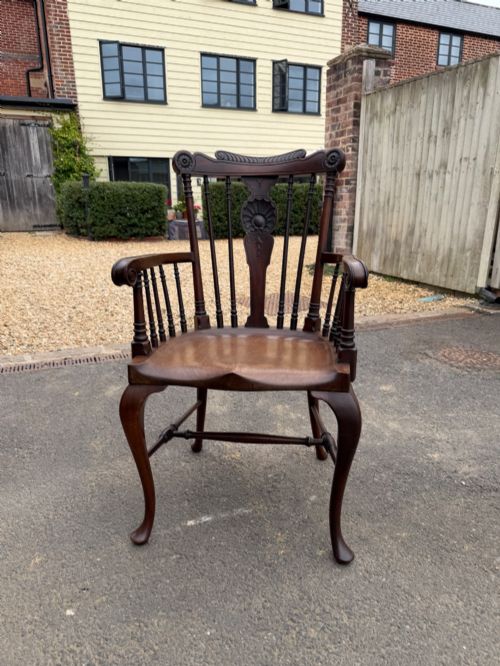
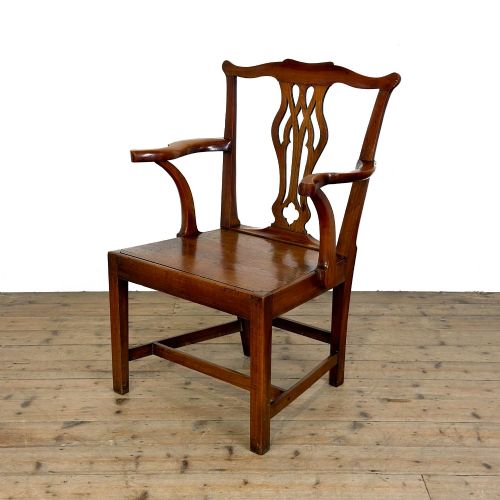
A solid wood carver chair is a substantial armchair designed to accompany a set of dining chairs or function independently at a desk. These pieces appear across various periods from the Regency era through to the 1930s, encompassing styles such as English Country, Georgian Revival, and Swedish Neoclassical.
The form typically manifests as an armchair with distinct armrests integrated into the wooden frame, serving as the head-of-table seat. Buyers encountering this selection will find examples ranging from rustic kitchen chairs to formal mahogany desk armchairs.
Makers utilised regional traditions to shape these seats, producing country comb back windsors alongside panelled oak armchairs and walnut styles. The overriding characteristic remains the heavy timber frame, constructed entirely from solid woods without composite boards.
Materials and construction methods
Makers relied on native timbers such as oak, mahogany, walnut, elm, ash, and fruitwood to build the structural frames. Elm and ash frequently appear in country vernacular pieces, valued for their tough, interlocking grain that resists splitting under stress.
Joinery methods depended heavily on the style and period, employing traditional tenons, dowels, and steam-bent components for Windsor backs. Turnery and hand carving defined the ornamentation on mahogany and walnut frames from the nineteenth century onward.
Solid Wood Carver Chair Retail Price Guide 2026
Typical asking prices for solid wood carver chair among the pieces listed under this phrase on Sellingantiques today, from the lower quarter to the upper quarter. They describe what is for sale here now, not the wider market.
The inventory records elm, ash, mahogany, oak, walnut, fruitwood, and alder across pieces spanning the Regency era to the 1930s.
Assessing quality and craftsmanship
Quality in these armchairs rests upon the selection of timber and the integrity of the original joints. Dense grain figures in mahogany and walnut denote careful material selection, whereas robust domestic timbers like elm indicate functional durability.
Refinement of the hand carving and the crispness of turned members separate standard utility seating from finer stylistic interpretations. The structural tightness of the arm joints and legs dictates the longevity of the piece in daily use.
Howard and Son·H. Samuel London
The Solid Wood Carver Chair Glossary
- Carver chair
- An armchair traditionally placed at the head of a dining table or used as a desk chair. It matches or complements the smaller side chairs in a dining set.
- Comb back
- A Windsor chair variation where the vertical spindles extend through a horizontal crest rail, resembling the teeth of a comb. This construction provides robust back support.
- Vernacular
- Objects designed by local craftspeople using regional materials and traditional methods rather than adhering to high-style academic design. These pieces often display charming local quirks.
- Turnery
- The craft of shaping wood on a lathe using cutting tools. Spindles and legs on these chairs frequently show varied turned profiles.
Solid Wood Carver Chair: Frequently Asked Questions
What is a solid wood carver chair?
A solid wood carver chair is an armchair built entirely from timber, featuring armrests and a more substantial build than standard dining seating. They were historically placed at the heads of dining tables.
These chairs span multiple centuries and stylistic revivals, offering both rustic country charm and formal architectural presence.
How do I use a carver chair today?
These armchairs function naturally as desk chairs, statement seating in hallways, or as the head chairs at a dining table. Their sturdy timber frames accommodate daily sitting.
When pairing them with a modern table, check the height of the armrests to ensure they slide beneath the tabletop properly.
How are different periods identified?
Periods are told apart by timber choice, joinery techniques, and stylistic ornament. Regency and Georgian pieces often feature mahogany, while country examples favour elm and ash.
Revival styles from the Victorian era and early twentieth century borrow decorative motifs from earlier Tudor or Neoclassical designs.
Which woods are most common?
Oak, mahogany, elm, and ash appear frequently across these listings. Country chairs often combine elm seats with ash or beech spindles.
Formal desk and dining armchairs lean towards mahogany and walnut for their darker tones and fine grain.