


Victorian Country Chairs
These Victorian country chairs bring robust everyday character into modern dining spaces through honest nineteenth-century utilitarian design.
Victorian country chairs
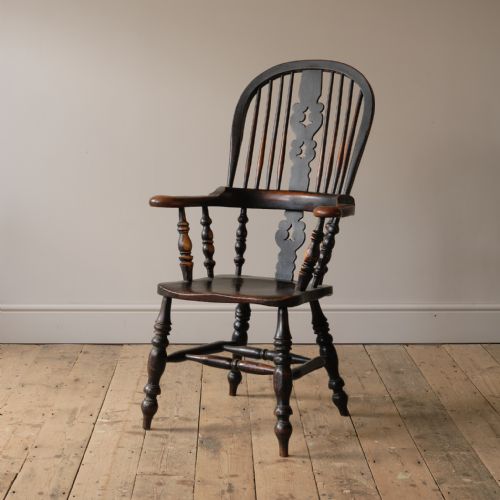
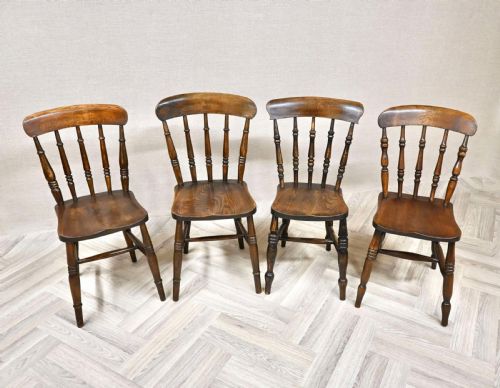
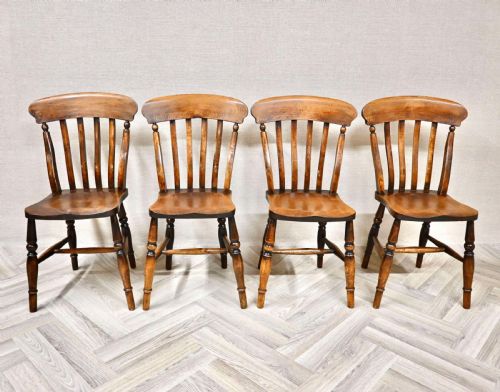
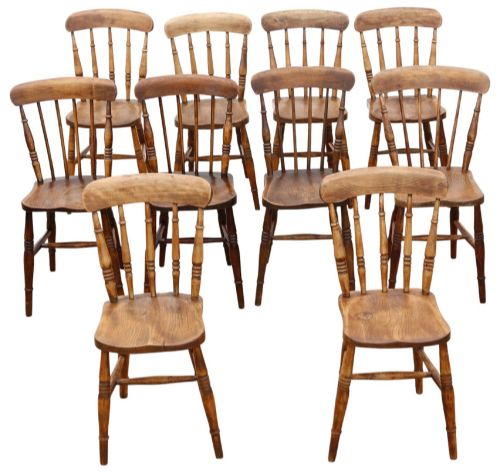
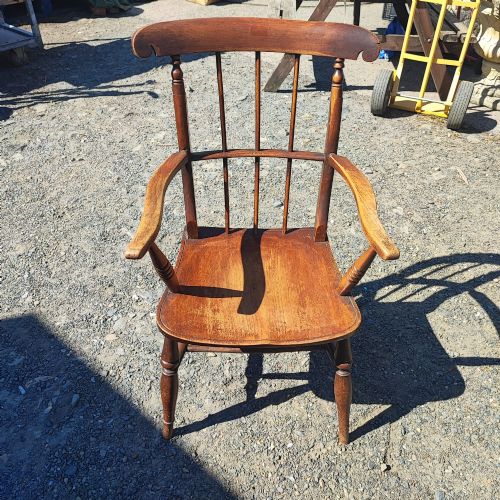
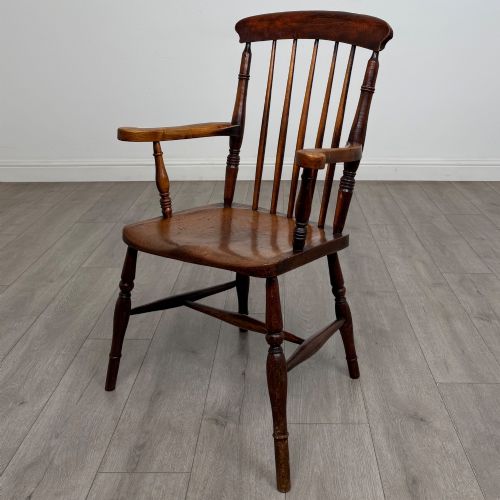
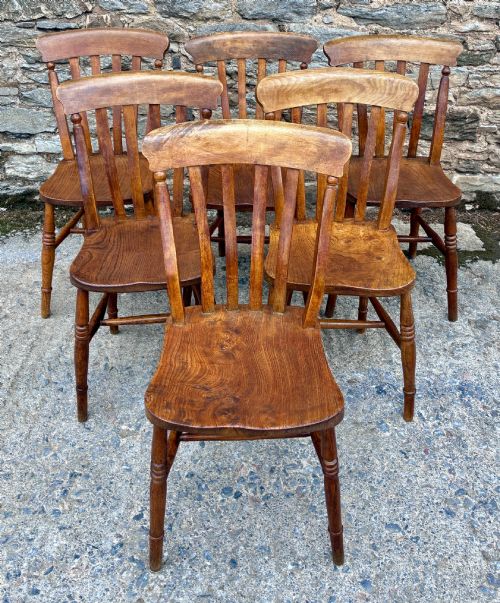
When searching for victorian country chairs, buyers encounter sturdy seating built for nineteenth-century farmhouses, kitchens, and country houses rather than formal parlours. The most common survivals on this page are dining chairs and side chairs configured in sets or pairs, designed for hard daily domestic use.
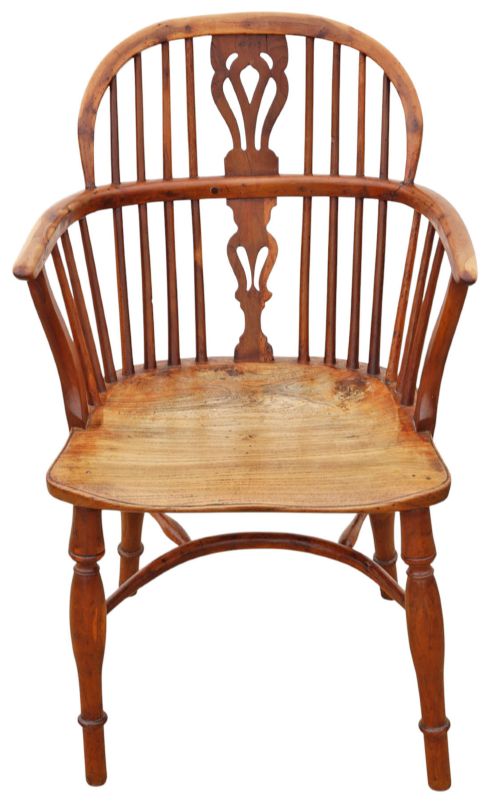
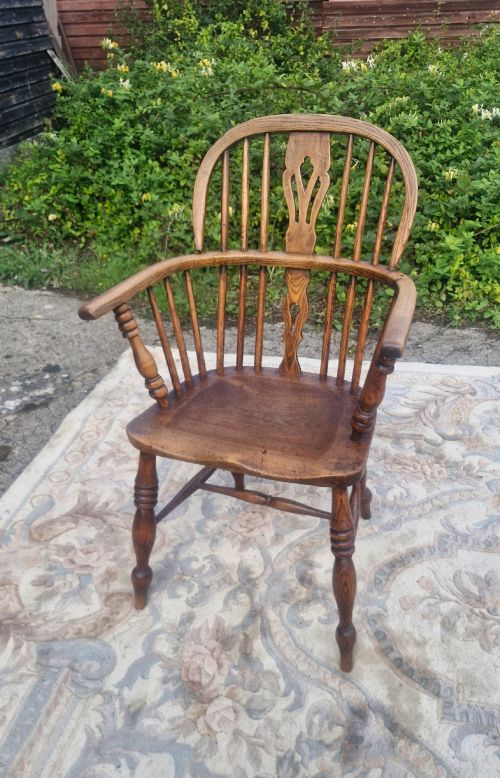
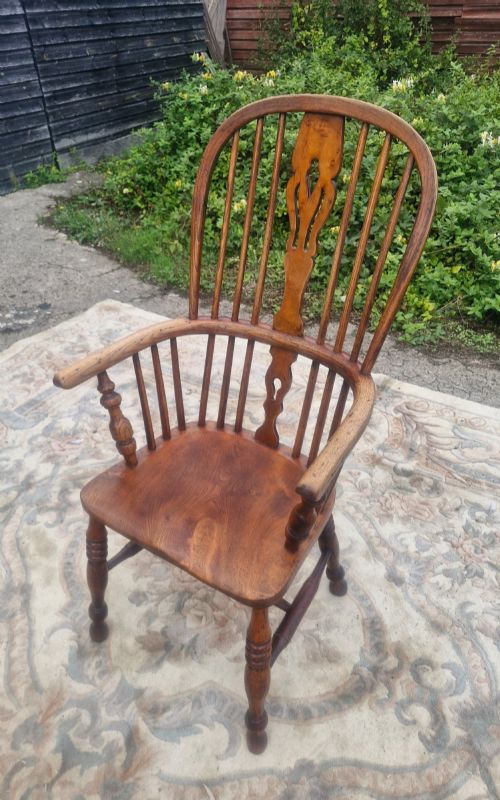
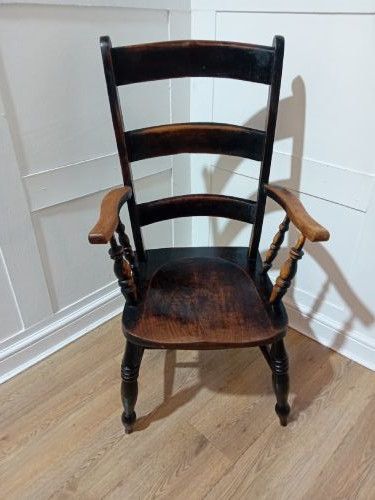
The regional forms span Windsor armchairs and kitchen chairs alongside ladder backs, fiddle backs, and balloon backs. Many examples originate from English country workshops, utilising local timber and straightforward joinery to serve domestic spaces.
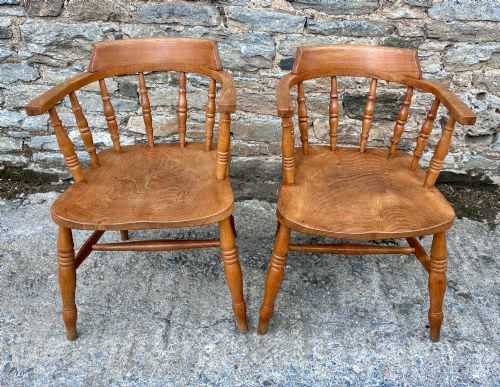
The selection includes specialised seating such as chapel chairs, smokers bow chairs, and station chairs. These variations reflect the diverse practical demands placed on rural and provincial furniture during the nineteenth century.
Materials and construction
The makers combined multiple timber species within a single piece to exploit their specific mechanical properties. Elm typically formed the saddle seats, whilst beech, ash, and oak provided strength for the turned legs, spindles, and uprights.
Construction relied on traditional methods including peg joining, double stretchers, and steam-bending. Turners shaped spindles and legs on lathes, integrating them into thick solid seats that resisted splitting during daily use.
Retail Price Guide 2026
Typical UK retail prices for victorian country chairs, calculated from the Sellingantiques database of over a million retail prices indexed since 2003. This retail price guide relies exclusively on Sellingantiques data; no external sources or auction records are used, so the figures do not describe the wider market.
The inventory records vernacular seating forms including ladder backs, lath backs, and Windsor kitchen chairs.
Standards of craftsmanship
Quality rests in the selection of timber and the harmony of the harlequin or matched sets. Pieces featuring distinct grain figures in elm seats paired with well-turned beech or ash spindles represent the more accomplished vernacular output.
Structural integrity depends on the tightness of the original joints and the survival of the timber without excessive replacement parts. Original surface treatments, such as scumble paint or aged patination, preserve the authentic character of the working furniture.
James Winter and Sons
The Victorian Country Chairs Glossary
- Windsor
- A chair style featuring a solid wood saddle-shaped seat into which the back and legs are directly tenoned. These sturdy forms often incorporate steam-bent hoops and central splats.
- Carver
- An armchair version of a dining chair, traditionally placed at the head of a table. These pieces match the smaller single chairs in a set.
- Scumble paint
- A decorative paint technique used to imitate the grain of more expensive hardwoods on cheaper timber. This finish was common in nineteenth-century provincial interiors.
- Double stretchers
- Pairs of horizontal rails connecting the legs of a chair to provide extra rigidity and strength. They appear frequently on heavily used kitchen and farmhouse seating.
- Harlequin set
- A collection of dining chairs that share similar periods, materials, and styles but were not originally manufactured as a single unified group. They offer a traditional way to seat larger numbers around a table.
Frequently Asked Questions
What woods were used for these chairs?
Makers relied on native British hardwoods that grew abundantly around rural workshops. Elm appeared most frequently for solid carved seats due to its resistance to splitting.
Supporting framework utilised beech, ash, and oak for their tensile strength in turned spindles and legs. Occasionally, pine or satin birch also appeared in specific regional designs.
How do I care for antique kitchen chairs?
These utility pieces require minimal intervention beyond regular dusting with a dry or slightly damp cloth. Avoid placing them near direct heat sources to prevent the timber from drying out and joints from loosening.
Applying occasional natural wax helps nourish the dry nineteenth-century wood surfaces. This preserves the historical patination accumulated over generations of domestic use.
Were these chairs used only in kitchens?
While the evidence records many examples in farmhouse and country house kitchens, the forms served diverse domestic and institutional spaces. Workshops produced variations specifically for chapels, railway stations, and dining rooms.
Sturdy construction allowed them to withstand heavy daily traffic outside the formal parlour. Their utilitarian origins made them adaptable to almost any room in a nineteenth-century home.
How can I tell the period of a country chair?
Dating relies on observing construction techniques, tool marks, and overall stylistic evolution across the nineteenth century. Early Victorian examples often display hand-turned components and pegged joints.
Later nineteenth-century pieces may incorporate standardised turned parts while retaining traditional elm and beech construction. Comparing seat shapes and back splats helps narrow the manufacturing decade.