


Solid Silver Salt Dishes
Solid silver salt dishes bring tactile weight to a dining table, offering centuries of refined metalwork for everyday use.
Solid Silver Salt Dishes
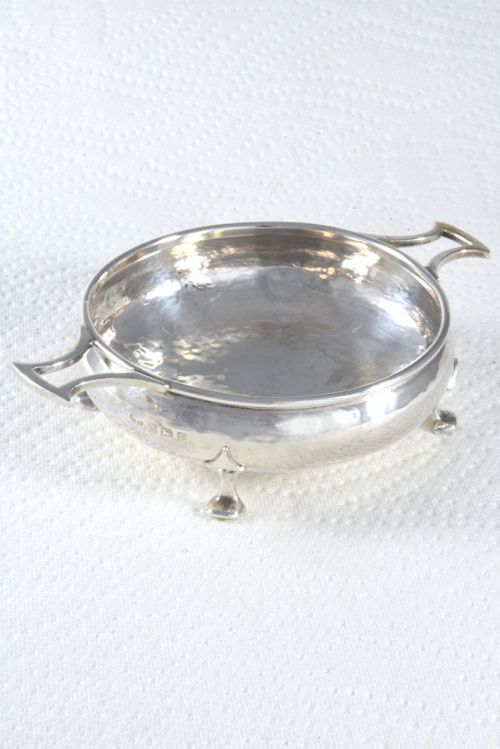
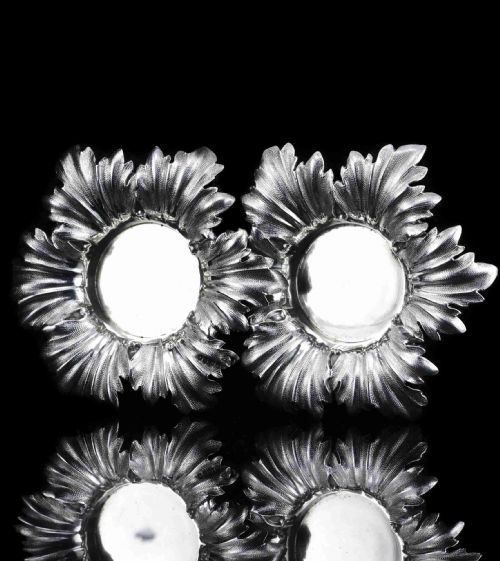
Solid silver salt dishes are small tableware vessels designed to hold condiments on the dining table, encompassing both open salt cellars and shallow pin or butter dishes. When searching for solid silver salt dishes, a buyer encounters forms ranging from simple boat shapes to elaborate naturalistic flower designs and cast shell motifs.
The pieces appearing on this page span several distinct periods, with Victorian examples and Georgian items appearing frequently alongside pieces from the early twentieth century. Makers such as Barnards, William Bateman, Edward Farrell, and Mary and Richard Sibley represent the standard of craftsmanship found across these historical eras.
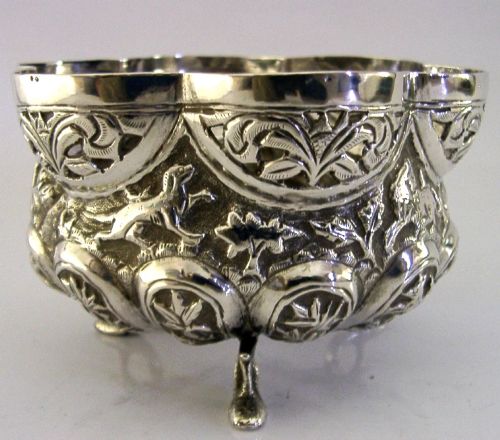
Beyond standard salt cellars, related forms such as mustard pots, trinket dishes, and decorative bowls occasionally appear within this category. These objects demonstrate the diverse applications of sterling silver, silver gilt, and vermeil across different workshops and geographic origins including Ottoman and Anglo-Indian traditions.
Materials and Technique
Makers utilised sterling silver and solid silver as the primary metal for these vessels, often applying silver gilt or vermeil to the interior surfaces to protect the metal from corrosive salt. Cobalt glass liners frequently accompany open salt cellars, providing a contrasting coloured insert that holds the condiment securely.
Techniques combine casting and chasing, visible in cast shell forms and elaborate foliate chased decoration on bodies and rims. Silversmiths employed hammering, shaping, and detailed hand engraving to achieve naturalistic flower designs and lobed profiles.
Victorian silversmiths occasionally shaped solid silver salt dishes into miniature Viking longships, bringing maritime drama straight to the dining table.
Indicators of Quality
Quality rests upon the crispness of the chased or cast ornament, such as the depth of detail in rococo shell motifs and naturalistic flower designs. Heavy gauge metal contributes to a substantial feel in the hand, separating robust pieces from lighter productions.
The presence of original components, including matching spoons and fitted blue glass liners, elevates the integrity of a set. Maker marks and clear hallmarks add historical documentation that distinguishes standard utility wares from master silversmith output.
Barnards·William Bateman·Edward Farrell·Mary Sibley And Richard Sibley·Vale Brothers And Sermon
The Solid Silver Salt Dishes Glossary
- Sterling silver
- An alloy comprising ninety-two point five percent silver by mass, with the remainder consisting of copper or other metals. This standard has served as the baseline for British silver tableware for centuries.
- Silver gilt
- Silver that has been coated with a thin layer of gold on its surface. This finish prevents the silver from tarnishing when exposed to corrosive contents like salt.
- Vermeil
- High-quality silver plated with a heavy layer of gold. It provides the appearance of solid gold while utilising silver as the structural base.
- Chasing
- A metalsmithing technique where a design is hammered into the front of the metal to push details outward and create relief. It creates textured surface patterns without removing material.
- Hallmark
- An official stamp applied by an assay office to indicate the purity of the metal, the maker, and the year of production. These marks provide definitive provenance for antique silver.
Solid Silver Salt Dishes: Frequently Asked Questions
How were salt dishes used?
Historically, open salt cellars sat on the dining table to hold coarse salt before individual shakers became common. Diners used small spoons or pinches of fingers to take salt from the dish.
Today, these small vessels function well on dressing tables for jewellery or on sideboards as decorative tableware.
Do salt dishes require special care?
Cleaning solid silver requires gentle polishing cloths formulated specifically for silver to preserve chased details and hallmarks. Regular use and washing in warm soapy water prevents tarnish accumulation.
Glass liners should be removed and washed separately to protect the surrounding metal from moisture trapped underneath.
How do I identify a Georgian piece?
Georgian pieces often display rococo revival styling, deep hand-chased shell motifs, and heavy cast construction. Hallmarks on these items include date letters and maker marks corresponding to the reigns of the Georges.
Examining the underside reveals wear patterns and construction methods typical of eighteenth and early nineteenth-century workshops.
What are glass liners used for?
Cobalt glass liners fit inside open salt cellars to prevent direct contact between the salt and the silver. Salt corrodes silver over time, making these removable glass inserts a practical protective measure.
Original glass liners matching the contours of the silver dish add significant authenticity to an antique salt cellar.