


Solid Silver Gravy Boat
A solid silver gravy boat brings proper weight and shine to the table, and this selection ranges from Georgian work to Art Deco forms.
Solid Silver Gravy Boat
A solid silver gravy boat serves sauces and gravies at the dining table with traditional form. When you search for a solid silver gravy boat, you encounter vessels designed for pouring, often featuring distinct handles and spouts.
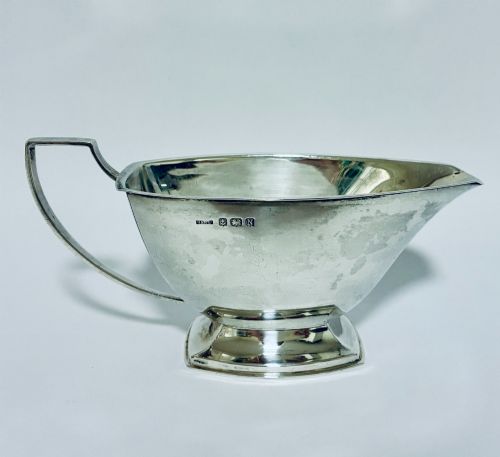
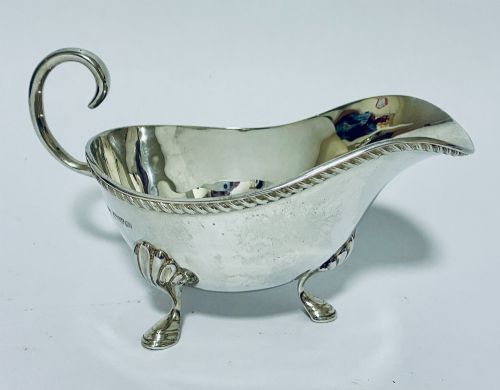
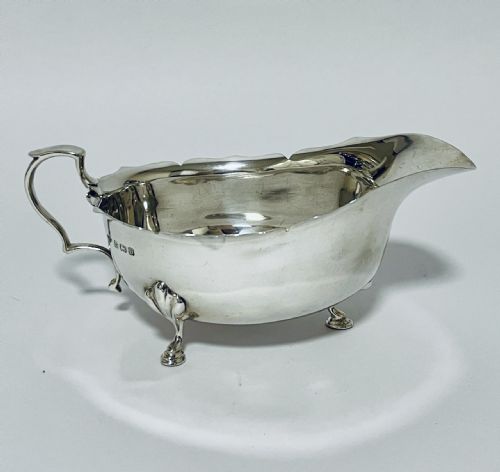
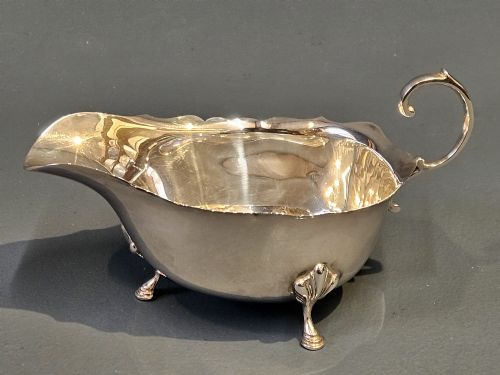
The pieces on this page span several centuries, including Georgian examples from the eighteenth century, Victorian designs, and later twentieth-century pieces. You will find forms ranging from plain eighteenth-century bowls to Art Deco silhouettes and Celtic Revival decoration.
Most items function as single vessels, though pairs appear among Georgian and Victorian entries. Serveware of this kind anchors a formal table setting while remaining practical for everyday use.
How they were made
Makers shaped these vessels from sterling silver and standard silver alloys, frequently employing hammer and smithing techniques. Some examples incorporate silver-gilt finishes, adding a rich interior layer of gold over the silver.
Decoration varies from plain polished surfaces to embossed motifs, naturalistic acorn designs, and intricate Celtic style engraving. Workshops utilised casting and chasing to achieve the handled bodies, scrolled feet, and pouring lips.
What varies in quality
The standard of a solid silver gravy boat rests on the gauge of the metal and the crispness of the chased or embossed details. Heavier pieces demonstrate greater substance in the hand, reflecting the amount of silver used by the silversmith.
Design execution distinguishes standard production from exceptional work, particularly in the balance of the handle and the clean line of the spout. Maker marks and clear hallmarks also provide certainty regarding origin and date.
James Welch·William Grundy·William Comyns·Walker and Hall
The Solid Silver Gravy Boat Glossary
- Sterling silver
- A silver alloy containing substantial pure silver content, traditionally marked with specific hallmarks to guarantee standard. This material provides the primary medium for the gravy boats listed here.
- Silver-gilt
- Silver that has been coated with a thin layer of gold on its surface. This finish often appears on the interior of sauce boats to protect the metal from acidic contents.
- Hallmark
- An official stamp applied to precious metals indicating the maker, assay office, and year of testing. These marks allow collectors to date pieces accurately.
- Sauce boat
- A small open vessel with a handle and spout used for serving gravies, sauces, or cream. They typically stand on three feet or an integrated pedestal base.
Solid Silver Gravy Boat: Frequently Asked Questions
How do I clean a silver gravy boat?
Use a soft cloth and specialised silver polish to remove tarnish without scratching the metal surface. Avoid harsh abrasives that can wear away chased or embossed details.
Rinse the vessel thoroughly in warm water and dry it completely after cleaning to maintain its shine.
How do I date a silver gravy boat?
Check the body of the vessel for stamped hallmarks, which include date letters and assay office symbols. These marks connect the piece to specific years of manufacture.
Stylistic markers such as Georgian pedestal feet or Art Deco geometric lines also indicate the era of production.
What is the difference between a sauce boat and a gravy boat?
The terms are often used interchangeably to describe open pouring vessels with handles and lips. Both forms serve liquid accompaniments at the table.
Regional preferences and historical catalogues sometimes favored one term over the other, but the function remains identical.