
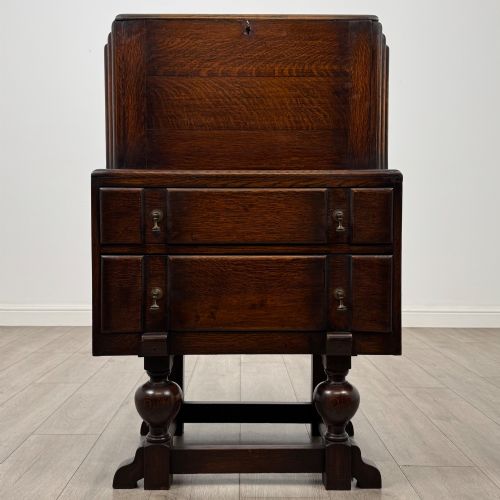
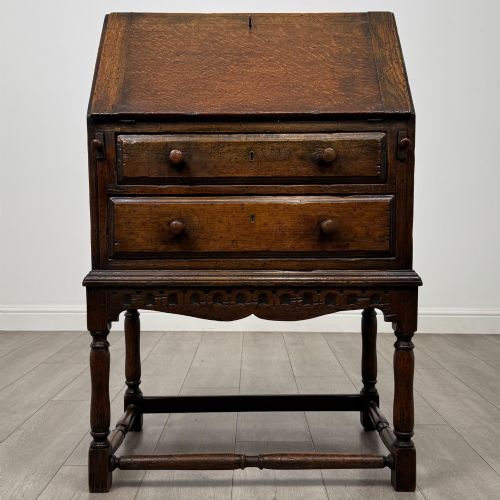
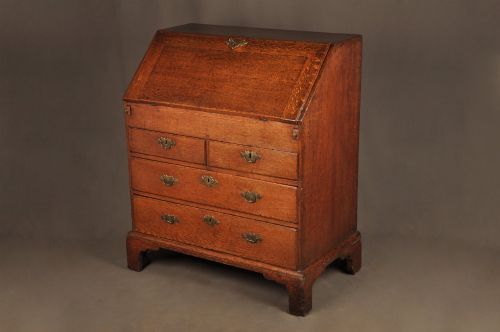
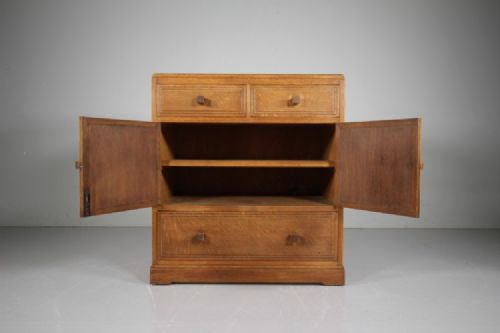


Solid Oak Secretary Desk
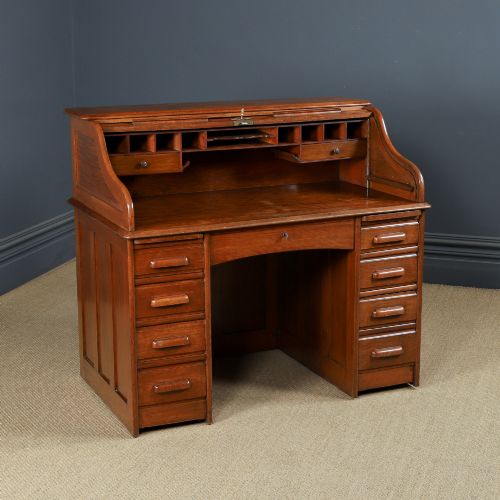
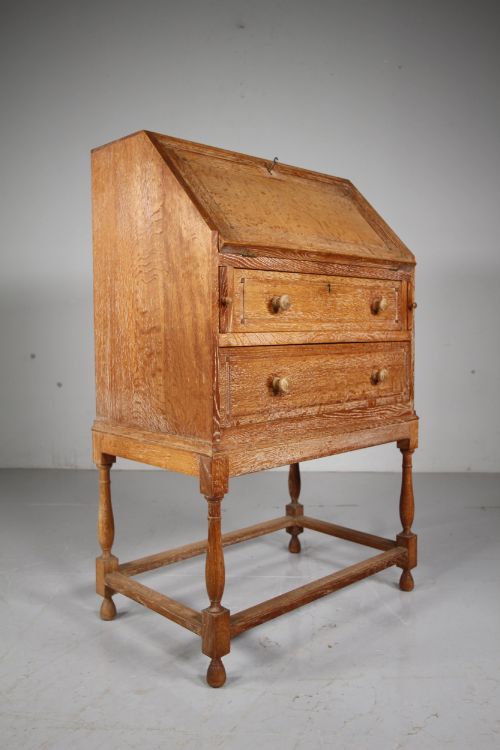
A solid oak secretary desk brings enduring utility and robust timber to any room, offering a fitted writing space that conceals daily papers behind a drop-front panel.
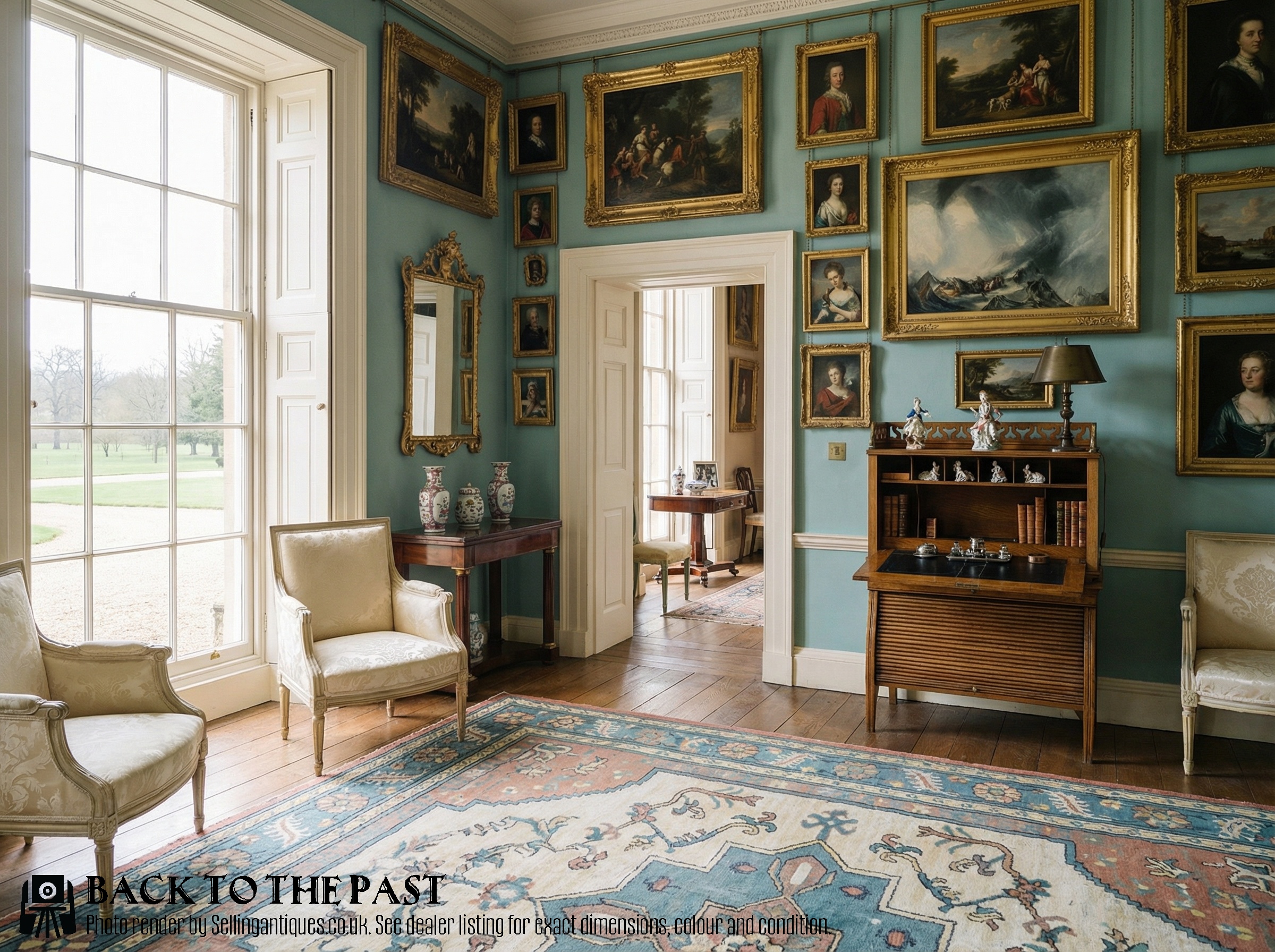
Solid Oak Secretary Desk
When buyers search for a solid oak secretary desk, they are examining a range of writing furniture spanning from the early eighteenth century through to the mid-twentieth century. The selection leans heavily towards Edwardian interpretations and twentieth-century revivals, alongside earlier Georgian and eighteenth-century examples.
These pieces primarily manifest as bureaux, writing desks, and bureau bookcases, frequently fitted with internal compartments and drawers. Most items encountered on this page reflect the enduring appeal of English oak, with particular emphasis on stylistic movements like Arts and Crafts and Jacobean Revival.
How they were made
Construction relies primarily on solid oak, frequently described as English oak, providing a heavy and durable carcase designed for decades of daily use. Joinery is paired with functional hardware, notably brass drawer pulls, handles, and occasional wrought iron or copper accents.
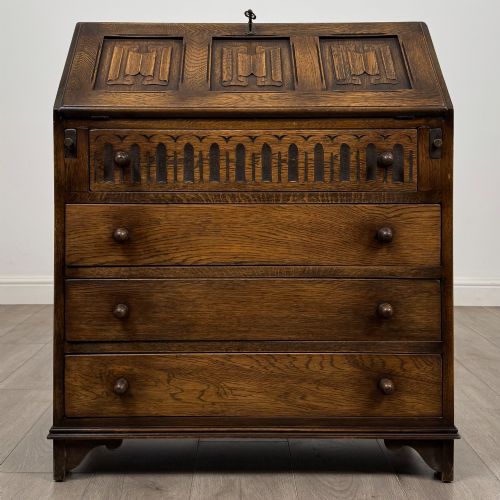
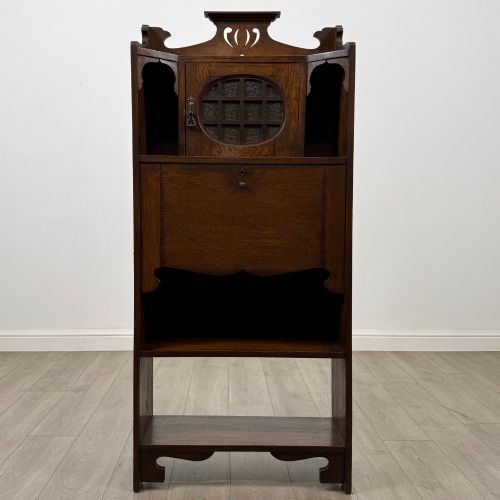
Surface ornamentation ranges from plain timber panels to carved linenfold motifs and decorative glass panes set into upper bookcase doors. Labelled workshop pieces and attributed items demonstrate specific regional cabinet-making traditions from makers operating in the early twentieth century.
Listings span several distinct eras, from early eighteenth-century examples up to mid-twentieth-century production, unified by their use of oak and brass.
What varies in quality
The standard of a bureau rests upon the selection of the timber, the depth and crispness of any carved detailing such as linenfold panels, and the integrity of the internal pigeonholes and small drawers. Earlier eighteenth-century iterations often display simpler, heavier boards, whereas Edwardian and Arts and Crafts examples showcase distinct stylistic ambitions.
Original labels from identifiable workshops or retailers elevate certain pieces above anonymous factory production. The presence of original brass or iron hardware and working locks adds significantly to the integrity of the surviving desk.
Heals of London·Bryn Mawr Welsh·Robert Mouseman Thompson·Liberty and Co·James Shoolbred and Co
The Solid Oak Secretary Desk Glossary
- Bureau
- A writing desk featuring a sloping hinged lid that drops down to form a writing surface, concealing a fitted interior of pigeonholes and small drawers. This form forms the core of the items listed under this search phrase.
- Bureau bookcase
- A taller piece of furniture combining a lower writing bureau with upper shelving enclosed by glazed or wooden doors. These provide both storage for books and a fold-down writing platform.
- Linenfold
- A style of carved wooden panelling that resembles folded vertical folds of fabric or linen. This decorative motif appears frequently on twentieth-century revival furniture.
- Arts and Crafts
- A design movement valuing handcraftsmanship, simple forms, and traditional construction methods over industrial mass production. Pieces from this era often emphasise the natural grain of the oak.
- Jacobean Revival
- A nineteenth and twentieth-century stylistic movement copying the heavy, geometric carved decoration and dark finishes of seventeenth-century English furniture. It accounts for several of the revival desks found here.
Solid Oak Secretary Desk: Frequently Asked Questions
What is a solid oak secretary desk used for?
These pieces function primarily as compact writing tables and storage cabinets for correspondence, paperwork, and books. The drop-front flap opens to reveal a writing surface alongside small drawers and pigeonholes.
In contemporary interiors, they serve equally well as laptop stations or hallway writing surfaces that close away clutter when not in use.
How do I identify an eighteenth-century bureau?
Early eighteenth-century examples rely on thick timber boards, hand-cut dovetails within the drawer construction, and patinated oak surfaces developed over centuries of handling. They generally lack the machine-sawn precision and applied decorative mouldings seen on later revival pieces.
Checking the secondary woods inside the drawer linings and observing the method of jointing helps confirm the age of the timber carcase.
What distinguishes Arts and Crafts desks?
Arts and Crafts desks emphasise visible construction details, honest material use, and restrained ornamentation rather than heavy historical revivals. They frequently display hand-hammered copper or brass hardware alongside exposed tenon joints.
These pieces often carry workshop stamps or labels indicating production by noted retailers from the early decades of the twentieth century.
How should I care for an oak bureau?
Maintain the timber by keeping the desk away from direct heat sources and sudden humidity changes that can cause solid oak panels to warp or split. Occasional application of a traditional wax polish helps nourish the grain without building up sticky layers.
Avoid using modern silicone-based sprays, which can penetrate open-grained oak and damage the historic finish over time.