

Solid Oak Chest
When you search for a solid oak chest, you uncover heavy timber storage pieces spanning centuries of domestic life, built to endure.
Solid Oak Chest
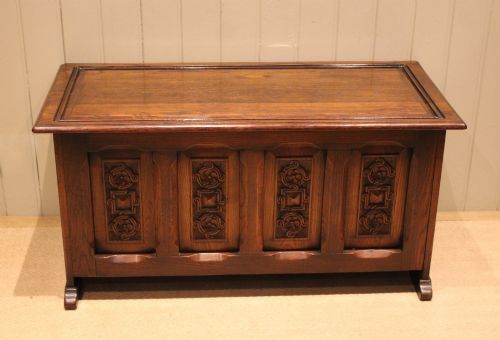
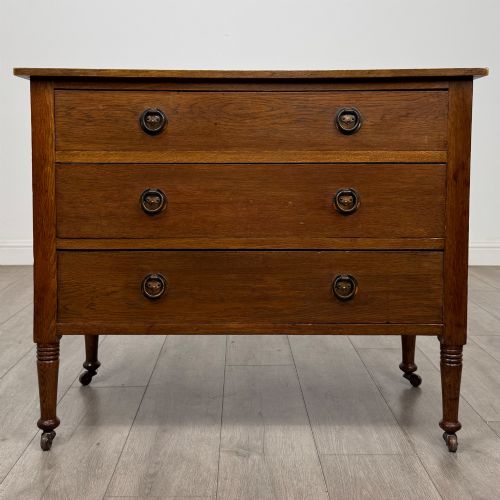
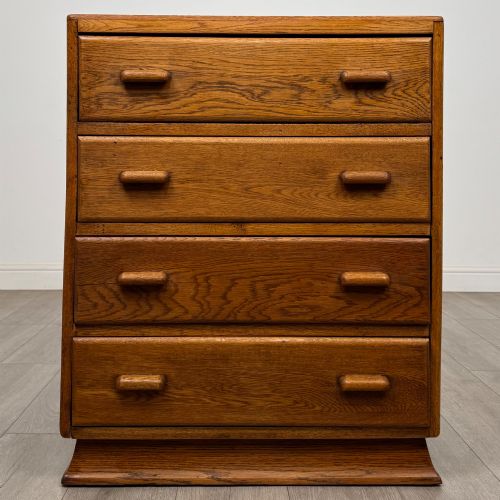
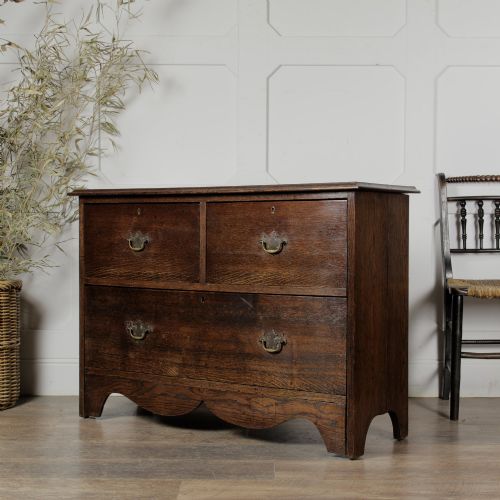
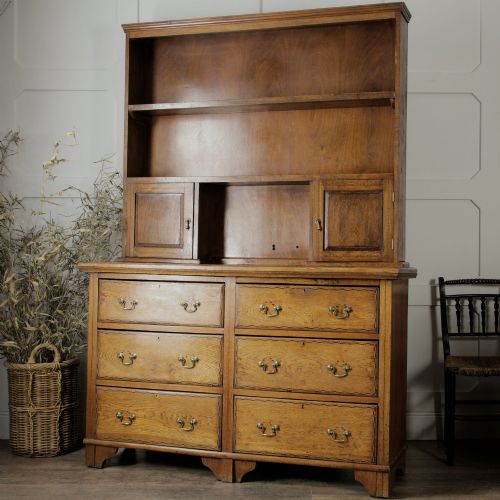
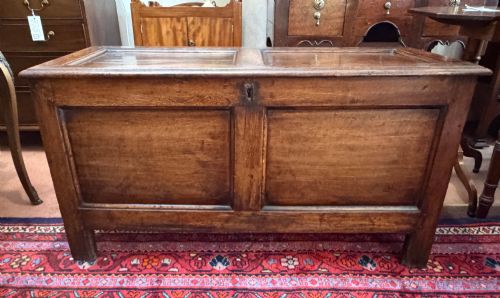
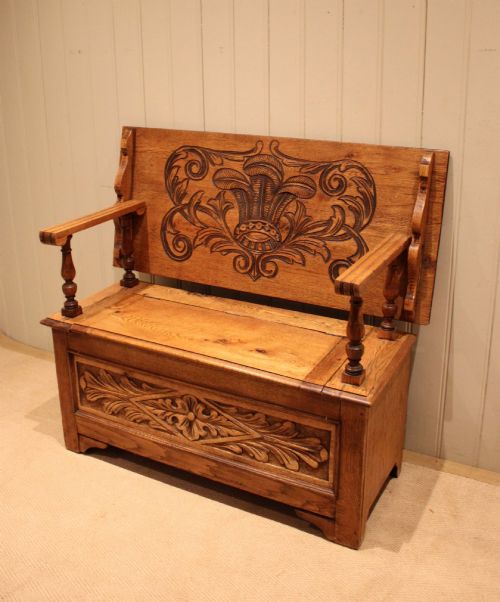
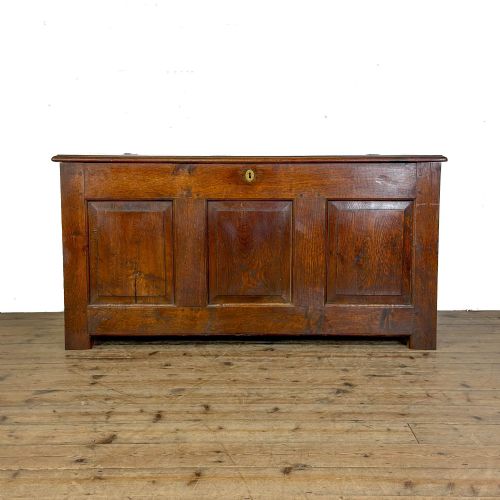
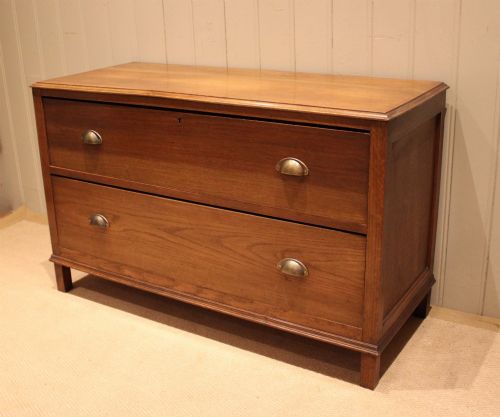
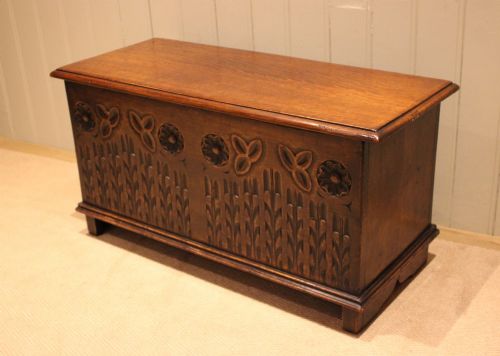
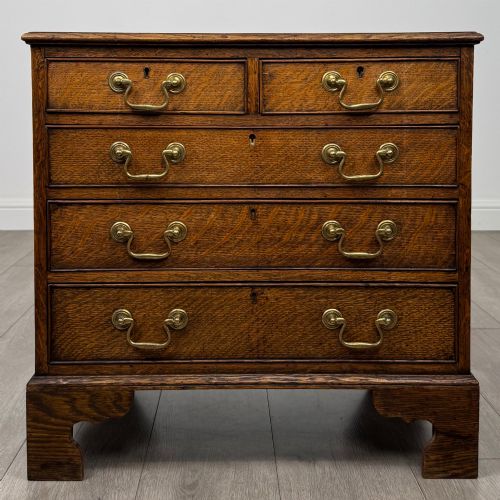
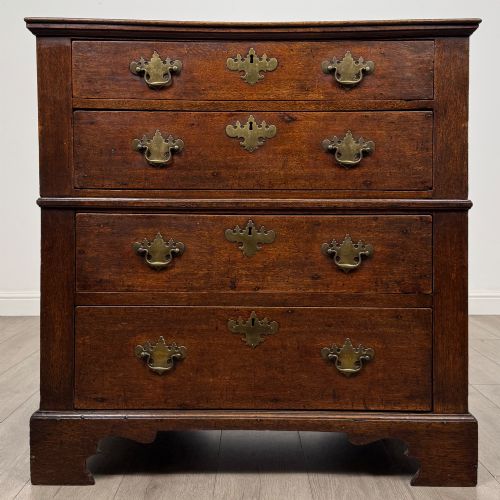
A solid oak chest encompasses a robust range of historic storage furniture, from early boarded coffers and blanket boxes to multi-drawer chests, tallboys, and dressing chests.
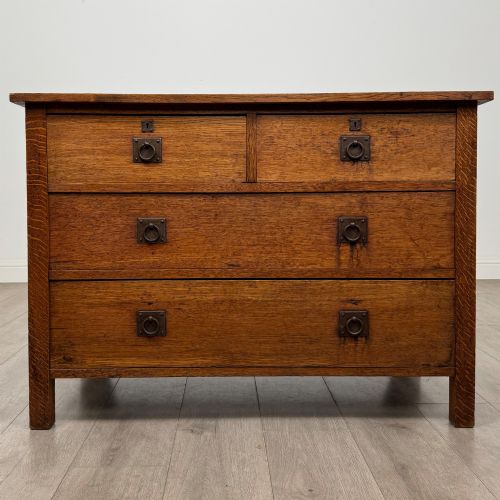
The pieces appearing most frequently bridge the seventeenth century through the Edwardian period, alongside robust Arts and Crafts examples and utilitarian 1920s or 1930s designs.
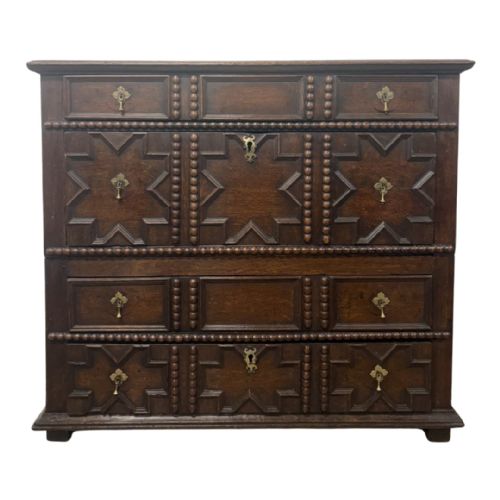
Forms vary significantly, encompassing panelled blanket chests, geometric moulded drawer fronts, mule chests, and compact nineteenth-century bedside or bedroom storage.
How they were made
Construction relies heavily on dense native timber joined using traditional methods like mortise and tenon frames, hand-cut dovetails on drawer boxes, and pegged joints on earlier examples.
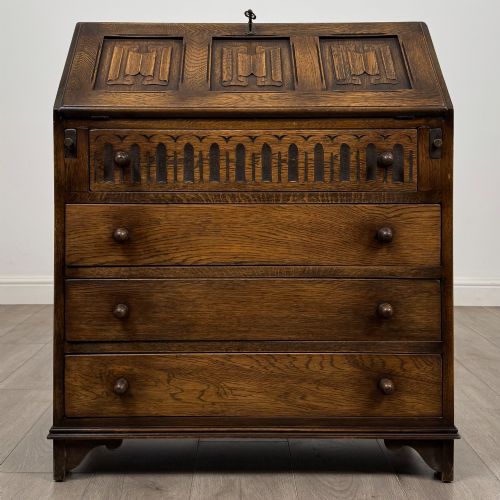
Surface decoration involves hand-carved linenfold patterns, geometric mouldings, raised panels, and subtle wood inlay, finished simply with wax to highlight the natural grain.
Metal hardware such as iron hinges, brass drop handles, and escutcheons are integrated functionally, often secured with hand-beaten nails or screws appropriate to each era.
Listings feature solid oak pieces spanning the 17th Century, Georgian, Victorian, Arts & Crafts, and Edwardian periods.
What varies in quality
The calibre of a piece rests on the selection of timber, where quartersawn oak showing prominent medullary rays indicates superior historic conversion and stability.
Joinery execution dictates longevity, distinguishing pieces built with tight, hand-cut framing and clean internal secondary woods from heavier, less refined utility builds.
The integrity of original surfaces, patination, and surviving period brasswork or ironmongery elevate a piece above later alterations or heavily stripped timbers.
Harris Lebus
The Solid Oak Chest Glossary
- Coffer
- A large wooden chest traditionally used for storing valuables, linens, or documents, often constructed with heavy stiles and rails.
- Dovetail
- A joint formed by interlocking wedge-shaped fingers, commonly utilised to secure drawer sides to drawer fronts.
- Linenfold
- A style of carved wooden panelling that resembles folded fabric, popular during the Tudor and revival periods.
- Mule chest
- A storage chest featuring one or more functional drawers beneath the main internal compartment.
- Medullary rays
- Natural ribbon-like flecks visible across quartersawn oak timber, prized for decorative figure and strength.
- Escutcheon
- A protective plate surrounding a keyhole, frequently fashioned from brass or iron.
Solid Oak Chest: Frequently Asked Questions
How do I date an oak chest?
Dating relies on observing construction methods, such as hand-cut dovetails, tool marks, and framing styles which shifted from joined panel construction in the seventeenth century to drawer-heavy carcases by the Georgian and Victorian eras.
Hardware styles, timber preparation, and native wood species also provide clear chronological markers for sorting early pieces from Edwardian revivals.
Can I use a coffer as a coffee table?
A sturdy antique coffer serves well as a low table in a living room, provided the top boards are flat and stable enough to support books or serving trays safely.
Placing felt pads beneath items and avoiding excessive moisture protects the historic wax finish and dry oak surface from ring marks.
How do I maintain solid oak furniture?
Routine care involves dusting with a dry cloth and occasionally feeding the wood with a traditional beeswax polish to nourish the grain without building up heavy residue.
Keep these timber pieces away from direct heat sources and rapid humidity shifts to prevent the solid boards from splitting or warping over time.