
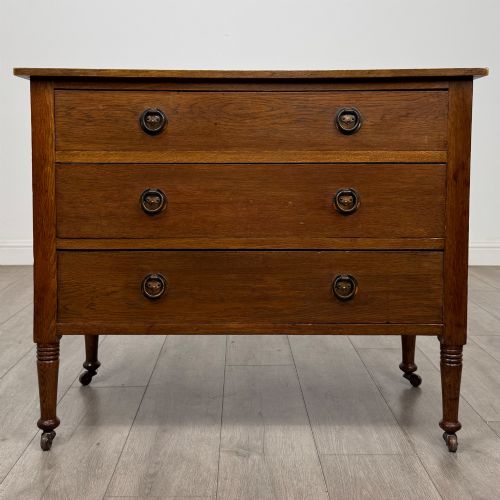
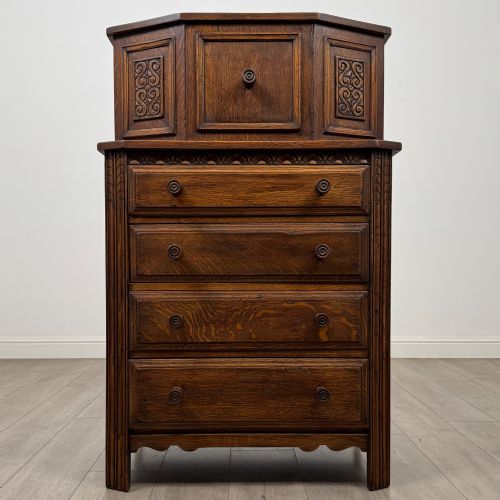
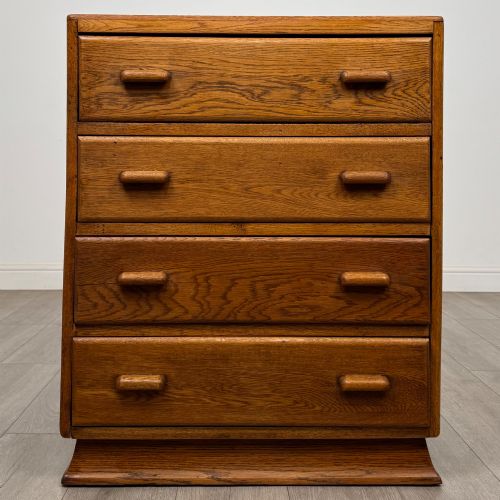
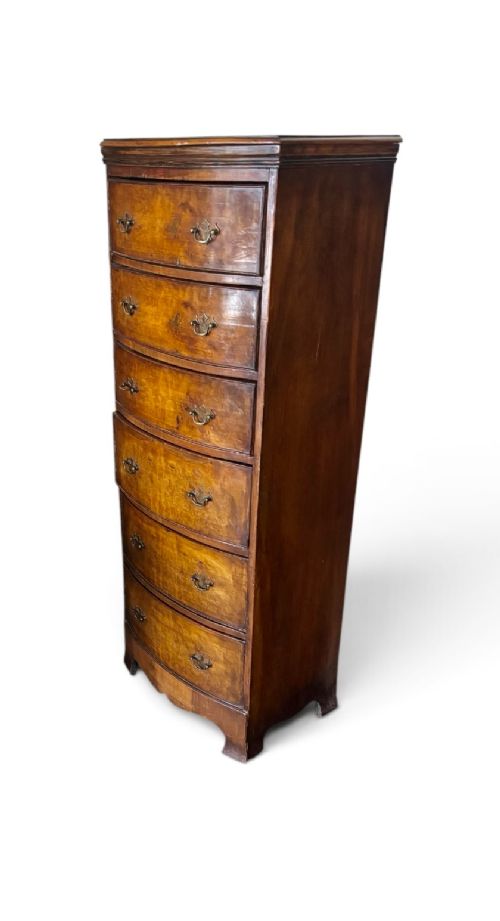

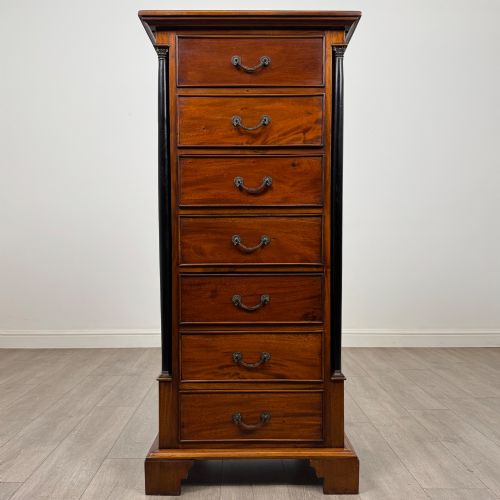
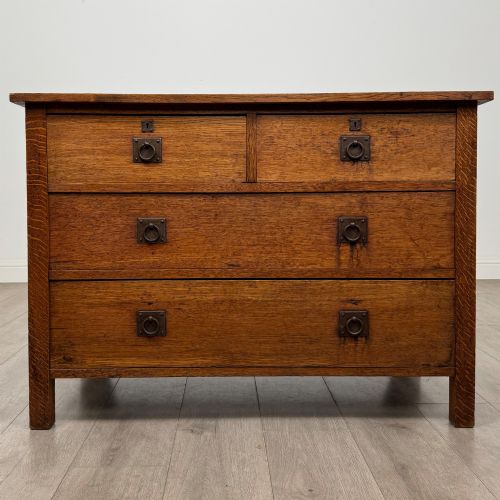
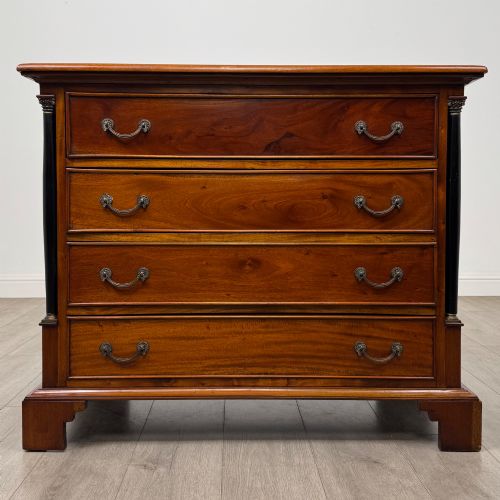
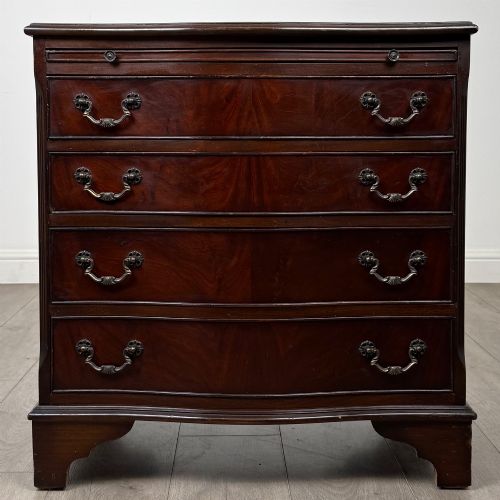
20th Century Tallboy
A 20th century tallboy offers vertical storage through stacked drawers, combining period craftsmanship with practical bedroom furniture.
20th Century Tallboy
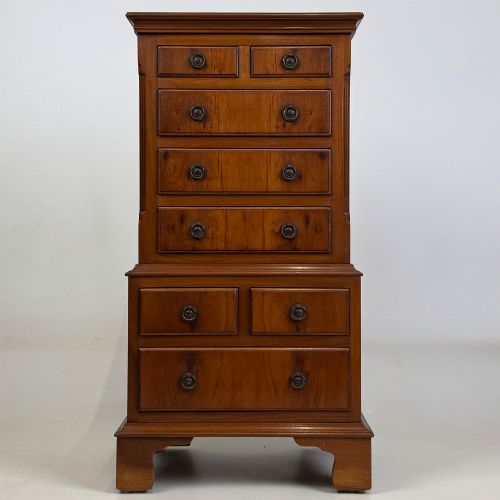
A 20th century tallboy is a vertical storage piece designed to maximise floor space by stacking drawers and cupboards upwards. These items combine the utility of traditional chest forms with the refined proportions favoured in Edwardian and later domestic interiors.
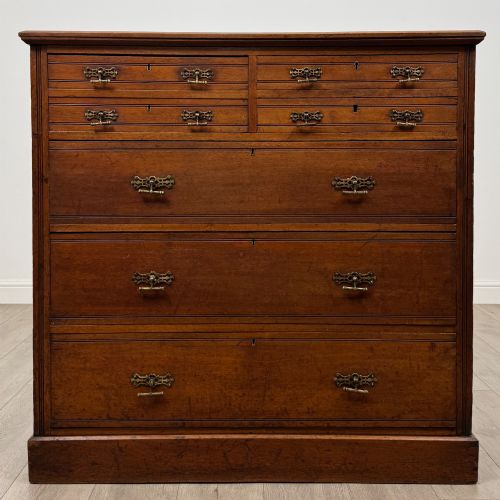
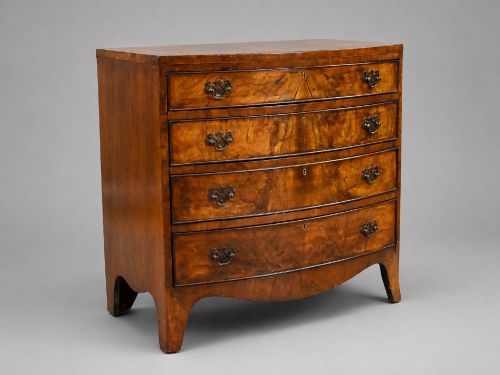
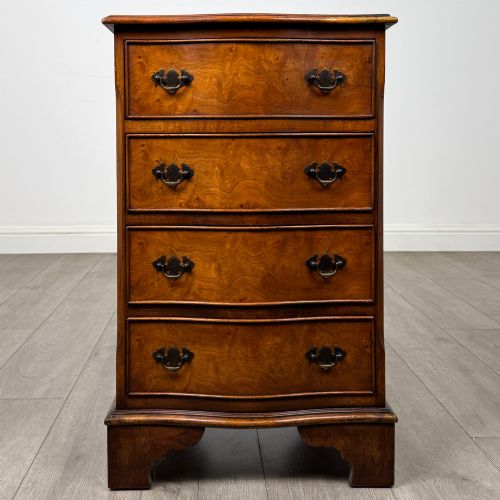
Most examples encountered here originate from the Edwardian period or date from the 1930s, constructed in woods like walnut and mahogany. Forms vary from bow front designs to chest on chest constructions and bureau bookcases.
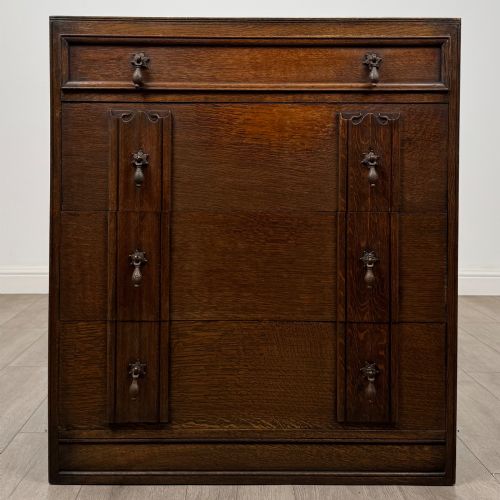
Makers drew on historical revival styles, producing pieces influenced by Queen Anne, Georgian, and Jacobean aesthetics alongside Arts and Crafts designs. Buyers find tallboys and narrow chests that suit both compact rooms and larger period settings.
How they were made
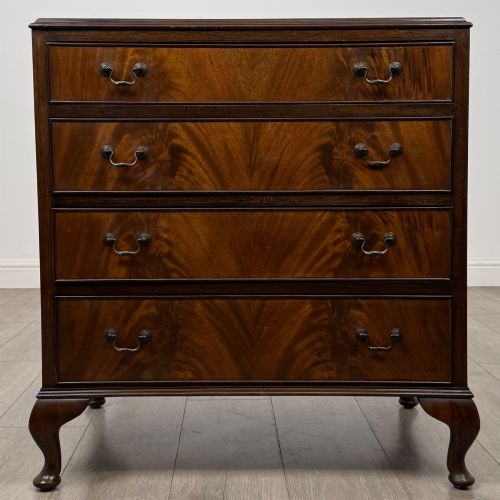
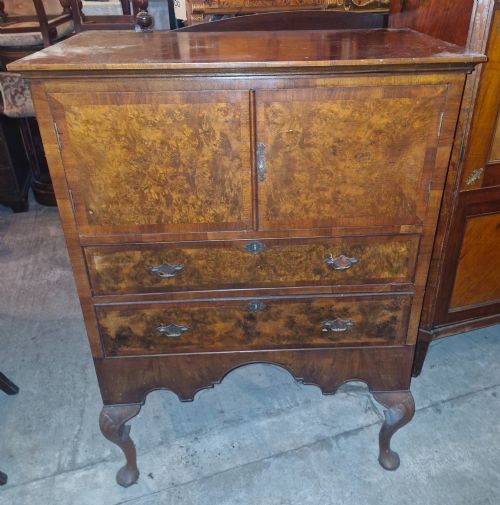
Cabinet makers utilised solid timbers alongside decorative veneers such as figured walnut, burr walnut, and flame mahogany applied to carcases of oak and other hardwoods. Brass handles, escutcheons, and metal fittings completed the drawer fronts and cupboard doors.
Surfaces received polishing to highlight natural grain patterns, while specialised techniques like oyster veneering and ebonising appeared on select pieces. Construction methods relied on traditional joinery to support the tall, multi-tiered structures of chests on stand and cabinet chests.
Listings feature periods from the late nineteenth century through the Edwardian era and the 1930s, utilising oak, mahogany, walnut, and brass.
What varies in quality
Quality rests in the selection of timbers, from plain oak boards to highly figured walnut and flame mahogany veneers matched symmetrically across drawer fronts. Superior execution shows in the precision of cabinet joinery and the harmonious proportions of bow front and serpentine shapes.
The choice of secondary woods, the finish of interior linings, and the detailing of brass hardware distinguish standard workshop production from finer cabinet work. Balance and structural integrity remain essential in tall vertical forms to ensure smooth operation of multiple drawers.
Jas Shoolbred
The 20th Century Tallboy Glossary
- Tallboy
- A tall chest of drawers, often constructed as a chest on chest or a single vertical cabinet, designed for maximum storage with a minimal footprint. These pieces elevate storage capacity without demanding extra floor area.
- Bow front
- A cabinet or chest front that curves outward in a convex arc across the centre. This curved profile softens the rectangular geometry of traditional case furniture.
- Serpentine
- A front shape characterised by a convex central section flanked by concave curves, creating a flowing wave effect. This contour requires precise woodworking skill to execute properly.
- Oyster veneering
- The practice of cutting small branches obliquely to produce circular or oval cross-section veneers resembling oyster shells. These pieces are laid closely together to create intricate geometric patterns.
- Chest on chest
- A tall furniture form comprising one chest of drawers stacked directly on top of a larger base chest. This dual-carcase construction creates substantial vertical storage capacity.
20th Century Tallboy: Frequently Asked Questions
What is a tallboy?
A tallboy is a vertical furniture piece designed primarily for storing clothing and linens within stacked drawers or cupboards. Its height provides substantial capacity while occupying minimal floor space.
These units appear in various period styles, functioning effectively in bedrooms, dressing rooms, and hallways as both storage and display surfaces.
How do I style a tallboy?
Placing a tallboy against a bedroom or hallway wall creates an immediate focal point that draws the eye upward, enhancing room height. The top surface accommodates lamps, small mirrors, or decorative objects without cluttering the floor.
Pairing the wood tone with existing furniture helps integrate the piece, while contrasting it with lighter walls highlights the grain of walnut or mahogany.
Are these pieces Edwardian?
Many examples date from the Edwardian era, spanning the late nineteenth and early twentieth centuries, while others originate from the 1920s and 1930s. Makers frequently drew inspiration from earlier Georgian and Queen Anne designs during these decades.
Examining the timber selection, construction methods, and hardware helps distinguish Edwardian revival pieces from earlier antiques.
What woods were used?
Cabinet makers predominantly worked with oak, mahogany, and walnut, frequently employing decorative veneers like burr walnut, figured walnut, and flame mahogany. Secondary timbers such as pine or oak were used for internal drawer framing and carcase backs.
Fittings often incorporated brass handles and metal hardware, complementing the polished exterior surfaces.