

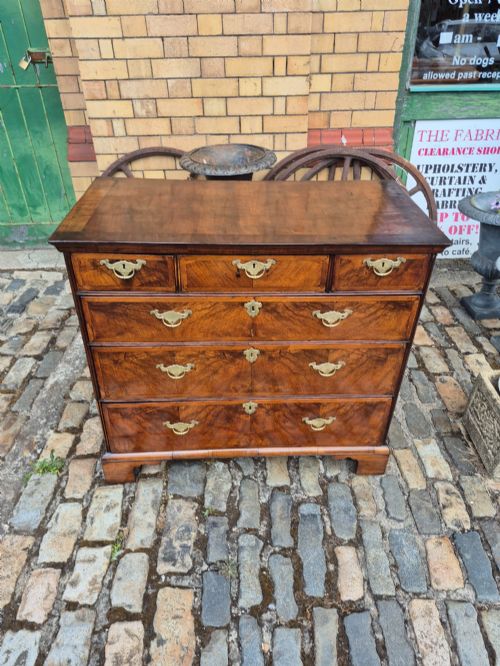
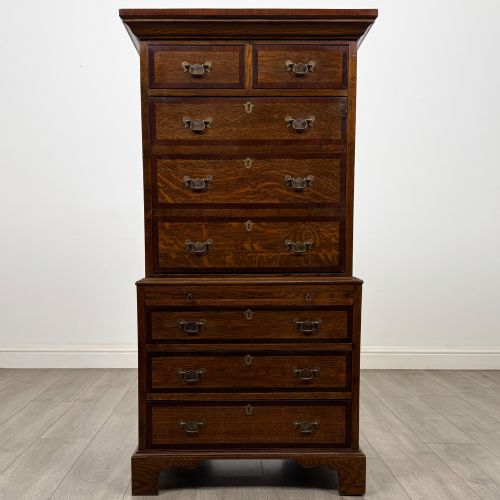
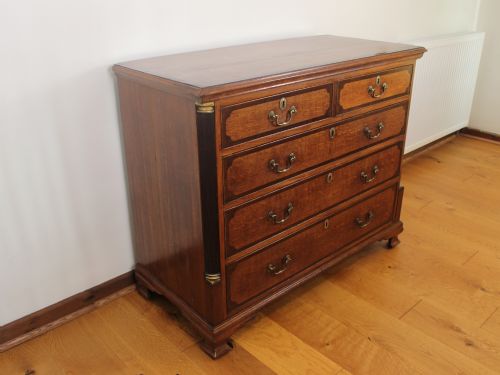
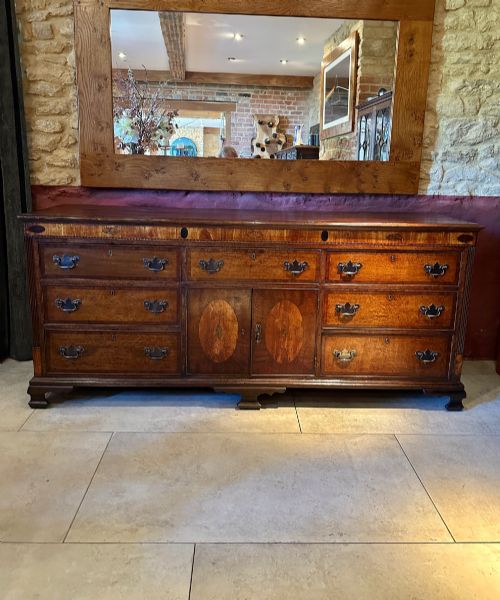


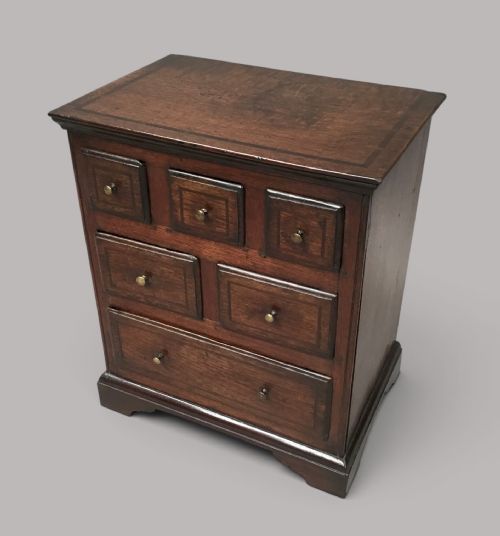


Crossbanded Oak Drawers
Crossbanded oak drawers bring together robust country timbers and refined contrasting borders to anchor a room with functional period character.
Crossbanded Oak Drawers
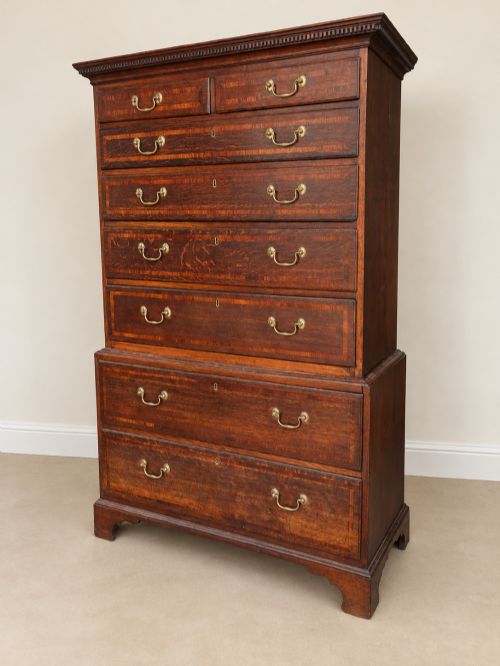
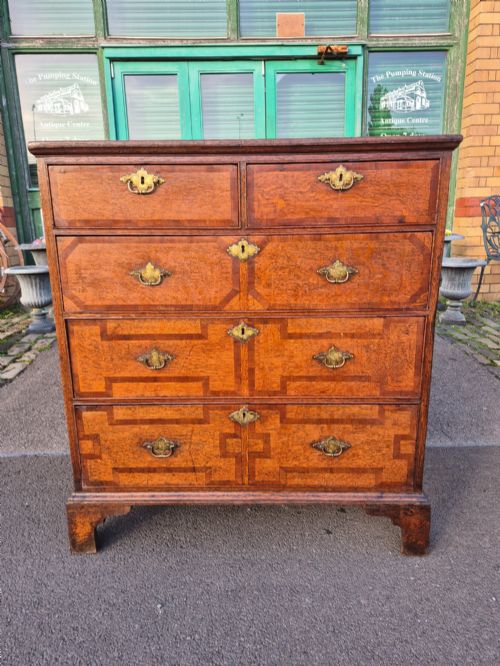
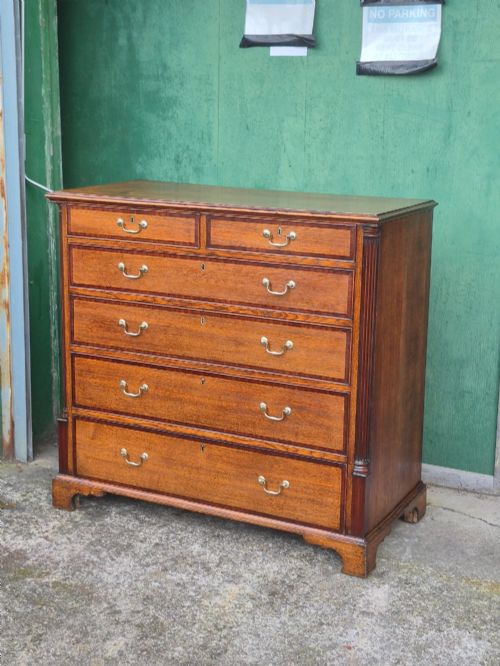
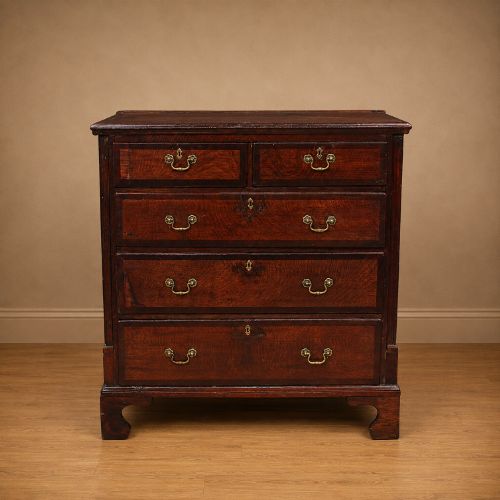
When you search for crossbanded oak drawers, you are looking at substantial storage furniture built primarily from oak and detailed with a contrasting band of veneer around the drawer perimeters. The pieces on this page span several centuries, with a strong representation of Georgian chests of drawers and low dressers alongside Edwardian and later interpretations.
The primary forms vary from mule chests and lowboy tables to tall chests on chests and bureau desks. Georgian country examples sit alongside continental commodes and revival sideboards, showing how cabinetmakers applied linear decorative borders to utilitarian storage.
Oak provides the sturdy carcase and drawer linings, whilst secondary timbers such as mahogany, walnut or fruitwood form the contrasting borders. Buyers meet everything from golden oak Georgian pieces to bleached or walnut-accented variants.
Judging quality and proportion
Quality rests in the crispness of the crossbanding and the harmonious pairing of oak with the contrasting border woods. Superior pieces maintain balanced proportions across large dresser bases or tall chests without feeling heavy.
Interior construction, such as properly fitted oak drawer linings and original brass hardware, separates standard utility furniture from finer workshop production. The integration of stepped interiors or secret drawers adds further distinction to bureaux and desks.
Crossbanded Oak Drawers Retail Price Guide 2026
Typical asking prices for crossbanded oak drawers among the pieces listed under this phrase on Sellingantiques today, from the lower quarter to the upper quarter. They describe what is for sale here now, not the wider market.
Listings feature oak combined with mahogany, walnut, satinwood, kingwood, and fruitwood inlay across eighteenth-century, Georgian, and Edwardian periods.
The Crossbanded Oak Drawers Glossary
- Crossbanding
- A strip of veneer applied to the border of a drawer front or table top so that its grain runs perpendicular to the central panel.
- Mule chest
- A storage chest featuring one or more working drawers built into the lower section beneath the main compartment.
- Tallboy
- A tall chest of drawers made in two stacked sections, often combining a chest on chest configuration.
- Low dresser
- A long low sideboard surface fitted with drawers below, commonly originating from eighteenth-century country workshops.
- Commode
- A decorative low chest of drawers, often associated with continental cabinetmaking and serpentine fronts.
Crossbanded Oak Drawers: Frequently Asked Questions
How do I date a crossbanded oak chest?
Dating relies on observing construction methods, timber choice and overall proportion. Georgian pieces frequently combine golden oak with mahogany crossbanding and hand-cut dovetails.
Later revival items from the Edwardian period or the twentieth century adopt similar decorative borders but often reveal machine tooling and different secondary woods upon closer inspection.
Where were these pieces used originally?
These items served functional storage roles throughout the home, from bedrooms and dressing rooms to hallways and dining spaces. Dressers and sideboard bases held tableware and linens in communal rooms.
Smaller chests and bureaus provided private storage for papers and personal belongings in parlours and chambers.
What is the difference between a mule chest and a standard chest?
A mule chest combines a traditional lift-lid blanket box with one or more functional drawers integrated into the base. This allowed access to linens without disturbing items stacked on top.
Standard chests rely entirely on horizontal drawer tiers stacked vertically within the carcase.
How do I care for antique oak furniture?
Maintain stable indoor humidity levels and keep wooden furniture away from direct heat sources and strong sunlight to prevent timber shrinkage and veneer lifting. Regular gentle dusting preserves the dry finish of the oak.
Apply occasional traditional wax polish to nourish the grain without building up heavy chemical residues.