
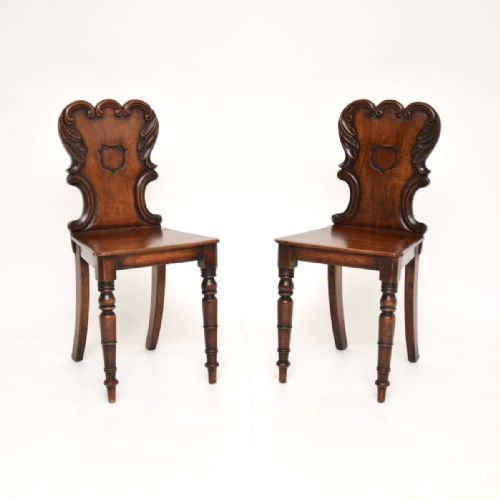


Solid Mahogany Hall Seat
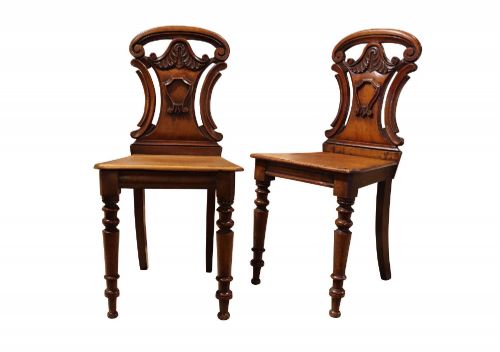
Solid mahogany hall seat pieces are striking hardwood items of historic furniture designed for grand entrance spaces and reception rooms.
Solid Mahogany Hall Seat
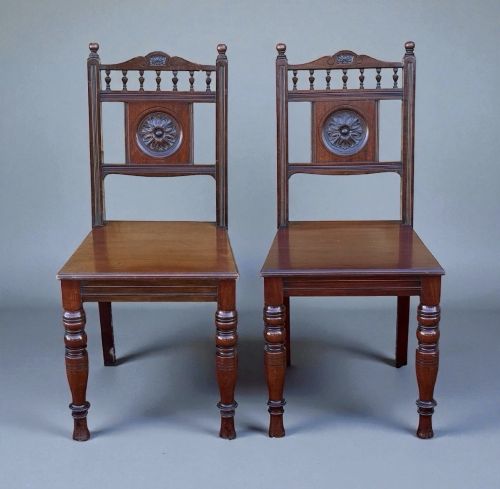
A solid mahogany hall seat encompasses sturdy hardwood chairs, side seats, and occasional benches found in entrance halls from the Georgian, Regency, and Victorian periods. Buyers seeking these items will frequently encounter matched pairs or sets originating from the 18th and 19th centuries.
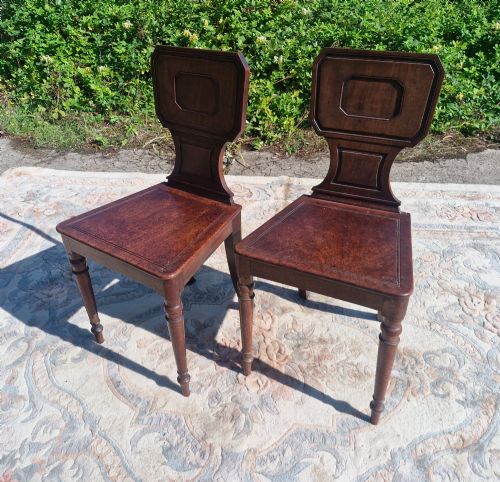
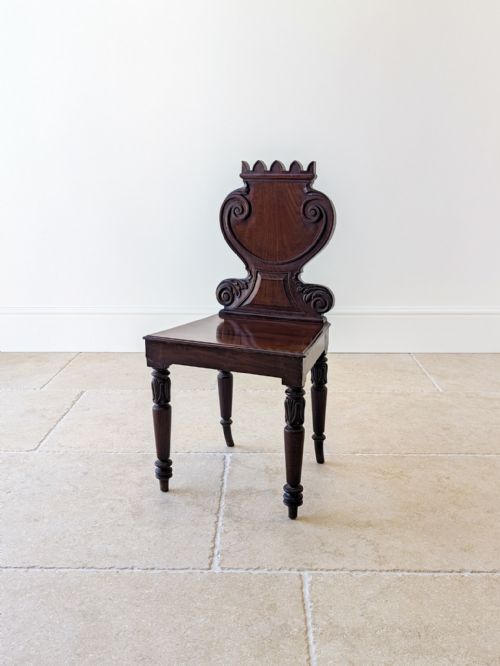
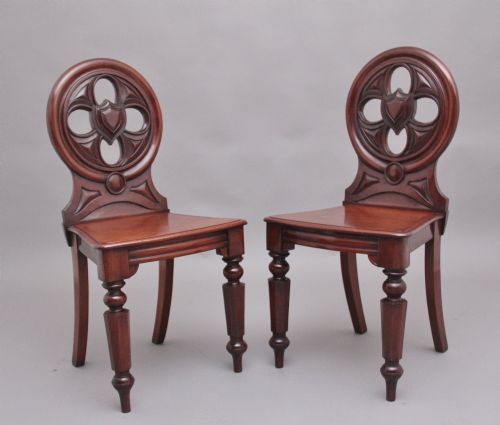
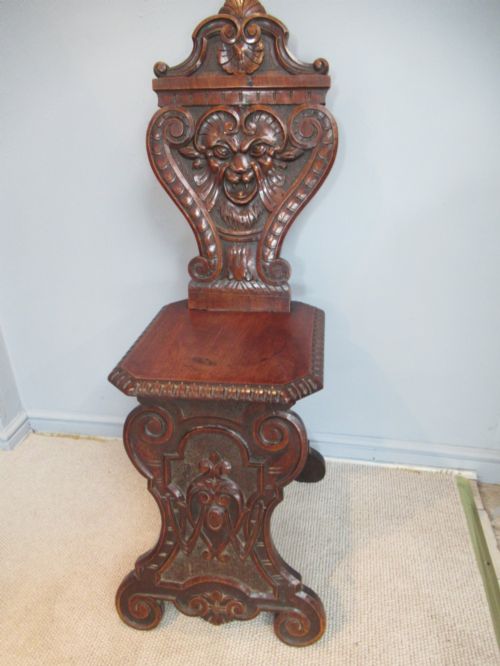
The form ranges from single side chairs with carved wooden panels to sculptural seats featuring pelta backs, shell motifs, or brass inlay. Regional variations include Scottish and Irish pieces alongside English designs from the William IV and Gothic Revival eras.
How they were made
Craftsmen built these seats using solid mahogany timber and hardwood, selecting dense stock capable of sustaining deep hand-carving on the backrests and solid wood seats. Joinery relied on traditional framing methods to ensure rigidity without upholstered padding.
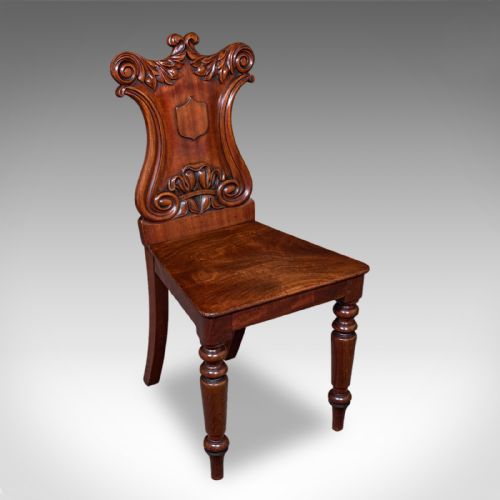
Makers applied surface decoration through timber shaping, relief carving of motifs like shells and pelta forms, and occasional brass inlay set directly into the mahogany grain.
Listings feature items spanning the 18th century through the late Victorian period, predominantly constructed from solid mahogany and hardwood.
What varies in quality
Quality in a solid mahogany hall seat rests upon the depth and crispness of the carved wooden details and the figuring of the timber grain. Pieces exhibiting sculptural shell backs or elaborate Gothic Revival ornament demonstrate superior craftsmanship compared to plain variants.
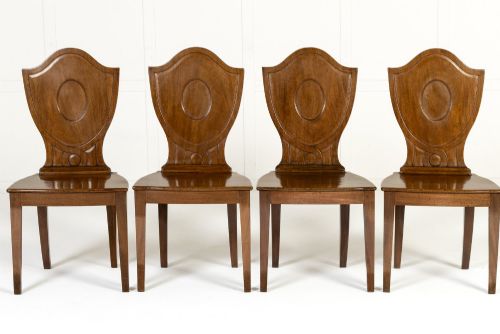
The integrity of the solid wood construction and the presence of matched sets, such as pairs or groups of four, elevate the standing of the piece within the historical record.
Gillows
The Solid Mahogany Hall Seat Glossary
- Solid Wood
- Timber construction utilising natural hardwood throughout rather than veneered surfaces over secondary woods. This ensures structural strength in high-traffic reception areas.
- Pelta Back
- A shield-shaped chair back design resembling an ancient Greek pelta weapon. This specific outline appears frequently on Regency and 19th-century examples.
- Shell Back
- A carved wooden backrest shaped in the form of a scalloped seashell. It represents a popular decorative motif during the Georgian and Victorian eras.
- Gothic Revival
- An architectural and decorative style drawing inspiration from medieval forms. Pieces from this period display pointed arches and ecclesiastical carving details.
- Regency
- A stylistic period spanning the early 19th century characterised by classical restraint and archaeological influence. Furniture from this time often incorporates brass inlay.
Solid Mahogany Hall Seat: Frequently Asked Questions
What is a solid mahogany hall seat?
A solid mahogany hall seat is a sturdy wooden chair or bench historically placed in entrance halls and reception rooms. These items feature solid hardwood construction designed to withstand minimal daily use while creating an impressive visual impact for visitors.
Most examples date from the Georgian, Regency, and Victorian periods, often taking the form of matched pairs or sets of side chairs with intricately carved wooden backs.
How were these seats used?
Historically, these chairs provided a brief resting place for visitors waiting in an entrance hall or reception space. They were primarily decorative statements of status and taste rather than comfortable lounge furniture.
Because they were constructed entirely of solid timber without upholstery, guests sat upright while waiting to be announced into the main rooms of the house.
How do I date a hall seat?
Dating relies on identifying the prevailing style, such as George III, Regency, William IV, or Victorian Gothic Revival. Each era introduced distinct carving motifs, from classical shell backs to pointed medieval arches.
Examining the wood grain, construction methods, and the presence of decorative brass inlay helps narrow the period of origin within the 18th and 19th centuries.
How do I live with a hall seat?
Placing a solid mahogany hall seat in a modern hallway or reception room preserves its traditional function as an architectural statement piece. The dense hardwood makes these items remarkably durable for contemporary entryways.
Maintenance involves regular dusting and protecting the timber from direct sunlight and extreme humidity changes to preserve the natural finish of the mahogany.