


Ornate Carved Wood Chair
These heavy, figurative seats bring dramatic historical presence to a room through intricate timber relief.
Ornate Carved Wood Chair
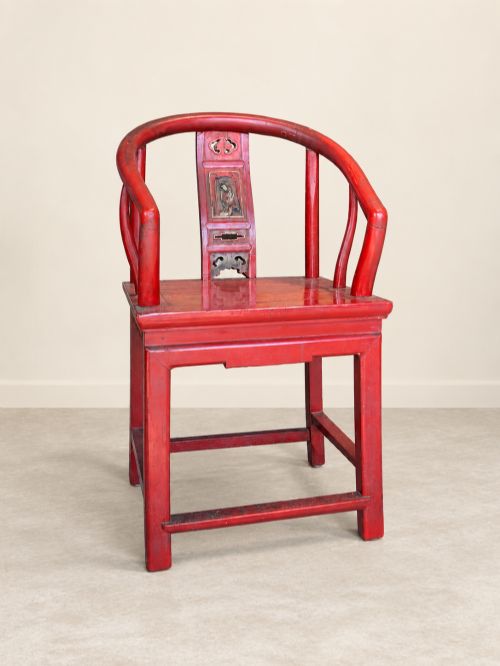
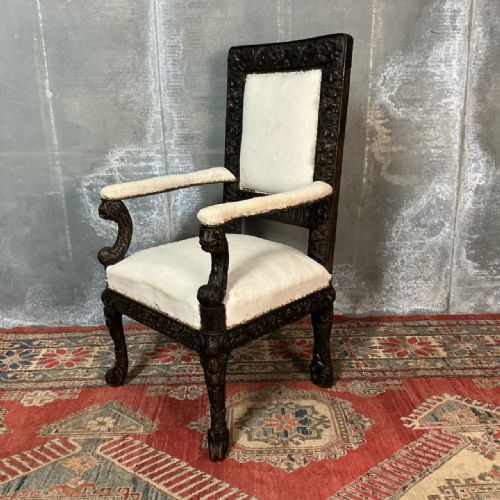
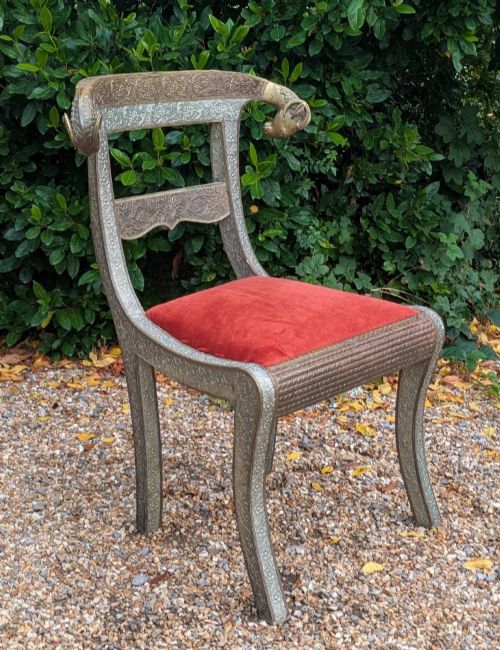
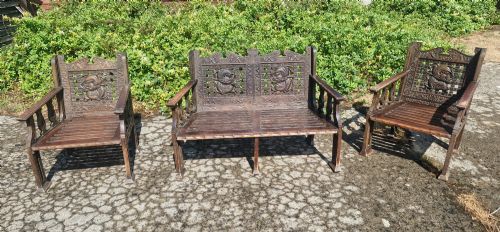
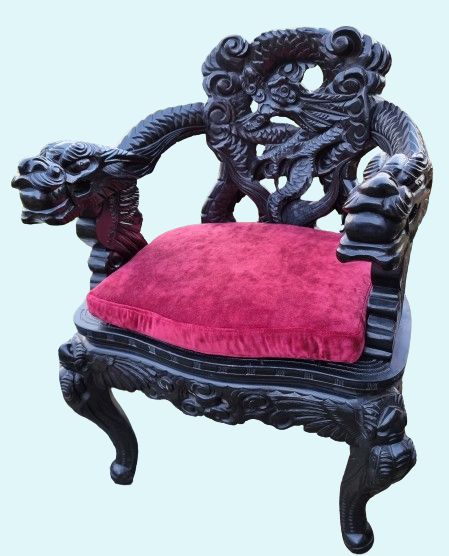
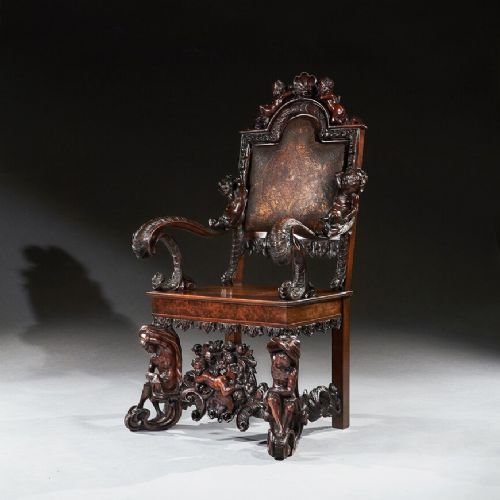
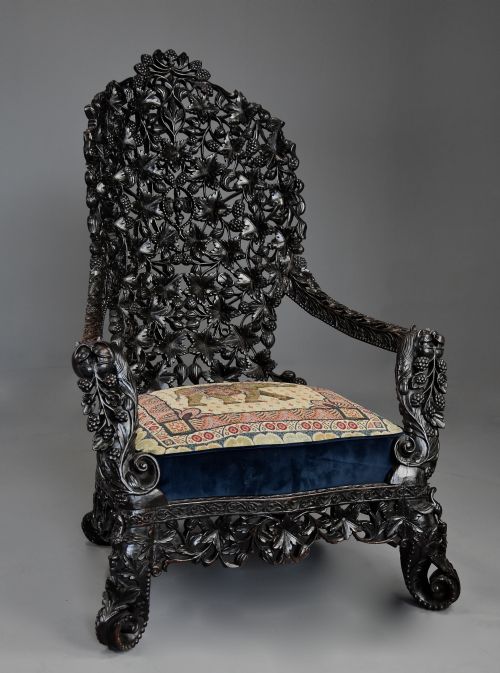
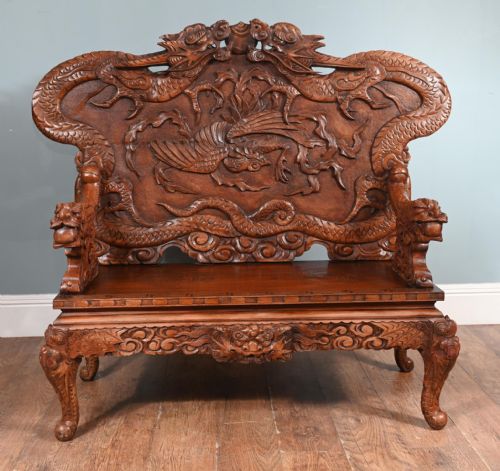
When you search for an ornate carved wood chair, you encounter a wide international assortment spanning the eighteenth, nineteenth, and early twentieth centuries. The selection ranges from imposing European revival seating in oak and walnut to detailed Anglo-Indian, Burmese, and Chinese imports executed in padauk, hardwood, and teak.
You meet armchairs, side chairs, hall chairs, and occasional pieces that reflect distinct regional tastes, from Baroque and Renaissance revivals to Black Forest and traditional oriental motifs. Many pieces incorporate dense figurative work, such as dragons, rams heads, or dancing bears, transforming standard seating into sculptural statements.
How they were made
Timbers such as oak, walnut, mahogany, teak, and padauk provide the dense structural foundation necessary for deep chisel work. Artisans utilised hand-carving techniques to shape high-relief foliage, figures, and structural frames directly into the solid wood.
Surfaces frequently receive additional decorative treatment through gilding, lacquer, marquetry inlay, or wax polishing. Upholstery elements incorporate velvet, leather, and traditional textiles fixed to the carved frames.
What varies in quality
The depth, crispness, and anatomical correctness of the wood carving distinguish standard production from exhibition pieces. Superior examples display undercut relief and fluid lines executed by skilled hands, whereas lesser items rely on shallow, mechanical stamping or blunt chisel work.
Material selection and structural integrity also govern overall merit. Solid, dense hardwoods like walnut and padauk retain sharp detail over centuries, while the balance of the joinery and the authenticity of the surface finish dictate the enduring standing of the piece.
Andrea Brustolon
The Ornate Carved Wood Chair Glossary
- Baroque Revival
- A nineteenth-century style imitating the heavy, dramatic curves and ornate scrollwork of the seventeenth century. It favours dynamic forms and deep relief.
- Padauk
- A heavy tropical hardwood valued for its durability and rich reddish-brown colour. It provides a stable base for intricate Oriental and colonial carving.
- Sgabello
- A light portable chair originating in the Italian Renaissance, featuring a wooden seat supported by two carved board legs rather than four standard posts.
- Giltwood
- Timber coated with a thin layer of gold leaf or powder over a prepared gesso ground. It catches ambient light to highlight intricate carved details.
Ornate Carved Wood Chair: Frequently Asked Questions
How do I identify the period of a carved wooden chair?
Examine the timber species, tool marks left by the carver, and the specific revival style employed in the backrest. Eighteenth-century pieces often display hand-sawn elements and tighter joinery tolerances compared to later revival items.
Compare the decorative motifs against known historical design revivals, noting that Victorian and Edwardian copies frequently exaggerate proportions for dramatic effect.
Where should I place an ornate chair in a modern room?
Position these substantial seats as standalone accent pieces in hallways, studies, or corners where their sculptural backs can be fully appreciated. Their heavy visual weight works best against neutral walls and unadorned backgrounds.
Avoid crowding them with matching furniture, as a single historic carved chair functions effectively as a focal point in a contemporary interior.
How do I care for antique carved wooden furniture?
Maintain the timber by applying microcrystalline wax sparingly to protect the surface finish from moisture and dust accumulation. Avoid placing antique wood near direct heat sources or in fluctuating humidity.
Dust intricate carvings gently with a soft natural bristle brush to prevent particulate build-up inside the recessed channels of the relief work.
What is the difference between an Italian Renaissance revival and a Baroque chair?
Renaissance revival models typically feature rectilinear frames, flat stretchers, and classical architectural motifs such as columns and strapwork. They present a formal, architectural silhouette.
Baroque designs introduce sweeping C-scrolls, asymmetric cartouches, and exuberant foliage that convey a sense of motion and theatricality.